





Walk
Where Wisdom Keeps You Young
Coimbra, Portugal
Walk
Where Wisdom Keeps You Young
Coimbra, Portugal
6 km
Distance
2h25
Durée
26
Audios
Loop
Parcours
Shutterstock
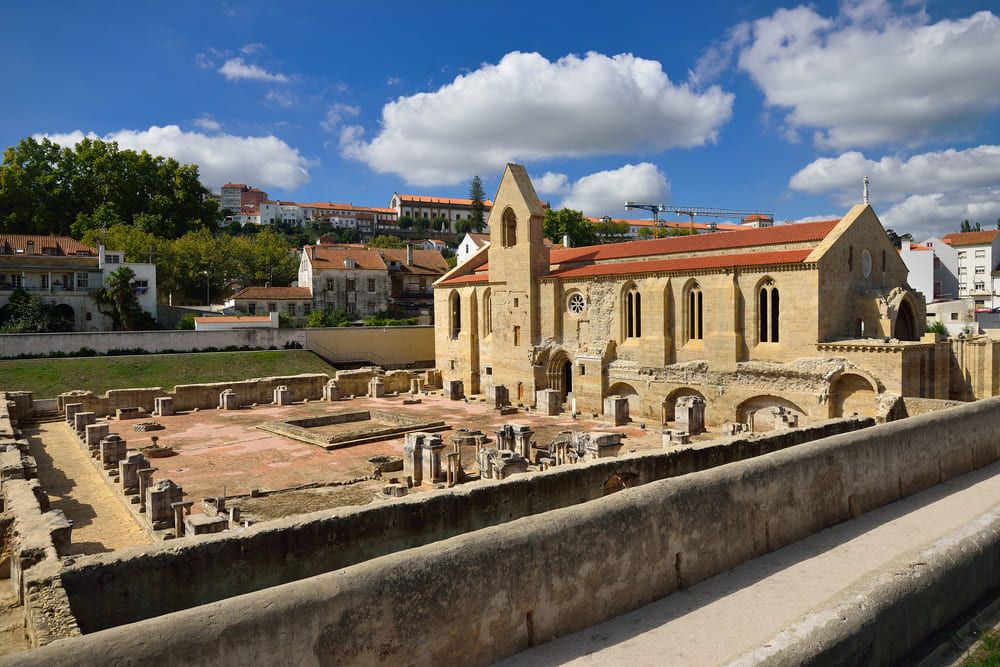
The Monastery of Santa Clara-a-Velha is a former Gothic convent of Coimbra, long threatened by the waters of the Rio Mondego. The Coimbra audio-guided tour stops here, with respect, to evoke this history-laden sanctuary, linked to the Holy Queen Isabel.
The Monastery of Santa Clara-a-Velha, the old convent of Saint Clare, is one of the most moving monuments of Coimbra, on the south bank of the Rio Mondego. According to the writings, it was founded in 1283 at the request of Dona Mor Dias, a figure of the local nobility. Deserted after the death of its founder, the site knew a second youth thanks to Isabel of Aragon, the queen become a saint, who spared no effort to rebuild it and was for a time linked to it. But the monastery, built too close to the river, was struck on multiple occasions by the floods of the Mondego, which invaded it little by little, finally forcing the nuns to abandon it for a new convent on the heights. Long remained submerged, the Gothic building was the subject of important safeguarding works that returned it to the visit. A history-laden sanctuary and a witness of the devotion of the holy queen, the Monastery of Santa Clara-a-Velha is discovered with respect.
You admire, with respect, the former Gothic convent founded in 1283 by Dona Mor Dias and restored by the holy queen Isabel of Aragon, long invaded by the floods of the Rio Mondego that forced the nuns to abandon it, then safeguarded and returned to the visit. The Monastery of Santa Clara-a-Velha is a moving sanctuary of Coimbra. It is a stop to be discovered with respect.
The Monastery of Santa Clara-a-Velha lies on the south bank of the Rio Mondego, in the Santa Clara district, in Coimbra, reachable on foot and by public transport. A place of memory, it can be visited with respect; the visit follows its own hours and conditions, which vary. It is best to check them before coming.
Because the monastery, built too close to the Rio Mondego, was struck on multiple occasions by the floods that invaded it little by little; the nuns finally had to leave it for a new convent on the heights, Santa Clara-a-Nova.
On the south bank of the Rio Mondego, in the Santa Clara district, in Coimbra, in Portugal.
Aucun avis pour le moment
