




Walk
The Land of the Morning Calm
Seoul, South Korea
Walk
The Land of the Morning Calm
Seoul, South Korea
7.2 km
Distance
3h00
Durée
20
Audios
Loop
Parcours
Shutterstock
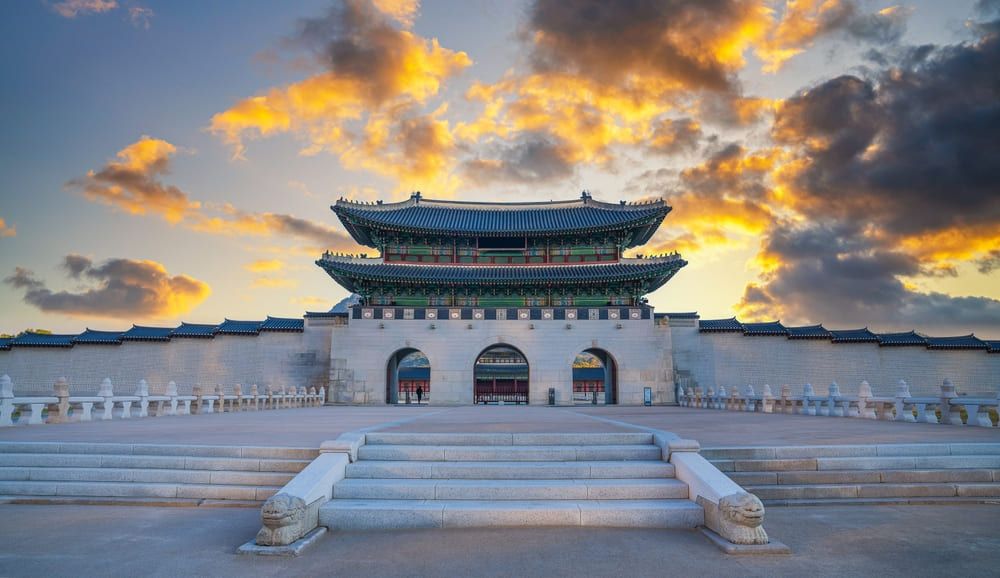
The Seoul audio-guided tour takes you to Gyeongbokgung Palace, the main and largest of the city's five palaces. A true royal palace, it occupies in Korean history a place comparable to that of Versailles in France. It is an absolute must-see of the capital.
The palace was built at the end of the fourteenth century, under one of the country's most influential dynasties, the Joseon dynasty, to house the royal family. It was at this time that Seoul, then called Hanyang, became the capital of the territory, chosen by King Taejo, founder of the dynasty. At the end of the sixteenth century, the Japanese invasion did not spare the building, largely destroyed by fire. Left abandoned, it gave up its place as official palace to Changdeokgung, before being rebuilt in the nineteenth century under the reign of King Gojong.
Designed according to the principles of feng shui, the palace was the first where the king both resided and ruled the country. You can admire vast courtyards, pavilions with characteristic Korean roofs, ponds and gardens. The changing of the guard, in traditional costumes, is one of the highlights of the visit. The site also houses the National Folk Museum of Korea. It is a striking immersion in the history of Korean royalty.
Gyeongbokgung Palace is in the north of central Seoul, just behind Gwanghwamun Square, whose perspective it extends. The visit follows its own schedule; admission is charged and opening times may vary with the season. It is advisable to check the visiting conditions in advance.
It is the main and largest of Seoul's five palaces, the royal palace of the Joseon dynasty where the king resided and ruled the country from the end of the fourteenth century.
Largely destroyed by fire during the Japanese invasion at the end of the sixteenth century, it was rebuilt in the nineteenth century under the reign of King Gojong.
Aucun avis pour le moment