





Walk
A well-kept Roman secret
Mérida, Spain
Walk
A well-kept Roman secret
Mérida, Spain
6.5 km
Distance
2h40
Durée
19
Audios
Loop
Parcours
Shutterstock
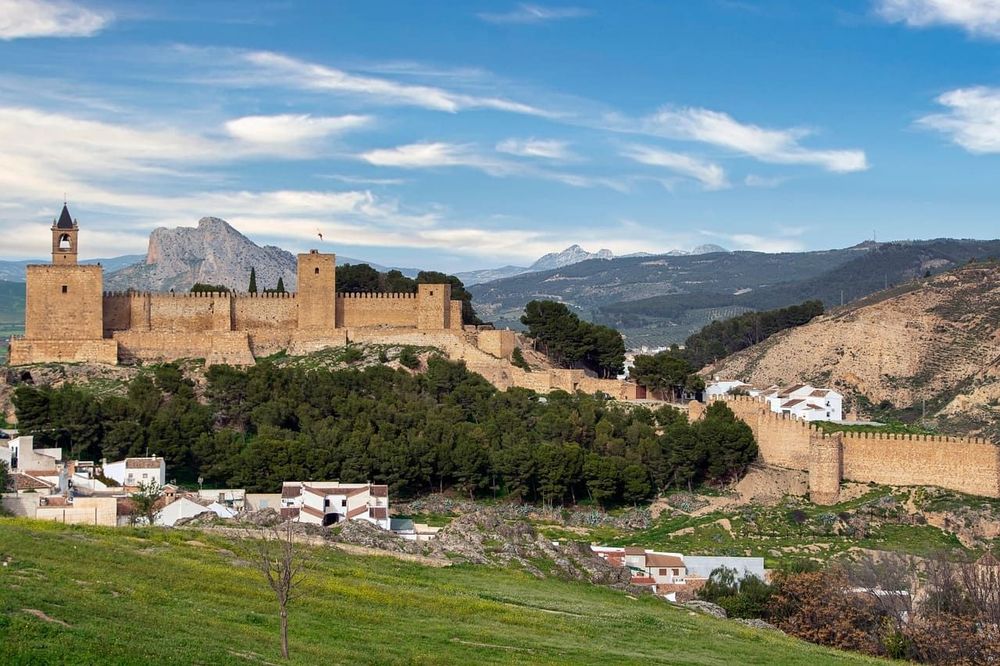
The Alcazaba of Mérida is a Muslim fortress of the ninth century, one of the oldest of Spain, standing near the Roman bridge to control the town and the passage of the Guadiana. The Mérida audio-guided tour stops here to evoke this imposing square enclosure, raised in 835 on the order of the emir of Cordoba Abd al-Rahman II, that reused Roman and Visigothic stones.
Behind its fortified walls hide the ruins of the Alcazaba of Mérida. This square fortress was built on the order of Abd al-Rahman II, fourth Umayyad emir of Cordoba, in the ninth century. This emir is considered as one of the most cultivated Muslim heads of State of his time, and his court was reputed the most brilliant of Europe; his qualities and the relative peace of his emirate marked his reign with a great cultural rise for Andalusian civilisation. But peace does not mean absence of tensions: he had this military enclosure erected in 835, to control a town that had revolted a few decades earlier. The Alcazaba is one of the oldest preserved Muslim fortifications of the peninsula. To build it, its constructors abundantly reused stones and elements of Roman and Visigothic architecture, taken from the ancient monuments of the town, so that its walls tell on their own the long history of Mérida. Inside hide a remarkable cistern, the aljibe, fed by the filtered waters of the Guadiana and accessible by a double staircase, as well as the vestiges of several eras. From the top of the ramparts, you enjoy a fine view over the river and the Roman bridge that it guarded. A Muslim fortress and a guardian of the river, the Alcazaba of Mérida is a fine stop of the discovery of the town.
Here you discover one of the oldest Muslim fortresses of Spain, a square enclosure raised in 835 on the order of the emir of Cordoba Abd al-Rahman II to control the town and the bridge; built by reusing Roman and Visigothic stones, it shelters a remarkable cistern, the aljibe, fed by the Guadiana, vestiges of several eras and fine views over the river. The Alcazaba is a guardian of the river in Mérida. It is a fine stop, to be explored on foot.
The Alcazaba of Mérida lies near the Roman bridge and the Plaza de España, at the edge of the Guadiana, reachable on foot. It follows its own days and opening hours, variable, and entry is generally subject to a fee, often included in a combined entry to the sites of the town. It is best to enquire before coming.
The Umayyad emir of Cordoba Abd al-Rahman II, who had it erected in 835 to control a revolted town and guard the bridge over the Guadiana; it is one of the oldest Muslim fortresses of Spain, built by reusing Roman and Visigothic stones, and sheltering the cistern called aljibe fed by the river.
Near the Roman bridge and the Plaza de España, at the edge of the Guadiana, in Mérida, in Spain.
Aucun avis pour le moment
