





Walk
The Hidden Jewel of the Spanish Renaissance
Úbeda, Spain
Walk
The Hidden Jewel of the Spanish Renaissance
Úbeda, Spain
3 km
Distance
1h30
Durée
23
Audios
Loop
Parcours
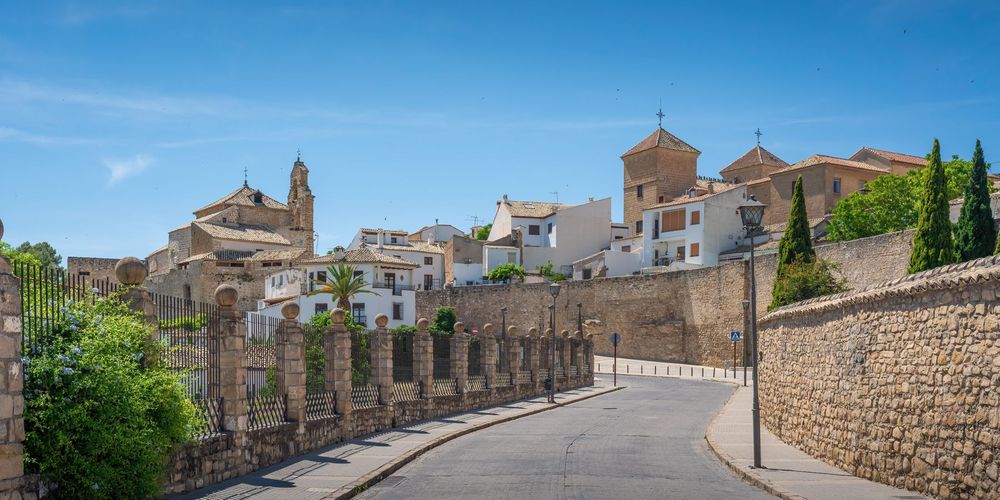
The Alcázar district is the oldest of Úbeda, a true medieval core that has kept its layout for centuries. The Úbeda audio-guided tour dwells here to evoke this historic area, the cradle of the fortified city and a witness of its distant past.
The Alcázar district corresponds to the oldest core of Úbeda, where the historic fortified city, with its almost square plan, stood. It has kept its medieval layout, made of narrow lanes and vestiges of the old defences. With the Renaissance ensemble, this district contributes to the heritage value of Úbeda, recognised internationally, and immerses the visitor in the Middle Ages of the city.
Here you wander in medieval lanes, among the vestiges of the old fortifications and the viewpoints over the Andalusian countryside. The Alcázar district offers an older and more intimate face of Úbeda, far from the great Renaissance palaces. It is a stop for lovers of history and old stones, in the heart of the medieval core.
The Alcázar district lies in the heart of the historic centre of Úbeda, reachable on foot. It is a freely accessible public area, explored on foot along its lanes; some have slopes and cobblestones, to be taken into account. The district is discovered slowly, during a walk in the old town.
Because it is the oldest district of the city, the medieval core of the fortified city, which has kept its layout for centuries.
In the heart of the historic centre of Úbeda, it is the oldest district of the city.
Aucun avis pour le moment
