





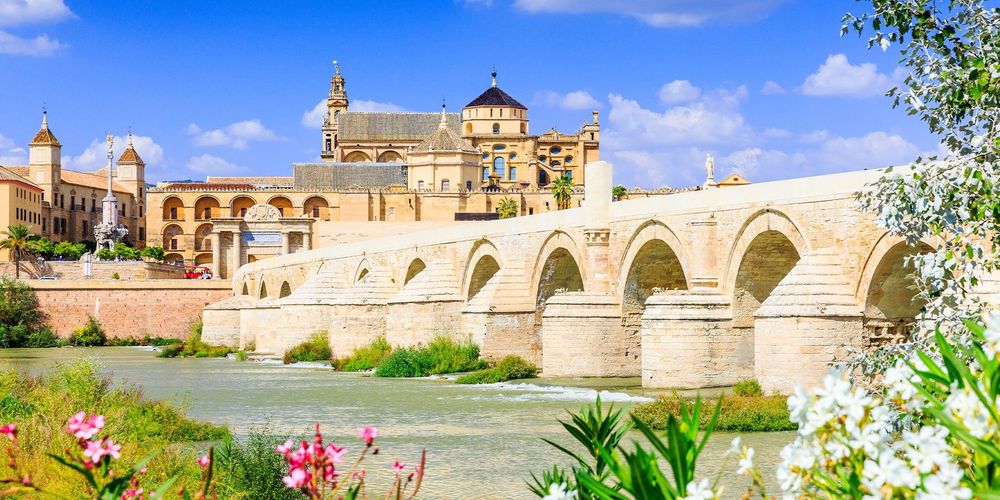
Walk
The City of Three Cultures
Cordoba, Spain
Walk
The City of Three Cultures
Cordoba, Spain
8.2 km
Distance
3h20
Durée
24
Audios
Loop
Parcours
Shutterstock
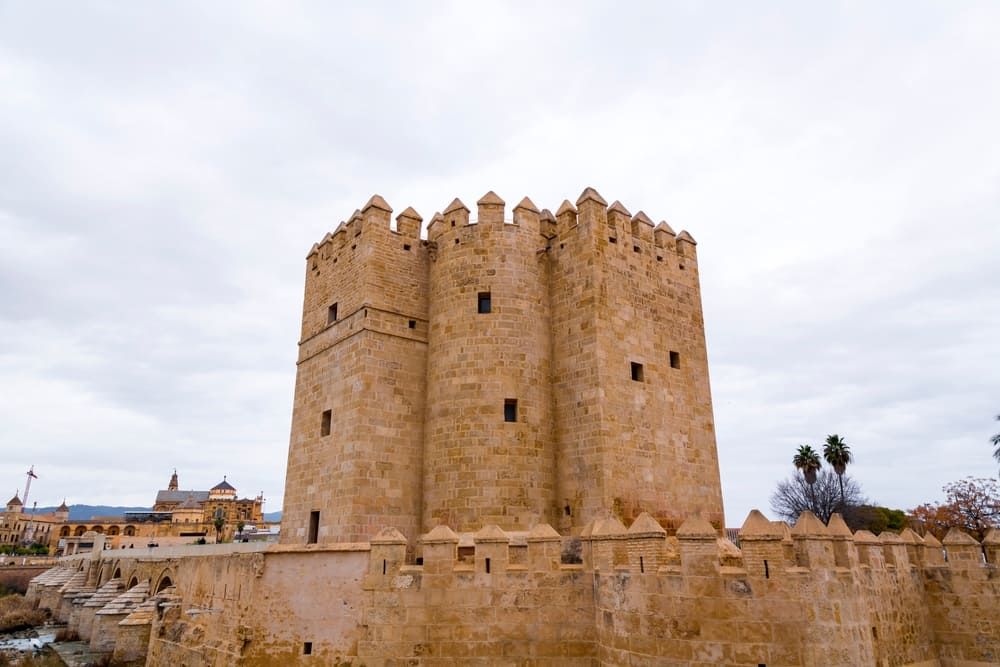
The Calahorra tower guards the entrance of the Roman bridge of Cordoba, on the bank opposite the city. The Cordoba audio-guided tour stops here to evoke this fortress of Islamic origin, which today houses a museum.
The Calahorra tower, whose name derives from Arabic, is a fortress built to defend the access to the Roman bridge of Cordoba, at the southern end of the structure. Of Islamic origin then remodelled in the Middle Ages, it constituted a strategic lock guarding the entrance of the city. It today houses a museum devoted to the civilisation of al-Andalus and offers, from its heights, a fine view over the bridge, the river and the Mosque-cathedral.
Here you discover the fortress guardian of the bridge, the museum devoted to al-Andalus and a fine view over the Roman bridge, the river and the Mosque-cathedral. The Calahorra tower tells the history of Cordoba and its civilisations. It is a stop for lovers of history and panoramas.
The Calahorra tower lies at the southern end of the Roman bridge, on the bank opposite the city, in Cordoba, reachable on foot. The visit of the tower and the museum has a fee and follows its own hours, which vary. It is best to check the arrangements before coming.
A museum devoted to the civilisation of al-Andalus; this fortress of Islamic origin guarded the entrance of the Roman bridge of Cordoba.
At the southern end of the Roman bridge of Cordoba, on the bank opposite the city.
Aucun avis pour le moment
