





Walk
Suspended between Sky and Peaks
Ronda, Spain
Walk
Suspended between Sky and Peaks
Ronda, Spain
2.6 km
Distance
1h15
Durée
27
Audios
Loop
Parcours
Shutterstock
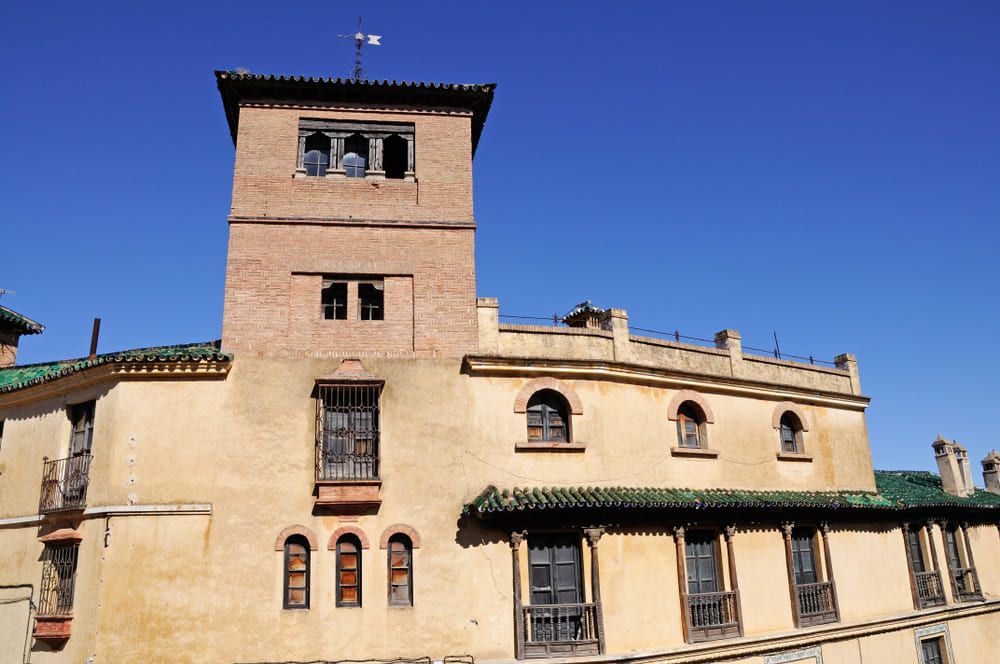
The Ronda audio-guided tour presents you with the Casa del Rey Moro, the "house of the Moorish king", clinging to the cliff above the ravine, famous for its medieval water mine.
Despite its name, no Moorish king ever lived here: the dwelling one sees is from the eighteenth century, built well after the Reconquest in a Neo-Mudéjar style imitating Islamic architecture to seduce the imagination of romantic travellers. What is authentically medieval is what hides below: a water mine dug in the fourteenth century, under the reign of King Abomelic, which descends in steps cut into the rock down to the río Guadalevín. In times of siege, Christian slaves shuttled in this vertiginous fault to bring the water up to the city, which allowed Ronda to hold behind its walls. A painful page, which it is important to recall with gravity. On the surface, terraced gardens descend towards the bottom of the ravine.
The Casa del Rey Moro offers a striking route: the descent of the water mine, cut into the rock down to the river, and its terraced gardens clinging to the cliff, which open superb views over the gorges. Beyond the Neo-Mudéjar decor, the place recalls the defensive ingenuity of Ronda and the labour of those who brought the water up there. A strong visit, both historic and spectacular.
The Casa del Rey Moro is in the old town of Ronda, at the edge of the ravine. The house, its gardens and the water mine can be visited according to hours to be checked on site; access is generally subject to a charge, and the descent of the mine includes many steps.
No: the present house dates from the eighteenth century and takes up a Neo-Mudéjar style; only its name evokes the Islamic era.
A staircase dug into the rock in the fourteenth century, descending to the río Guadalevín, which allowed the city to be supplied with water during sieges.
Aucun avis pour le moment
