





Walk
The Hidden Jewel of the Spanish Renaissance
Úbeda, Spain
Walk
The Hidden Jewel of the Spanish Renaissance
Úbeda, Spain
3 km
Distance
1h30
Durée
23
Audios
Loop
Parcours
Shutterstock
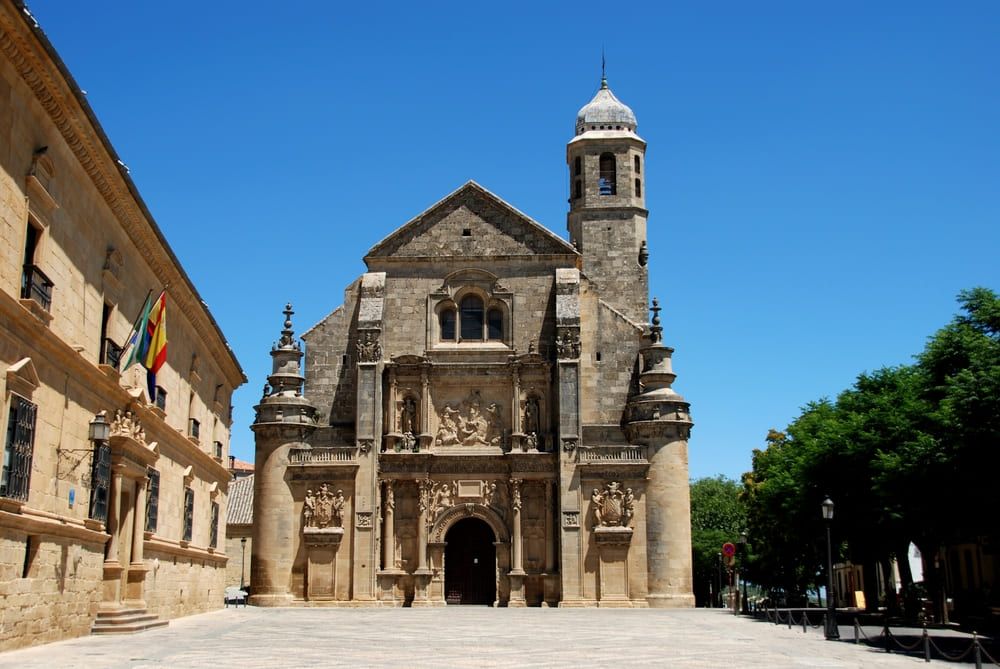
The Santa Capilla del Salvador del Mundo is the most famous monument of Úbeda and one of the great masterpieces of the Spanish Renaissance. The Úbeda audio-guided tour stops here, with respect, to evoke this majestic chapel, a jewel of Plaza Vázquez de Molina.
Built in the sixteenth century, the Sacra Capilla del Salvador was conceived as a funerary chapel for Francisco de los Cobos, secretary of Emperor Charles V. A masterpiece of the Spanish Renaissance, it stands out by its richly carved façade and its sumptuous interior. Still linked to the ducal house that ensures its keeping, it remains the most dazzling symbol of Úbeda.
You admire the carved façade, the ornate portal and the richly decorated interior of the chapel, a summit of Renaissance art. Located on Plaza Vázquez de Molina, it dominates the monumental ensemble of the square. It is the unmissable stop of Úbeda, to be discovered with respect for its religious and heritage dimension.
The Sacra Capilla del Salvador lies on Plaza Vázquez de Molina, in the heart of Úbeda, reachable on foot. The visit has a fee and follows its own hours, generally Monday to Saturday, morning and afternoon, which may vary with the season and celebrations. It is best to check them before coming and to respect the sacred character of the place.
As a funerary chapel for Francisco de los Cobos, secretary of Charles V, in the sixteenth century; it is a masterpiece of the Spanish Renaissance.
On Plaza Vázquez de Molina, in the heart of the historic centre of Úbeda, in Andalusia.
Aucun avis pour le moment
