





Walk
Capital of the Nasrid Kingdom
Granada, Spain
Walk
Capital of the Nasrid Kingdom
Granada, Spain
5.1 km
Distance
2h00
Durée
19
Audios
Loop
Parcours
Shutterstock
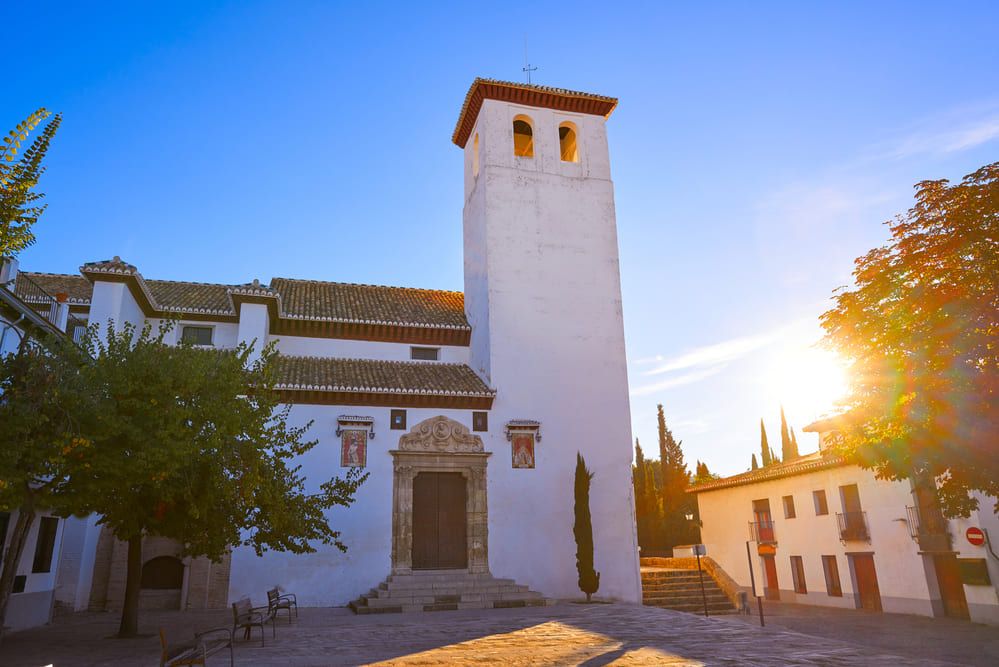
This small church, located in the heart of the Albaicín district, shares its name with the square where it’s stood since the 16th century. It was built to replace a former mosque that once stood here when the Moors ruled the city. Its architecture is what’s known as the Mudéjar style, a blend of Christian design with Muslim influences and materials. This style first emerged in the Iberian Peninsula in the 12th century, when the Catholic Monarchs began to reclaim Muslim-held cities. The term “Mudéjar” originally referred to Muslims who continued to live under Christian rule. During what was called the “period of tolerance,” they were still allowed to practise Islam and maintain their traditions. But that tolerance didn’t last for long. In 1502, a royal decree forced Muslims to convert to Christianity, or leave the country, marking a dark and painful turning point for the Muslim population. So now you know what Mudéjar means, make sure to keep an eye out as you continue exploring Spain.You’ll likely spot this style in other cities too!
Aucun avis pour le moment
