





Walk
Mountain Slopes, Timeless Soul
La Orotava, Spain
Walk
Mountain Slopes, Timeless Soul
La Orotava, Spain
2.5 km
Distance
1h00
Durée
17
Audios
Loop
Parcours
Shutterstock
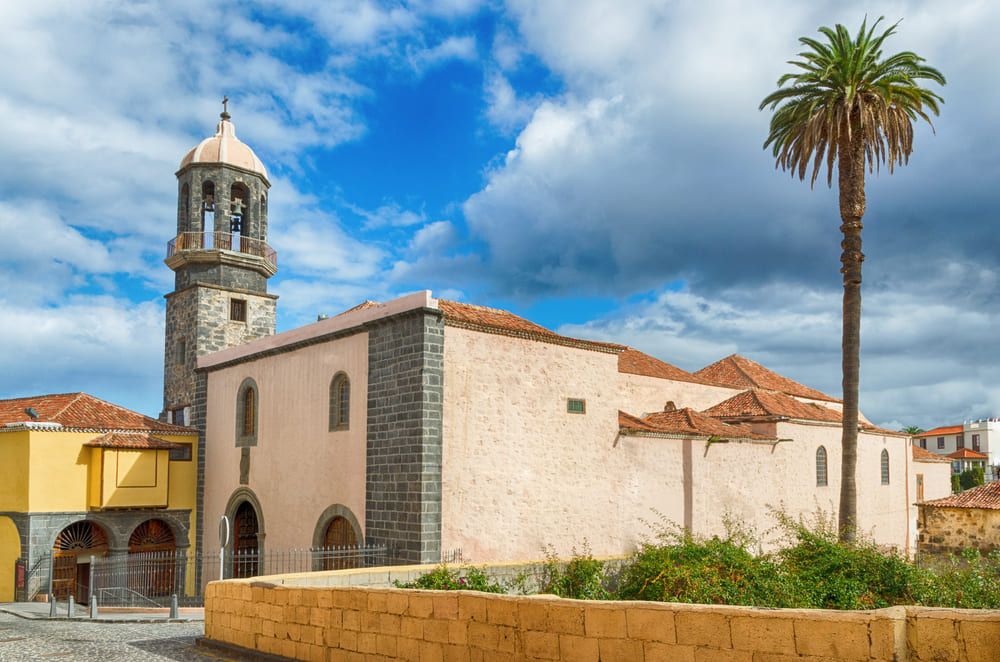
The Church of Santo Domingo and the fine house of Torre Hermosa form a historic ensemble of La Orotava. The La Orotava audio-guided tour stops here, with respect, to evoke this old sanctuary and this seigneurial residence, witnesses of the heritage of the town.
Here you discover two fine witnesses of the heritage of La Orotava, neighbours of one another: on one hand, the house called Torre Hermosa, and on the other, the Church of Santo Domingo. The house, today divided, is a former seigneurial residence that illustrates traditional Canarian architecture and the rank of the families that lived in the district. The Church of Santo Domingo, for its part, is one of the old religious buildings of the town, linked to the order of the Dominicans that settled in La Orotava, like other religious communities that marked the town with their imprint. With sober architecture, typical of the conventual churches of the archipelago, it keeps elements of the religious heritage and perpetuates the worship. This ensemble illustrates the historic richness of the district, where noble residences and religious buildings mix. A witness of the faith and the heritage of La Orotava, the Church of Santo Domingo is discovered with respect.
You admire, with respect, the ensemble formed of the fine seigneurial house of Torre Hermosa, illustrating Canarian architecture, and the Church of Santo Domingo, an old religious building linked to the Dominicans, with sober architecture typical of the conventual churches of the archipelago, witnesses of the historic richness of the district. The Church of Santo Domingo is a place of heritage of La Orotava. It is a stop to be discovered with respect.
The Church of Santo Domingo and the house of Torre Hermosa lie in the heart of the old town of La Orotava, reachable on foot. A place of worship, the church can be visited with respect for services; access and hours follow their own conditions, which vary. You admire the house from the street. It is best to check the arrangements before coming.
The fine seigneurial house called Torre Hermosa, today divided, illustrating Canarian architecture; with the Church of Santo Domingo, an old religious building linked to the Dominicans, it forms an ensemble witness of the historic richness of the district.
In the heart of the old town of La Orotava, in Tenerife, in Spain.
Aucun avis pour le moment
