





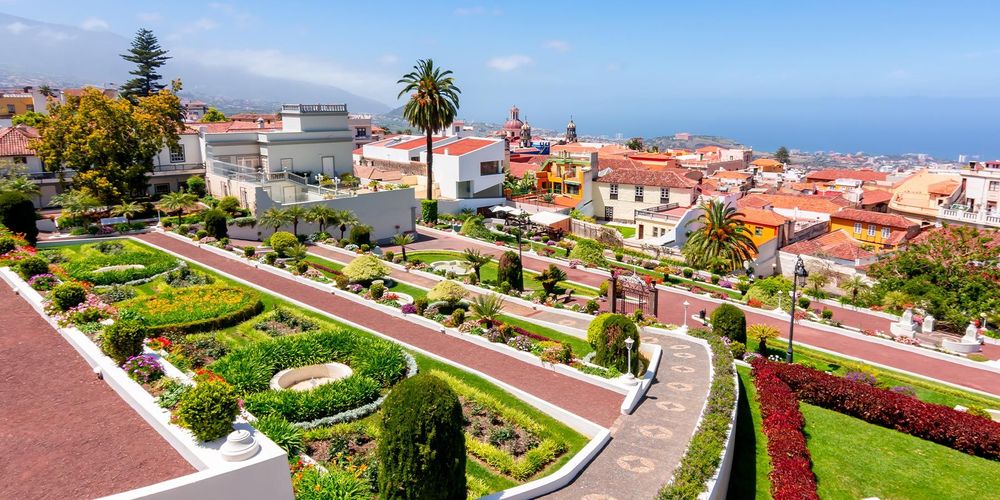
Walk
Mountain Slopes, Timeless Soul
La Orotava, Spain
Walk
Mountain Slopes, Timeless Soul
La Orotava, Spain
2.5 km
Distance
1h00
Durée
17
Audios
Loop
Parcours
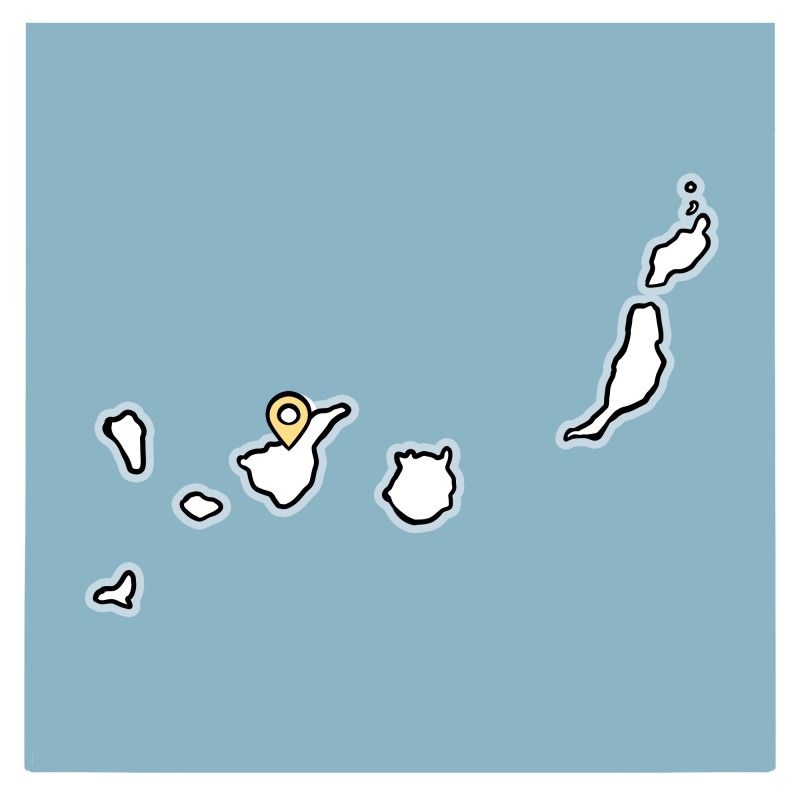
Take a moment to rest on one of the benches here in the quiet Plaza Casañas, while we tell you a little about the history of the Canary Islands. Most people know the Canaries as a dream destination with volcanic islands, sun-soaked beaches, and stunning landscapes, but their story goes far beyond tourism. These seven islands began forming over 20 million years ago.
They’re volcanic islands, born from hotspots deep beneath the Earth's crust. When heat and pressure build up, magma pushes through the crust, forming a volcano. Over time, as the tectonic plate moves but the hot spot stays put, more volcanoes emerge in a line, creating the island chain we see today, much like Hawaii.
Lanzarote and Fuerteventura were the first to rise from the sea, over 23 million years ago. The youngest islands, El Hierro and La Gomera, appeared two million years ago. Who knows, maybe another volcano will rise here one day!
All of the islands experienced long periods of eruptions, shaping their dramatic landscapes and giving us the stunning sites we enjoy today. At that time, they were barren and uninhabited. The islands’ original fauna, giant lizards, rats, and tortoises, have since vanished.
When humans eventually settled here, they brought their own animals and crops. The first settlers arrived from North Africa around 500 BC. They are now known to have been of Amazigh origin, “Amazigh” meaning “free people” in Berber.
The Spanish conquistadors later called them the Guanches. Interestingly, no trace of boats has ever been found, which has led to theories that they were exiled here by the Romans, who often used banishment as punishment. Cut off from the rest of the world, and even isolated from one another across the different islands, the Guanches lived in near-total solitude for over a thousand years.
With no outside contact, they gradually lost knowledge of seafaring, architecture, and tool-making. They lived simple lives, growing barley and raising goats. They had no known religion, not even knowledge of Islam, which suggests their migration was ancient.
However, they did worship a female deity and practiced mummification. Though their culture was eventually wiped out by the Spanish conquest, it left behind fascinating traces. Some of the remarkably well-preserved mummies can be seen at the Archaeological Museum of Tenerife, and even at the Louvre in Paris.
You can also visit the Guanche Cave in the north of the island, the most significant archaeological site in the Canaries Islands. It contains artefacts dating back to the 5th century BC.
Aucun avis pour le moment
