





Walk
Isle of Kings
Palma de Mallorca, Spain
Walk
Isle of Kings
Palma de Mallorca, Spain
5 km
Distance
2h00
Durée
26
Audios
Loop
Parcours
Shutterstock
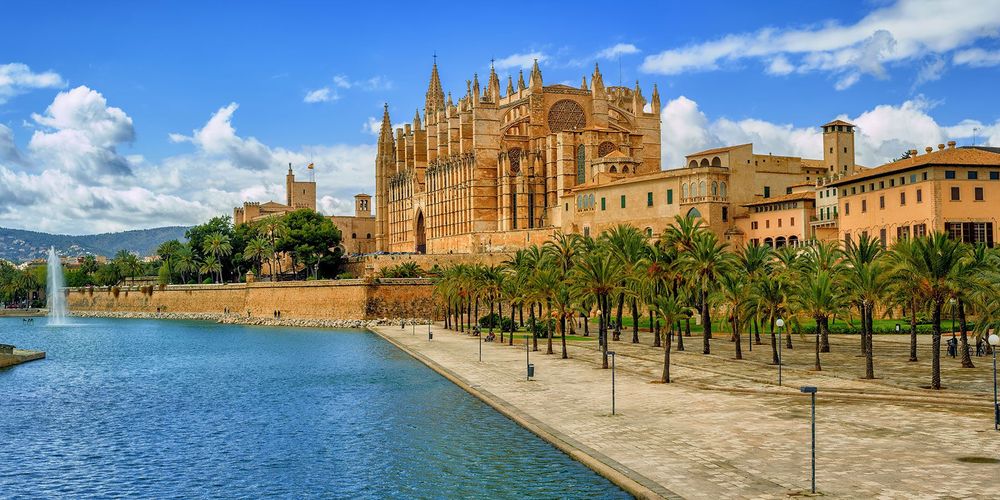
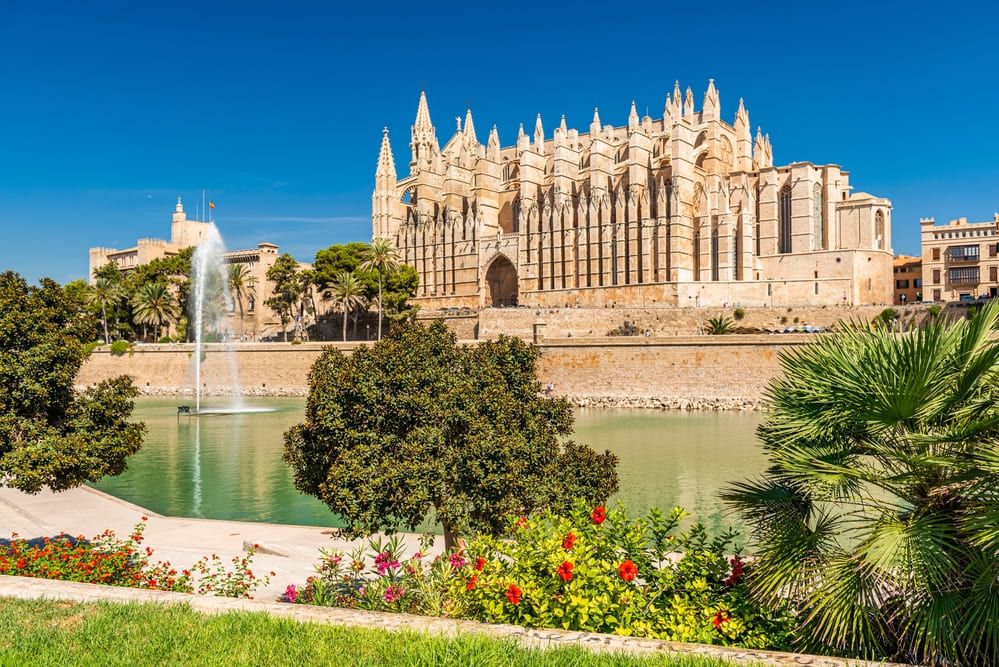
The Cathedral of La Seu is the immense Gothic vessel that dominates Palma by the sea, one of the most impressive religious buildings of Spain. The Palma audio-guided tour stops here, with respect, to evoke this masterpiece of light and stone, emblem of the town.
The Cathedral of La Seu is the emblem of Palma and one of the most impressive Gothic buildings of Spain. Its construction began in the thirteenth century, after the Christian conquest of the island, on the location of the old great mosque, and continued for several centuries. Built in golden stone by the sea, over whose bay it towers, it strikes by its colossal dimensions and by the elegance of its Gothic architecture, supported by powerful flying buttresses. Its interior is one of the most luminous that exist: the cathedral possesses one of the largest Gothic rose windows of the world, which, on certain dates, projects a spectacular play of light on the opposite wall. At the beginning of the twentieth century, the architect Antoni Gaudí intervened on the cathedral, leaving his mark there, notably on the baldachin of the choir. La Seu also shelters chapels, works of art and remarkable stained-glass windows. A major sanctuary and a jewel of the Gothic, the Cathedral of La Seu is discovered with respect.
You admire, with respect, the immense Gothic cathedral in golden stone by the sea, built from the thirteenth century on the old great mosque, with colossal dimensions and powerful flying buttresses, endowed with one of the largest Gothic rose windows of the world and interventions of Antoni Gaudí, which towers over the bay of Palma. The Cathedral of La Seu is the emblem of the town. It is a major stop to be discovered with respect.
The Cathedral of La Seu lies by the sea, in the heart of Palma, reachable on foot. A place of worship, it can be visited with respect for services; access and hours follow their own conditions, which vary. It is best to check them before coming and to respect the sacred character of the place.
It is an immense Gothic vessel in golden stone built by the sea from the thirteenth century on the old great mosque; it possesses one of the largest Gothic rose windows of the world, which projects a spectacular play of light, and keeps interventions of the architect Antoni Gaudí.
By the sea, in the heart of Palma de Mallorca, in Spain.
Aucun avis pour le moment
