





Walk
A well-kept Roman secret
Mérida, Spain
Walk
A well-kept Roman secret
Mérida, Spain
6.5 km
Distance
2h40
Durée
19
Audios
Loop
Parcours
Shutterstock
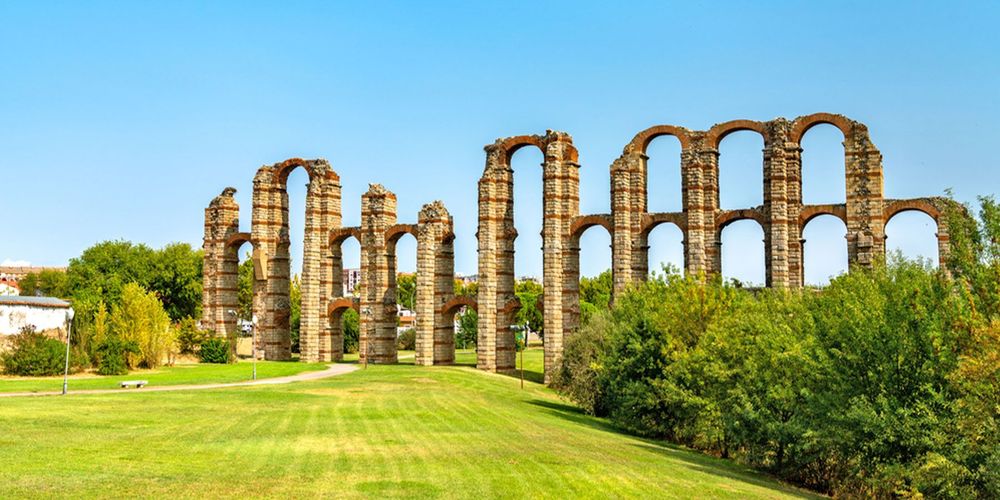
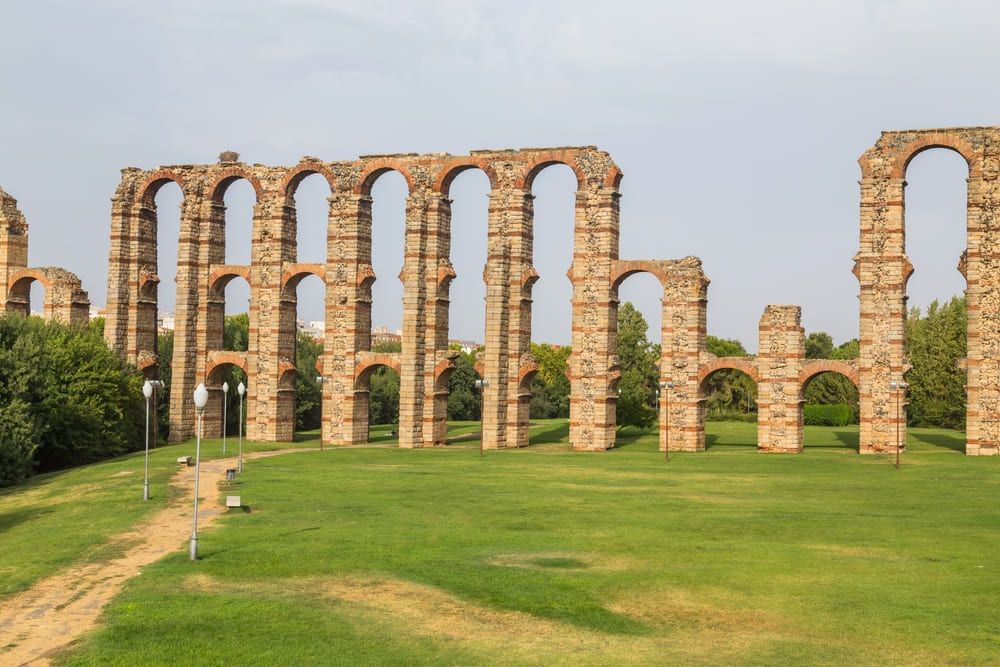
The Aqueduct of the Miracles is one of the most impressive archaeological sites of Mérida, a Roman aqueduct of which nearly eight hundred metres and high arches of twenty-five metres are still preserved. The Mérida audio-guided tour stops here to evoke this masterpiece of ancient engineering, classified World Heritage of Unesco, that supplied the town from the reservoir of Proserpina.
Here you are in the great park of the Acueducto de los Milagros, the park of the Aqueduct of the Miracles, in front of its fabulous vestiges. It is one of the most important archaeological sites of the town. Its first function was to supply with water the western part of Augusta Emerita, from the reservoir of Proserpina, a great Roman dam situated about five kilometres from there. If we call it the Aqueduct of the Miracles, it is above all for the admiration it aroused across the centuries, because of its state of conservation judged almost miraculous; the inhabitants marvelled that such an ancient work still stood. About eight hundred metres of this aqueduct, nearly two thousand years old, are still preserved today, and its highest arches culminate at twenty-five metres. Its silhouette is recognised by its granite pillars rhythmed with courses of red brick, that compose a striking motif of light and dark bands, at once solid and elegant. This alternation, typical of Roman architecture, gives the work all its beauty. Classified Property of Cultural Interest and inscribed on the World Heritage of Unesco within the archaeological ensemble of Mérida, the aqueduct testifies to the mastery of the Roman engineers in matter of water management, essential to the life of a great town. At the foot of the arches, in the greenery of the park, you measure the genius of Rome. An ancient aqueduct and a wonder of engineering, the Aqueduct of the Miracles is a fine stop of the discovery of Mérida.
Here you discover one of the most impressive archaeological sites of Mérida: a Roman aqueduct of which nearly eight hundred metres and high arches of twenty-five metres are preserved, with granite pillars rhythmed with bands of red brick; it supplied the town from the reservoir of Proserpina, and its almost miraculous state earned it its name, classified World Heritage of Unesco. The Aqueduct of the Miracles is a wonder of Mérida. It is a fine stop, to be explored on foot.
The Aqueduct of the Miracles lies in the park of the same name, in the valley of the Albarregas, in Mérida, reachable on foot. It is an open-air site, freely accessible, to be admired through the verdant park. You discover it during a walk to the north of the centre.
Because of the admiration it aroused across the centuries, due to its state of conservation judged almost miraculous; this Roman aqueduct, of which nearly eight hundred metres and arches of twenty-five metres with granite pillars and bands of red brick are preserved, supplied the town from the reservoir of Proserpina and is classified World Heritage of Unesco.
In the park of the same name, in the valley of the Albarregas, in Mérida, in Spain.
Aucun avis pour le moment
