





Walk
The Hidden Jewel of the Spanish Renaissance
Úbeda, Spain
Walk
The Hidden Jewel of the Spanish Renaissance
Úbeda, Spain
3 km
Distance
1h30
Durée
23
Audios
Loop
Parcours
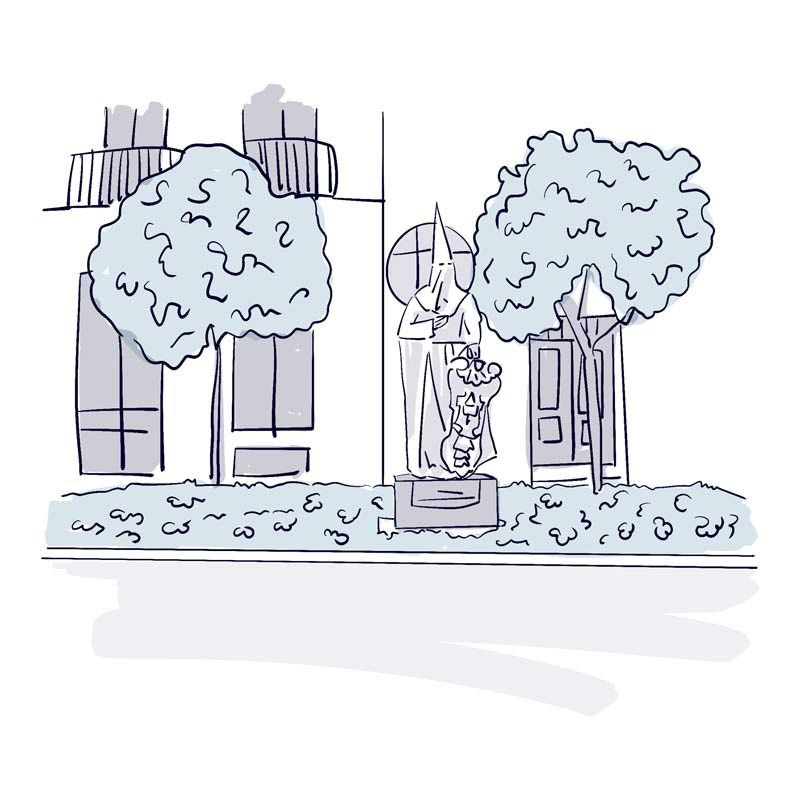
One of the most recent monuments of Úbeda pays tribute to the Semana Santa, Holy Week, deeply rooted in the tradition of the city. Installed in 2022, it celebrates these popular celebrations. The Úbeda audio-guided tour stops here, with respect, to evoke this living tradition.
Installed in 2022, the Monument to the Semana Santa is one of the most recent of Úbeda. It pays tribute to the city's Holy Week, a deeply respected tradition, marked by its processions and the fervour of the inhabitants. This monument celebrates the importance of these celebrations in the identity of Úbeda and the intangible heritage of Andalusia.
Here you observe this recent monument, a tribute to the Holy Week of Úbeda and its processions. It invites you to discover the importance of this tradition in the life of the city. It is a stop to understand the fervour and the intangible heritage of Úbeda, during a walk in the centre.
The Monument to the Semana Santa lies in Úbeda, reachable on foot. It is an open-air work, freely visible at all times, with no ticket office. On the level, it is discovered during a walk in the centre. Holy Week itself gives rise to processions, generally in spring, in respect of the tradition.
In 2022; it is one of the most recent monuments of the city, in tribute to the Holy Week of Úbeda.
The Holy Week of Úbeda, a tradition deeply rooted in the city, marked by its processions and the fervour of the inhabitants.
Aucun avis pour le moment
