





Walk
Suspended between Sky and Peaks
Ronda, Spain
Walk
Suspended between Sky and Peaks
Ronda, Spain
2.6 km
Distance
1h15
Durée
27
Audios
Loop
Parcours
Shutterstock
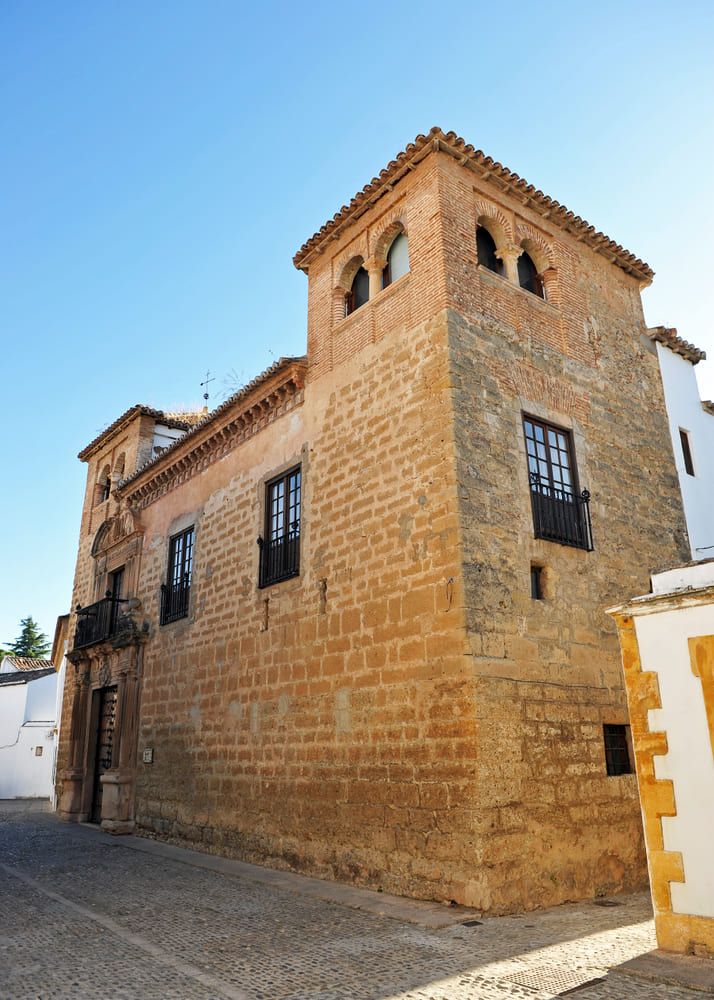
The Ronda audio-guided tour presents you with the Palacio de Mondragón, the most emblematic civil monument of the old town, on the square of the same name.
Of Nasrid origin, at the beginning of the fourteenth century, the palace was first the residence of the Muslim governors, before passing into the hands of Christian noble families after the conquest of 1485, which explains the mixture of Mudéjar, late Gothic, Renaissance and Baroque styles. Although largely remodelled in the sixteenth and seventeenth centuries, the façade preserves above its portal the coat of arms of the Mondragón family, which gave it its name. Inside, several patios testify to the Moorish and aristocratic influence, and the terraced gardens, inspired by the Generalife, offer magnificent views over the Tajo gorges. The palace today houses the municipal museum of Ronda, which retraces the history of the region from prehistory to the modern era.
The Palacio de Mondragón charms with its Baroque façade, its Moorish-inspired patios and its terraced gardens open onto the gorges. Housing the municipal museum, it sets ancient history and Andalusian palatial art in dialogue. It is a historic and cultural heart of the old town, not to be missed.
The Palacio de Mondragón is on the Plaza de Mondragón, in the old town of Ronda. It houses the municipal museum, which can be visited according to hours to be checked on site; access is generally subject to a charge.
It was the residence of the Muslim governors in the Nasrid era, before passing to the Christian nobles after 1485.
The municipal museum of Ronda, which retraces the history of the region from prehistory to the modern era.
Aucun avis pour le moment
