





Walk
The beautiful Catalan capital
Barcelona, Spain
Walk
The beautiful Catalan capital
Barcelona, Spain
6.4 km
Distance
2h35
Durée
27
Audios
Loop
Parcours
Shutterstock
The Barcelona audio-guided tour has you discover, at the street corner, the small Plaça de la Verònica. It takes its name from Veronica who, according to the Gospels, is said to have wiped the face of Jesus during the way of the cross, leaving the imprint on her veil.
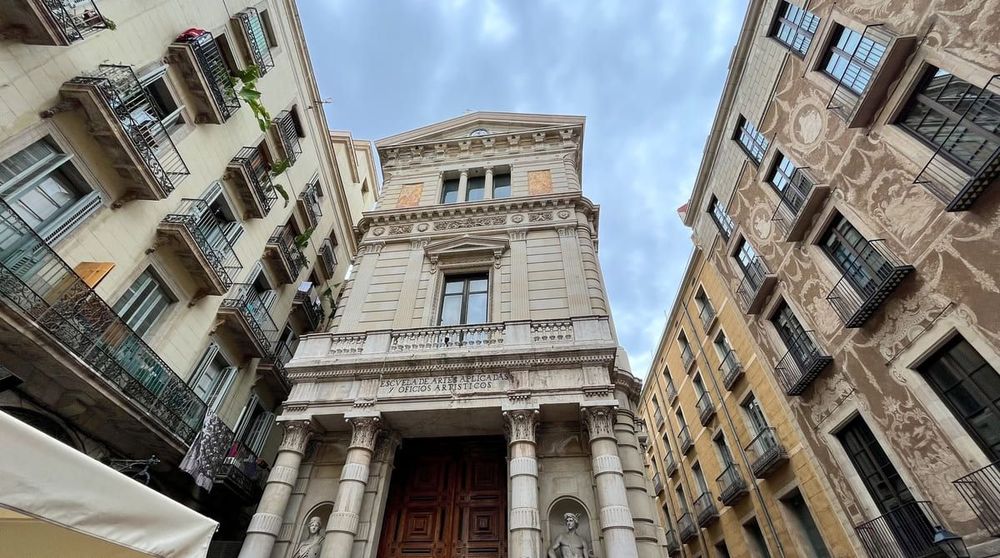
On the square stands the Borsi, a narrow building of light stone adorned with columns, Greek-inspired statues and a balustrade. Built in the 1880s, it was the seat of the Casino Mercantil, an association of bankers and businessmen that operated alongside the official stock exchange, until the civil war. In 1940, the authorities of the new Franco government did not authorise its reopening, and the building then housed the school of fine arts.
Discreet and a little out of the way, the square offers a quiet pause in the heart of the lively district. The façade of the Borsi, with its columns and statues, testifies to the affluent architecture of the late nineteenth century and to the commercial and political history of Barcelona. It is a charming stop, to be appreciated by looking up at the sculpted details.
Plaça de la Verònica is in the old town of Barcelona, near La Rambla. It is a public space freely accessible at all hours and on the level. The façade of the Borsi can be contemplated from the square, along the walk.
From Saint Veronica who, according to the Gospels, is said to have wiped the face of Jesus on the way of the cross.
An 1880s building that was the seat of the Casino Mercantil, an association of bankers and businessmen, then the school of fine arts.
Aucun avis pour le moment
