





Walk
Through Gaudí’s eyes
Barcelona, Spain
Walk
Through Gaudí’s eyes
Barcelona, Spain
10.5 km
Distance
6h00
Durée
23
Audios
Loop
Parcours
Shutterstock
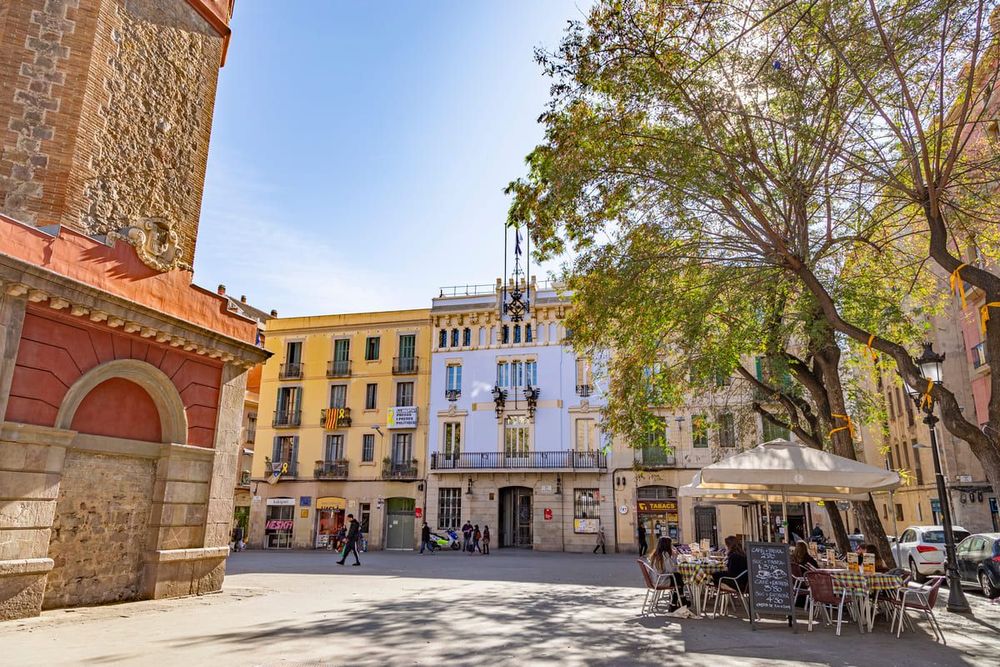
The Barcelona audio-guided tour leads you to the heart of the Gracia district, to Plaça de la Vila de Gracia. With its village soul, this district offers a striking contrast with the rigorous grid of the neighbouring Eixample.
Gracia was a town in its own right until its annexation to Barcelona in 1897. The district developed from 1626 around the Carmelite convent of Our Lady of Grace, which gave it its name. When a convent settles, houses are built and life follows: Gracia grew according to the codes of a village, with its lively squares and its human-scale streets, far from Cerda's rigid plan.
Plaça de la Vila de Gracia, dominated by the clock tower, is one of the hearts of the district's social life, with its terraces and convivial atmosphere. All around, the squares and lanes of Gracia, such as Plaça del Sol, invite strolling. The district is renowned for its bohemian atmosphere, its independent shops and its popular festivals.
Plaça de la Vila de Gracia can be seen freely, in the open air, in the heart of the Gracia district of Barcelona. It is accessible at any time and served by the metro. Cafes, restaurants and independent shops line the square and the neighbouring streets, following their own hours. The district is particularly lively in the evening and during the Gracia festivals.
Because it was an independent town until 1897, developed according to the codes of a village and not of the Cerda plan.
From the Carmelite convent of Our Lady of Grace, around which the district developed from 1626.
Aucun avis pour le moment
