





Walk
Through Gaudí’s eyes
Barcelona, Spain
Walk
Through Gaudí’s eyes
Barcelona, Spain
10.5 km
Distance
6h00
Durée
23
Audios
Loop
Parcours
Shutterstock
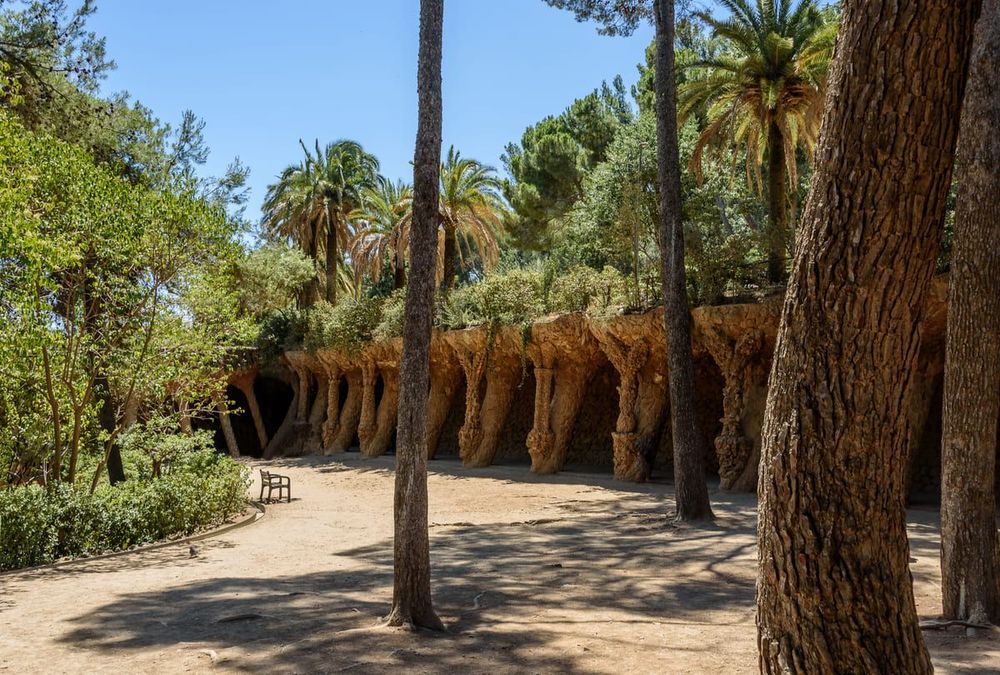
The Barcelona audio-guided tour leads you, in Park Güell, under the Washerwoman's Portico, the Portic de la Bugadera. This gallery with slanting columns, which follows the slope of the ground, illustrates Gaudi's genius for blending architecture into nature.
To cross the park, Gaudi built a whole series of viaducts wide enough for the passage of carriages, with, below, arcaded paths for pedestrians. This portico takes the form of a Romanesque cloister supported by rows of double columns: vertical outer columns shaped like palm trees, and slanting inner columns, following the natural slope of the ground, which create a striking wave effect.
The portico's name comes from a figure sculpted in a column, evoking a washerwoman carrying her basket on her head. The wrought-iron gate leading to it was compared by Dali to calves' livers. The first example of an organic architecture blended into the landscape, the portico illustrates how Gaudi drew on the forms of nature to build.
The Washerwoman's Portico is in the monumental zone of Park Güell, in Barcelona. Access to this zone is ticketed and limited, with hours that vary by season; it is best to plan ahead. The portico, shaded, offers a refreshing stop during the walk through the park.
From a figure sculpted in a column, depicting a washerwoman carrying her basket on her head.
The inner columns are slanted, following the slope of the ground, and create a wave effect that blends the structure into the landscape.
Aucun avis pour le moment
