





Walk
The Little Land of the Mediterranean
Valencia, Spain
Walk
The Little Land of the Mediterranean
Valencia, Spain
4.7 km
Distance
2h00
Durée
27
Audios
Loop
Parcours
Shutterstock
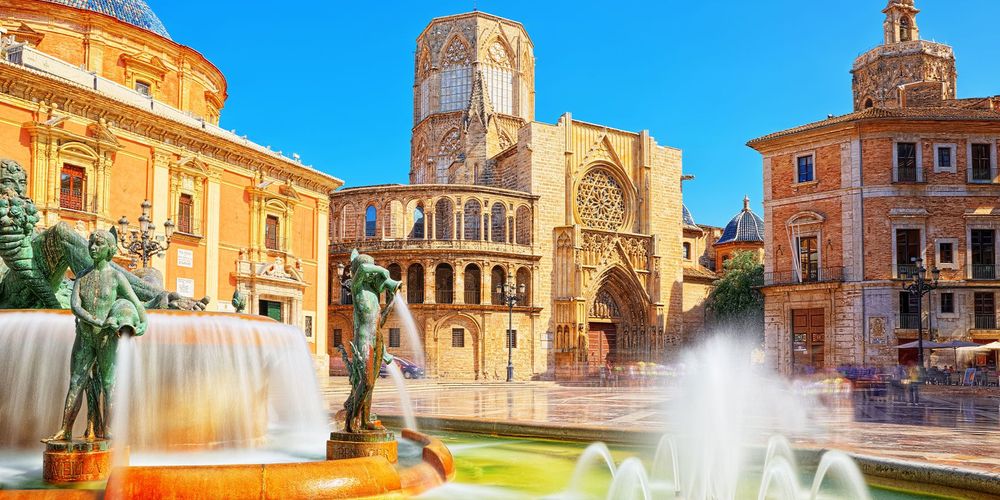
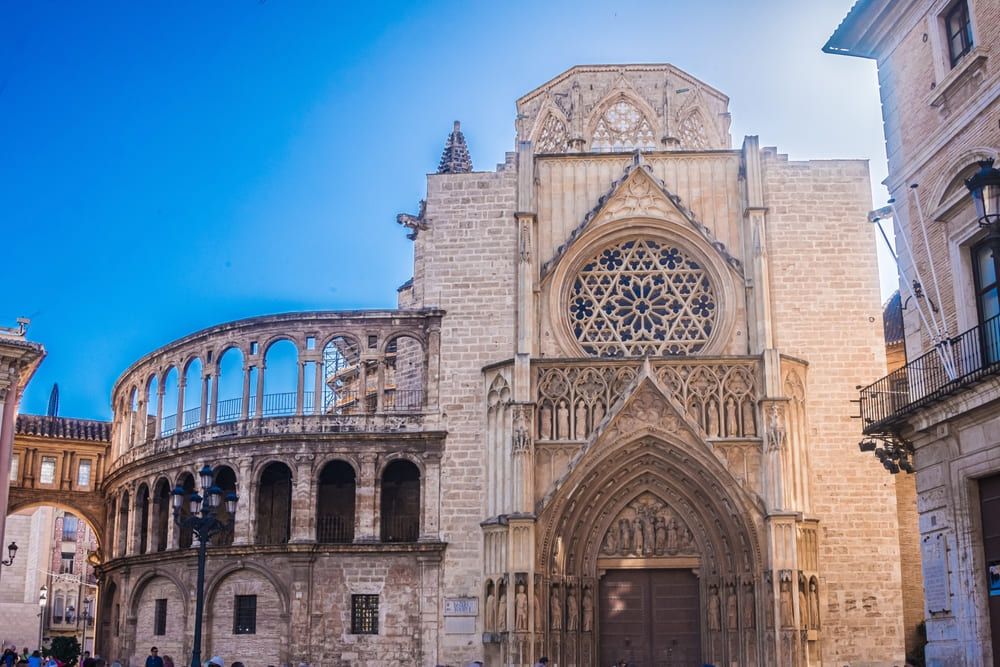
The Cathedral of Saint Mary of Valencia is the great sanctuary of the town, famous for sheltering the Holy Chalice. The Valencia audio-guided tour stops here, with respect, to evoke this masterpiece mixing the styles, dominated by its tower, the Micalet.
The Cathedral of Saint Mary is the main religious building of Valencia and the historic heart of the town. Its construction began in the thirteenth century, after the Christian reconquest, on the location of the old great mosque, itself built on a Roman temple. From this long construction and its reworkings results a fascinating mixture of styles: Gothic for the most part, but also Romanesque, baroque and neoclassical, which come together on its portals and in its chapels. The cathedral is world-famous for sheltering, in one of its chapels, the Holy Chalice, a venerated stone cup that tradition identifies with the Grail, the chalice of the Last Supper. Its most visible emblem is the Micalet, or Miguelete, its high octagonal Gothic bell tower, which you can climb for a panoramic view over Valencia. Inside, the cathedral also shelters fine works of art and frescoes. A major sanctuary and a jewel of the heritage, the Cathedral of Saint Mary of Valencia is discovered with respect.
You admire, with respect, the great sanctuary of Valencia, built from the thirteenth century on the old great mosque, a fascinating mixture of Gothic, Romanesque, baroque and neoclassical, famous for sheltering the Holy Chalice venerated as the Grail, dominated by the Micalet, its high octagonal tower that you can climb for a panorama over the town. The Cathedral of Saint Mary is the heart of Valencia. It is a major stop to be discovered with respect.
The Cathedral of Saint Mary lies in the heart of the old town of Valencia, on the Plaza de la Reina, reachable on foot. A place of worship, it can be visited with respect for services; access to the cathedral and the climb of the Micalet follow their own hours and conditions, which vary. It is best to check them before coming and to respect the sacred character of the place.
Because it shelters the Holy Chalice, a venerated stone cup that tradition identifies with the Grail, the chalice of the Last Supper; built from the thirteenth century on the old great mosque, it mixes Gothic, Romanesque and baroque, and is dominated by the Micalet, its high octagonal tower.
In the heart of the old town of Valencia, on the Plaza de la Reina, in Spain.
Aucun avis pour le moment
