





Walk
Short tour - The beautiful Catalan capital
Barcelona, Spain
Walk
Short tour - The beautiful Catalan capital
Barcelona, Spain
3.3 km
Distance
1h20
Durée
18
Audios
Loop
Parcours
Shutterstock
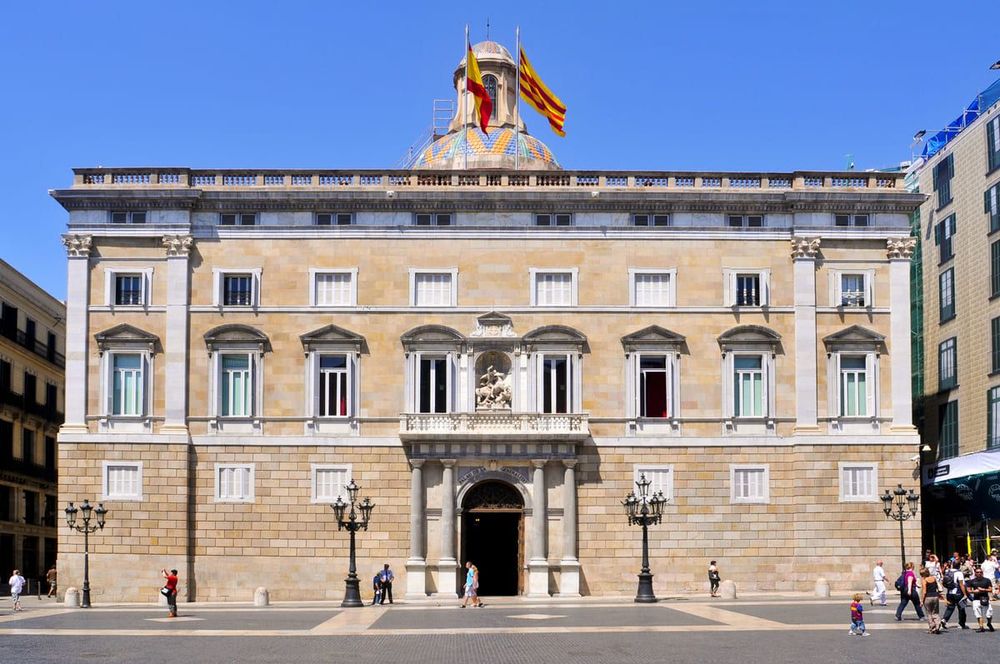
The Barcelona audio-guided tour takes you to Plaça de Sant Jaume, at the crossroads of the two main Roman roads of ancient Barcino. It was here that the Roman forum and the temple of Augustus stood, and it is today the political heart of the city.
You can still see four columns of the temple of Augustus, preserved in the neighbouring Carrer del Paradís. The square owes its name to the former church of Sant Jaume, demolished in 1823 to clear the space and install the new political heart of the city. It was then called for a time Constitution Square. Two major buildings face each other there: the Palau de la Generalitat, seat of the autonomous government of Catalonia, and the Ajuntament, the city hall of Barcelona.
The two palaces, the Palau de la Generalitat and the Ajuntament, are as imposing as each other and listed as properties of national interest. The square is the scene of the great gatherings of Catalan life, traditional festivals, demonstrations and celebrations. A stone's throw away, the columns of the temple of Augustus recall the antiquity of the place. It is a major thoroughfare of the Gothic quarter.
Plaça de Sant Jaume is in the heart of the Gothic quarter of Barcelona. It is a public space freely accessible at all hours and on the level. The palaces that frame it, seats of institutions, can only be visited on certain occasions; their façades can be contemplated from the square.
The Palau de la Generalitat, seat of the government of Catalonia, and the Ajuntament, city hall of Barcelona, both listed as properties of national interest.
The forum and the temple of Augustus stood there; four columns of the temple are preserved in the neighbouring Carrer del Paradís.
Aucun avis pour le moment
