





Walk
The Little Land of the Mediterranean
Valencia, Spain
Walk
The Little Land of the Mediterranean
Valencia, Spain
4.7 km
Distance
2h00
Durée
27
Audios
Loop
Parcours
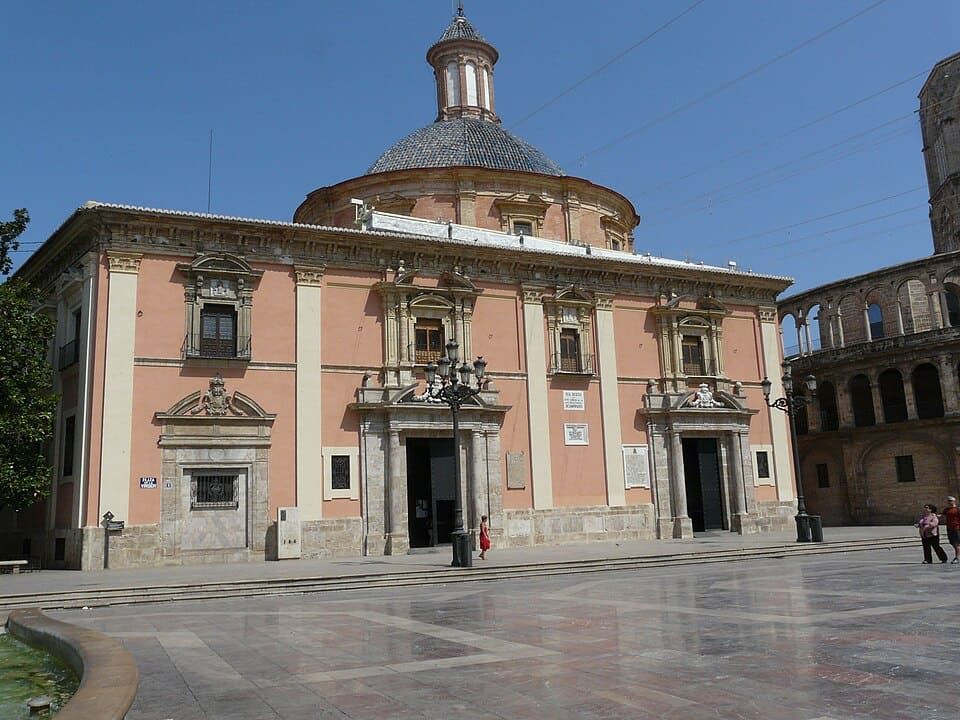
©Pere López - CC BY-SA 3.0. <https://creativecommons.org/licenses/by-sa/3.0/deed.fr>via Wikipedia Commons
The Basilica of the Virgin of the Forsaken is the sanctuary of the patron saint of Valencia, near the cathedral. The Valencia audio-guided tour stops here, with respect, to evoke this baroque place of devotion, deeply dear to the heart of the people of Valencia.
The Basilica of the Virgin of the Forsaken, the Basílica de la Virgen de los Desamparados, is one of the most important places of worship and the dearest to the heart of the people of Valencia. It is dedicated to the Virgin of the Forsaken, patron saint of the town and the region, object of a deep popular devotion. Built in the seventeenth century in a fine baroque style, the basilica stands out by its façade and above all by its great oval dome, richly decorated with frescoes inside. It shelters the venerated image of the Virgin, which is the object of pilgrimages and great celebrations, in particular during her annual feast, one of the most moving and most followed moments of the year in Valencia, when the crowd gathers to honour its patron saint. Located just next to the cathedral, on a square where you also discover Roman vestiges, the basilica forms with it the religious heart of the town. A major sanctuary and a place of popular fervour, the Basilica of the Virgin of the Forsaken is discovered with respect.
You admire, with respect, the seventeenth-century baroque sanctuary dedicated to the Virgin of the Forsaken, patron saint of Valencia, with a great oval dome adorned with frescoes, which shelters the venerated image of the Virgin, object of a deep devotion and great celebrations, near the cathedral, on a square with Roman vestiges. The Basilica of the Virgin of the Forsaken is a place of fervour of Valencia. It is a stop to be discovered with respect.
The Basilica of the Virgin of the Forsaken lies just next to the cathedral, in the heart of the old town of Valencia, reachable on foot. A place of worship and pilgrimage, it can be visited with respect for services; entry is generally free, but hours vary. It is best to check them before coming and to respect the sacred character of the place.
To the Virgin of the Forsaken, patron saint of Valencia and its region, object of a deep popular devotion; this seventeenth-century baroque sanctuary, with a great oval dome adorned with frescoes, shelters her venerated image and hosts great celebrations.
Just next to the cathedral, in the heart of the old town of Valencia, in Spain.
Aucun avis pour le moment
