





Walk
Long live the Golden City !
Salamanca, Spain
Walk
Long live the Golden City !
Salamanca, Spain
3.4 km
Distance
1h20
Durée
22
Audios
Loop
Parcours
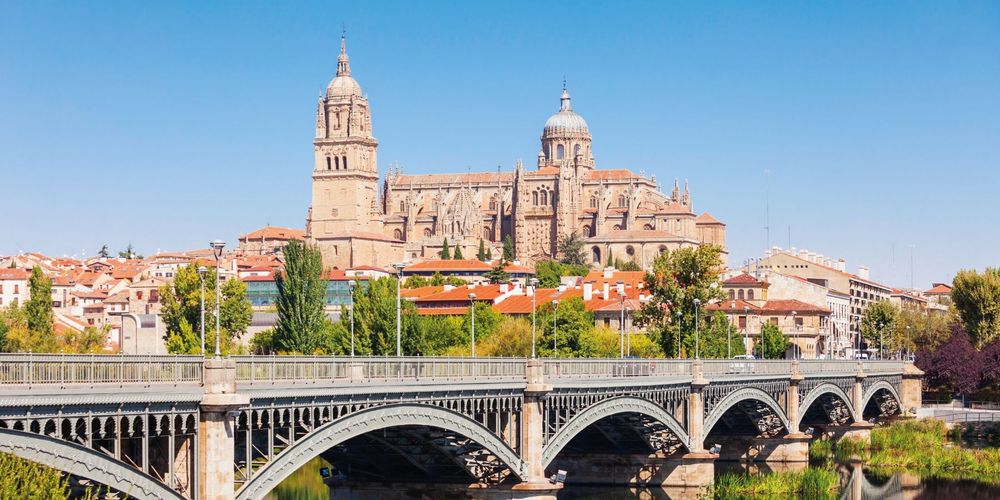
The New Cathedral of Salamanca is an imposing Gothic and baroque building, adjoining the old cathedral. The Salamanca audio-guided tour stops here, with respect, to evoke this major sanctuary, famous for its sculptures and its famous astronaut.
Built between the sixteenth and the eighteenth century, the New Cathedral of Salamanca is one of the last great Gothic cathedrals of Spain, enriched with baroque elements. Its richly sculpted façade and its high tower dominate the city. During a restoration of the end of the twentieth century, the stonemasons slipped onto one of the portals some modern figures, including an astronaut, become a famous detail. It forms with the old cathedral a unique ensemble.
You admire the richly sculpted façade, the high tower, the Gothic and baroque interior and the famous astronaut hidden among the sculptures of a portal, in an atmosphere of contemplation. The New Cathedral is one of the last great Gothic cathedrals of Spain. It is a major stop to be discovered with respect.
The New Cathedral lies in the heart of the historic centre of Salamanca, adjoining the old cathedral, reachable on foot. A place of worship, the visit may have a fee and follows its own hours, which vary. It is best to check the arrangements before coming and to respect the sacred character of the place.
It was added by the stonemasons during a restoration of the end of the twentieth century, on one of the portals, and has become a famous detail of the building.
In the heart of the historic centre of Salamanca, adjoining the old cathedral.
Aucun avis pour le moment
