






Walk
A gem by the Tagus River
Toledo, Spain
Walk
A gem by the Tagus River
Toledo, Spain
5.3 km
Distance
2h10
Durée
25
Audios
Loop
Parcours
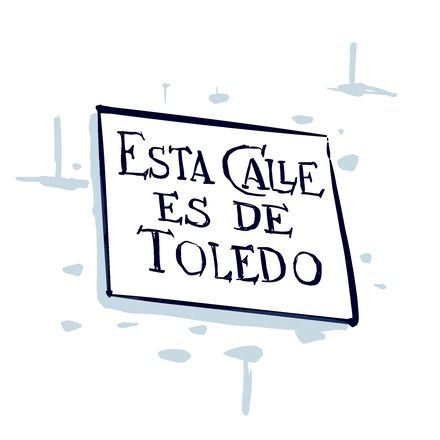
The Toledo audio-guided tour tells you, before the Church of Saint Vincent, the singular story of the "stolen streets" of the city and their legends.
Along the streets of Toledo, one glimpses small ceramic plaques bearing the mention "Esta calle es de Toledo", this street belongs to Toledo. Their origin goes back to 1561, when the capital was transferred to Madrid: the nobles followed the power and left the city, leaving behind them vast empty dwellings. The convents, usually on the outskirts, bought these properties, and Toledo became the city of convents. These extended to the neighbouring houses and ended up appropriating portions of public space, like the lanes separating two buildings. The gates that still close some of these so-called "stolen" lanes testify to this practice become common.
The stolen streets of Toledo invite one to observe the lanes closed by gates and the ceramic plaques that mark them out. This urban curiosity tells a little-known page of the history of the city, when the convents profoundly transformed its fabric. It is an unusual and instructive stop, to be spotted along the walk in the historic centre.
The stolen streets are discovered along the lanes of the historic centre of Toledo, notably near the Church of Saint Vincent. They can be walked freely on foot at all hours; the plaques "Esta calle es de Toledo" signal some of them.
They recall that the lane belongs to the city, a legacy of the time when the convents appropriated public space.
After the transfer of the capital to Madrid in 1561, the nobles left and the convents bought back their empty dwellings.
Aucun avis pour le moment
