





Walk
Discovering Stockholm, island by island
Stockholm, Sweden
Walk
Discovering Stockholm, island by island
Stockholm, Sweden
5.5 km
Distance
2h20
Durée
26
Audios
Loop
Parcours
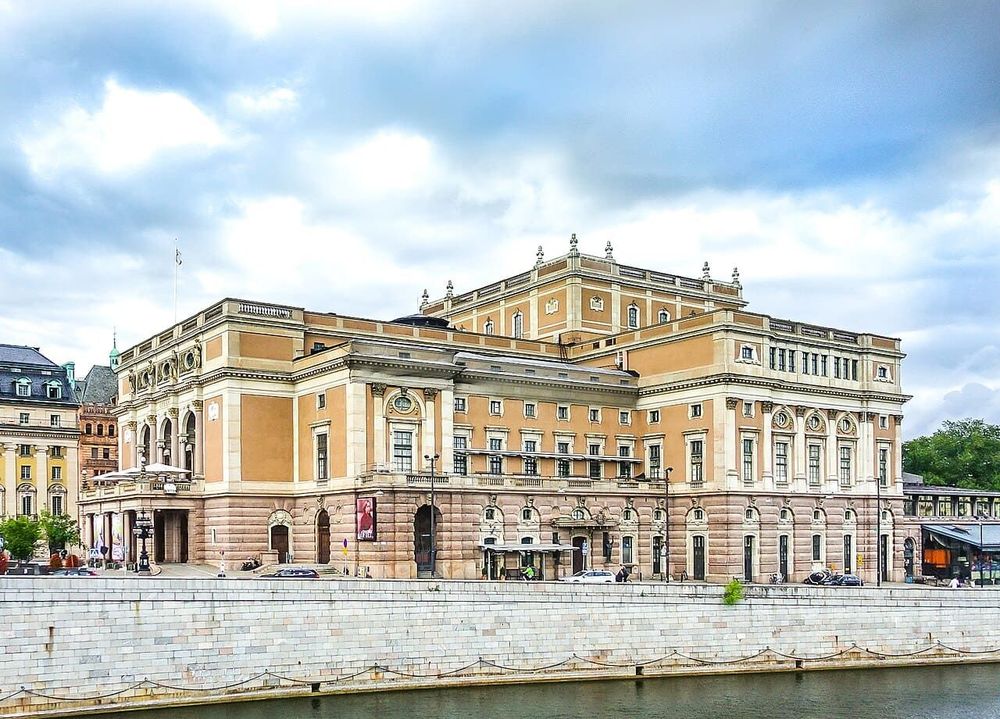
©Frankie Fouganthin CC BY-SA 4.0. <https://creativecommons.org/licenses/by-sa/3.0/deed.fr>via Wikipedia Commons
The Stockholm audio-guided tour leads you before the Royal Opera, the national stage for opera and ballet in Sweden. A temple of song and dance, this building with a heavy past stands in the centre of the city, facing the Royal Palace.
The first company of the Royal Opera was founded in 1773 by King Gustav III of Sweden, a great patron of the arts. But the sovereign who gave life to this institution met his death there: he was the victim of an attack during a masked ball at the opera in 1792. This event lastingly marked the memory of the place and inspired many works, including a famous opera by Verdi.
The present Royal Opera building, in a neoclassical style, was inaugurated at the end of the 19th century. Its solemn facade and its richly decorated hall make it one of the great cultural venues of Stockholm. There you attend top-level opera and ballet performances, in a setting charged with history and prestige.
The Royal Opera is in the centre of the city, facing the Royal Palace. The facade can be seen freely; access to the interior is in the context of performances and certain guided tours, whose programming, hours and prices vary. It is best to check the programme in advance.
King Gustav III of Sweden, in 1773; he was the victim of an attack during a masked ball at the opera in 1792.
Top-level opera and ballet performances, in a neoclassical building with a richly decorated hall.
Aucun avis pour le moment
