





Walk
The cultural soul of Switzerland
Basel, Switzerland
Walk
The cultural soul of Switzerland
Basel, Switzerland
3.2 km
Distance
1h30
Durée
25
Audios
Loop
Parcours
Shutterstock
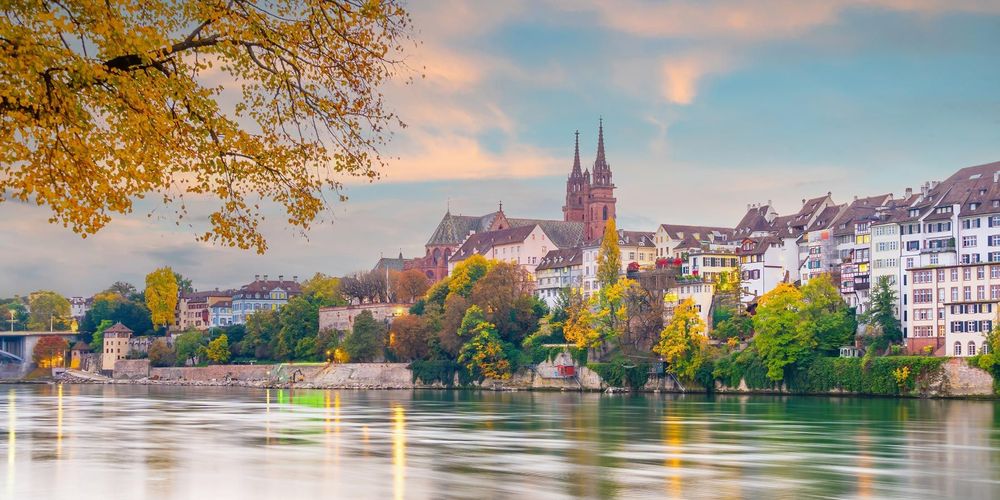
As you walk along Freie Strasse, you’re actually moving through several centuries of history. Basel’s story goes back to Roman times, when soldiers and merchants settled on the hill overlooking the Rhine to control this important trade route. After the fall of the Roman Empire, the city continued to grow around the river, which became a key commercial corridor linking northern and southern Europe.
During the Middle Ages, Basel gradually developed into an important religious and economic center, organized around the cathedral, the markets and the craft guilds. In 1356, a powerful earthquake destroyed much of the city. The reconstruction that followed shaped the old town you can still see today, with its narrow streets and historic squares.
In the fifteenth century, Basel experienced a real intellectual expansion. The Council of Basel, a major religious gathering held to discuss reforms, conflicts and the organization of the Church, brought scholars and clergy from across Europe. Then, in 1460, the founding of the university strengthened this momentum.
Printers, humanists and artists settled here, turning the city into an important cultural center. In 1501, Basel joined the Swiss Confederation, marking a major political turning point. A few years later, the Protestant Reformation deeply transformed religious and social life, reshaping the role of churches and institutions.
Over the centuries, trade, industry and later the chemical and pharmaceutical sectors all contributed to the city’s prosperity. Today, as you walk along Freie Strasse, Basel’s main shopping street for centuries, you are following a route that connects the medieval past, the city of the humanists and the modern city, shaped by culture and innovation.
Aucun avis pour le moment
