





Walk
The Bear Pit
Bern, Switzerland
Walk
The Bear Pit
Bern, Switzerland
4.5 km
Distance
1h50
Durée
24
Audios
Loop
Parcours
Shutterstock
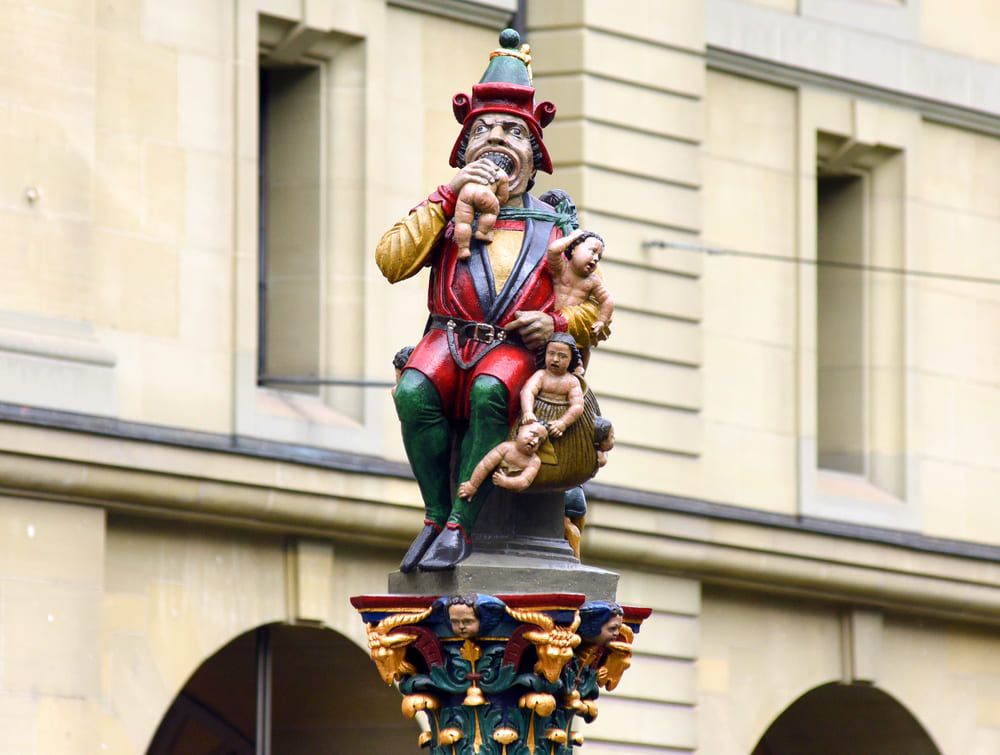
A stop on the Berne audio-guided tour, the Ogre fountain is one of the most famous in the city. Its German name literally translates as the fountain of the devourer of children, which its statue illustrates unambiguously.
It shows an ogre swallowing a naked child, while others await their fate around him, some sticking out of his sack. Dating from the sixteenth century, this fountain is surrounded by many interpretations. Several meanings are attributed to it, some controversial; historians have not established its exact origin.
Beyond its disturbing appearance, the Ogre fountain is a remarkable testimony of the Bernese Renaissance fountain art, listed as a Swiss cultural property of national importance. Observe its colourful details and its singular silhouette, one of the strong images of the old town.
The Ogre fountain is in Berne's old town, on the Kornhausplatz. Freely accessible, it can be seen at any time.
An ogre devouring children; its exact origin and meaning remain debated by historians.
From the sixteenth century; it is listed as a Swiss cultural property of national importance.
Aucun avis pour le moment
