



Walk
Behind the Scenes of Liberty
Boston, Estados Unidos
Walk
Behind the Scenes of Liberty
Boston, Estados Unidos
Distance
4.4 kmDurée
1h50Audios
27Parcours
Loop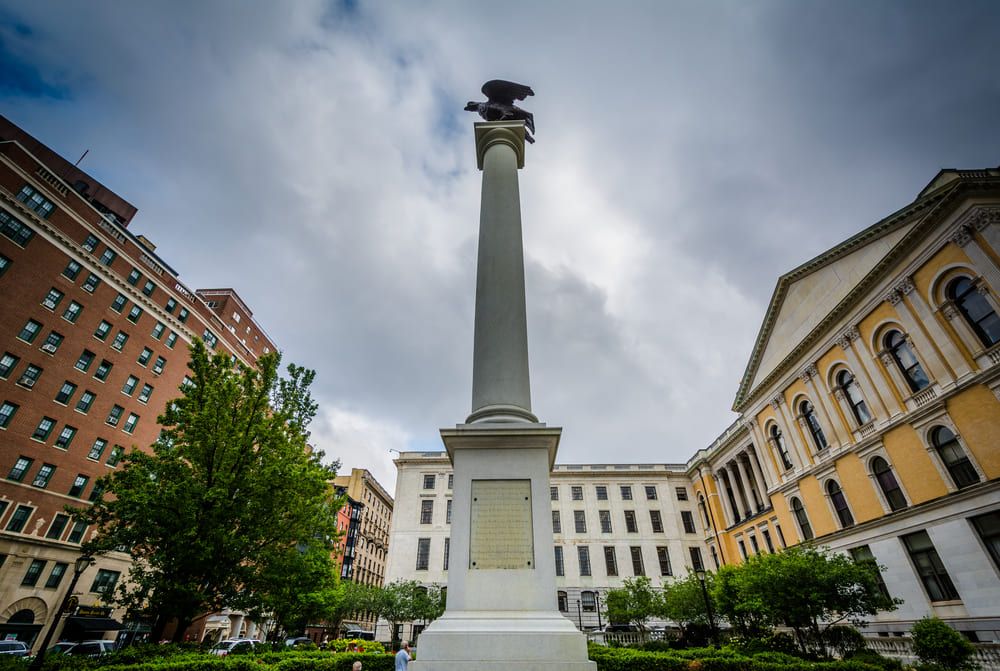
Shutterstock
If the gates are open, step through the wrought-iron entrance to Ashburton Park and take a moment to explore its memorials. The most recognisable is the Beacon Hill Monument, standing proudly before you with its gilded eagle perched on top. The monument commemorates a much older landmark. In 1634, the first settlers erected a towering warning mast on the summit of the hill—a beacon—with a suspended tar kettle that could be set alight if an attack threatened the colony. That emergency signal gave the entire Beacon Hill neighbourhood, stretching west from here, the name it still bears today. The site was considered so strategically important that, during the Siege of Boston in 1775, British troops established an observation fort on the hill. After the city's liberation, the fort was quickly recaptured and restored by the Bostonians. The original wooden mast was finally brought down in a violent storm in 1789, and the monument you see today was erected in 1791 to commemorate the end of the American Revolutionary War. If all this talk of hills seems a little puzzling while you're standing here, there's a good reason. In 1811, as Boston expanded, the city decided to shave almost 60 feet (18 metres) off the top of Beacon Hill. The earth removed from the hill was used as fill to reclaim the surrounding marshland for new development. The original column was dismantled, and the gilded eagle was later positioned to mark, symbolically, the former height of the vanished hill. So, thanks to 19th-century city planners, you can enjoy the view without having to climb those extra 60 feet.
Aucun avis pour le moment
