



Walk
Behind the Scenes of Liberty
Boston, Estados Unidos
Walk
Behind the Scenes of Liberty
Boston, Estados Unidos
Distance
4.4 kmDurée
1h50Audios
27Parcours
Loop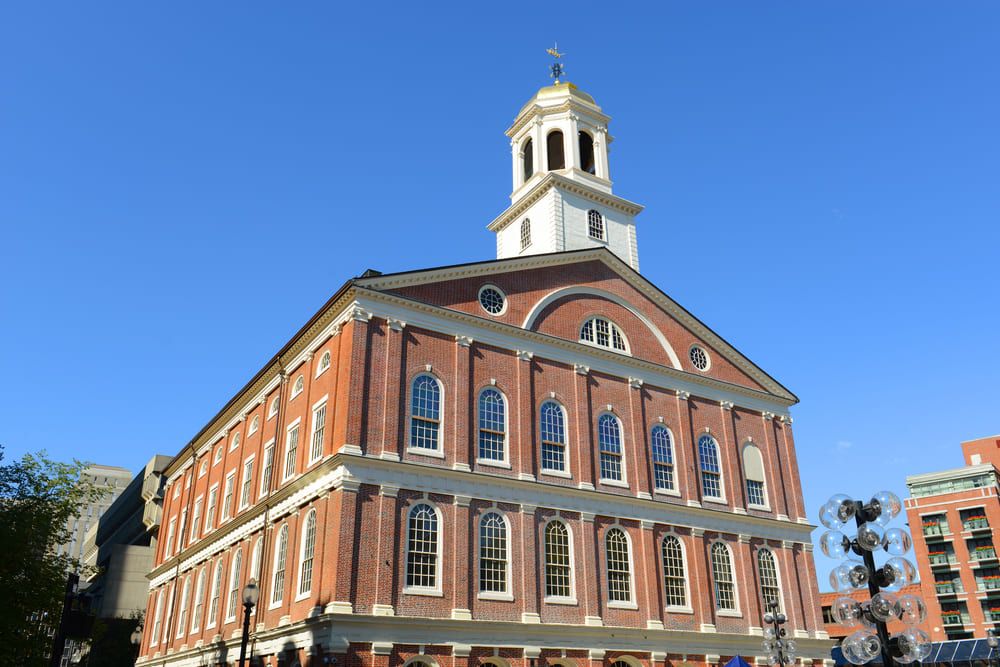
Shutterstock
Standing before you is the famous Faneuil Hall, often known as the “Cradle of Liberty.” The building was given to the city in 1742 by the wealthy merchant Peter Faneuil and originally combined a marketplace on the ground floor with a public meeting hall above. This was where the Sons of Liberty helped ignite the American Revolution by protesting British taxes on sugar, stamps and tea. Over the centuries, its platform remained a stronghold of free speech, hosting abolitionists campaigning against slavery, labour activists, and suffragists fighting for women’s right to vote. That civic tradition continues today on the second floor, where naturalisation ceremonies are held and hundreds of new immigrants take the oath each year to become American citizens. Now look up at the top of the cupola. The famous gilded grasshopper weathervane is a well-known Boston landmark—at least among the locals. According to legend, it was once used as a test to identify spies during the War of 1812, which lasted from 1812 to 1815. This second war against Britain put the sovereignty of the young United States to the test and fuelled widespread suspicion of possible British informants. Anyone suspected of treason might be asked what stood on top of Faneuil Hall, and a wrong answer immediately raised doubts. So now you know the secret, you’re ready to pass as a local. Still, the story of this place also deserves a more nuanced view. Peter Faneuil, its benefactor, built a significant part of his fortune through the slave trade—a reminder of the deep contradictions of colonial Boston, a city that would later become one of the leading centres of the abolitionist movement.
Aucun avis pour le moment
