



Walk
From Pacific Royalty to the Aloha Spirit
Honolulu, United States
Walk
From Pacific Royalty to the Aloha Spirit
Honolulu, United States
Distance
4.8 kmDurée
2h00Audios
25Parcours
Loop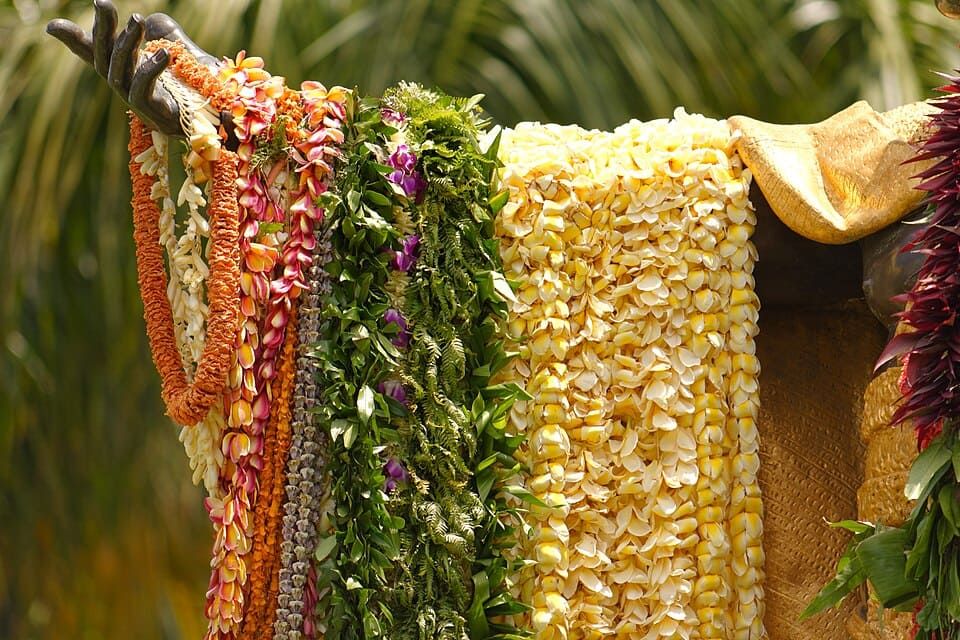
©Daniel Ramirez from Honolulu, USA, CC BY 2.0 <https://creativecommons.org/licenses/by/2.0/deed.fr>via Wikipedia Commons
You've probably seen Hawaii's colorful flower leis in movies, or perhaps even received one when you arrived at the airport. But there's much more to these garlands than the tourist souvenirs they might appear to be. In Hawaiian culture, a lei is a makana, a sacred gift that represents hospitality, respect, and Aloha. The tradition dates back to the first Polynesian voyagers, who made garlands from plants found on the islands and wore them during religious ceremonies, celebrations, and occasions honoring their chiefs. Giving someone a lei is like offering them a piece of your heart, and accepting one means welcoming a lasting bond with the person who gave it to you. With so much meaning attached to this simple gesture, it's no surprise that there are certain customs to follow. Most importantly, you should never refuse a lei. Turning one down is considered deeply insulting, as though you were rejecting the affection and kindness of the person offering it. You should also avoid removing it in front of the person who gave it to you. Even if the fragrance becomes overwhelming, it's more respectful to wait until you're out of sight before taking it off. Some traditions are particularly thoughtful. For example, when giving a lei to a pregnant woman, it's customary to choose an open garland rather than a closed one. A closed lei is believed to symbolize the umbilical cord wrapping around the baby, so an open lei, with both ends hanging freely down the front, is considered more appropriate. A flower crown worn in the hair is another option. As you walk along Maunakea Street, take a look through the storefronts, where artisans carefully weave these garlands by hand, one flower at a time. Their patience and skill are part of what makes each lei so special. And the customs don't end once the flowers begin to fade. In Hawaii, throwing a lei in the trash is considered disrespectful, because a gift given in the spirit of Aloha shouldn't be treated like ordinary waste. In the past, people would sometimes return their leis to the ocean, but this practice has changed to help protect marine life. Today, you're encouraged to carefully cut away the plastic string and return the flowers to the earth instead. You can bury them at the base of a tree, hang them from a branch, or allow the wind to carry them away. In this way, the flowers return to nature, completing the circle of life and honoring the gift that welcomed you to the islands.
Aucun avis pour le moment
