






Walk
From Pioneers to Casinos: The Story of Downtown
Las Vegas, United States
Walk
From Pioneers to Casinos: The Story of Downtown
Las Vegas, United States
2.2 km
Distance
1h00
Durée
14
Audios
Loop
Parcours
Shutterstock
During your visit to Las Vegas, you’ve probably discovered the story of the Strip and the first hotel-casinos that appeared there, turning the city into the world capital of gambling and entertainment. But do you know what Nevada was like before all of that? How the state itself was created, and how the gold rush helped shape its identity?
Let’s take a step back. Long before the neon lights, the casinos, and even before Las Vegas existed, Nevada was a land of dust, dry mountains, and precious metals. In the mid-nineteenth century, the American West was swept up in the gold rush.
Thousands of prospectors crossed the plains hoping to strike it rich. While California captured the world’s attention in 1849, the territory that would later become Nevada entered the spotlight about ten years later with a major discovery: the Comstock Lode, one of the largest silver and gold deposits ever found in the United States. Almost overnight, thousands of miners rushed into the Nevada mountains to dig for the silver and gold buried underground.
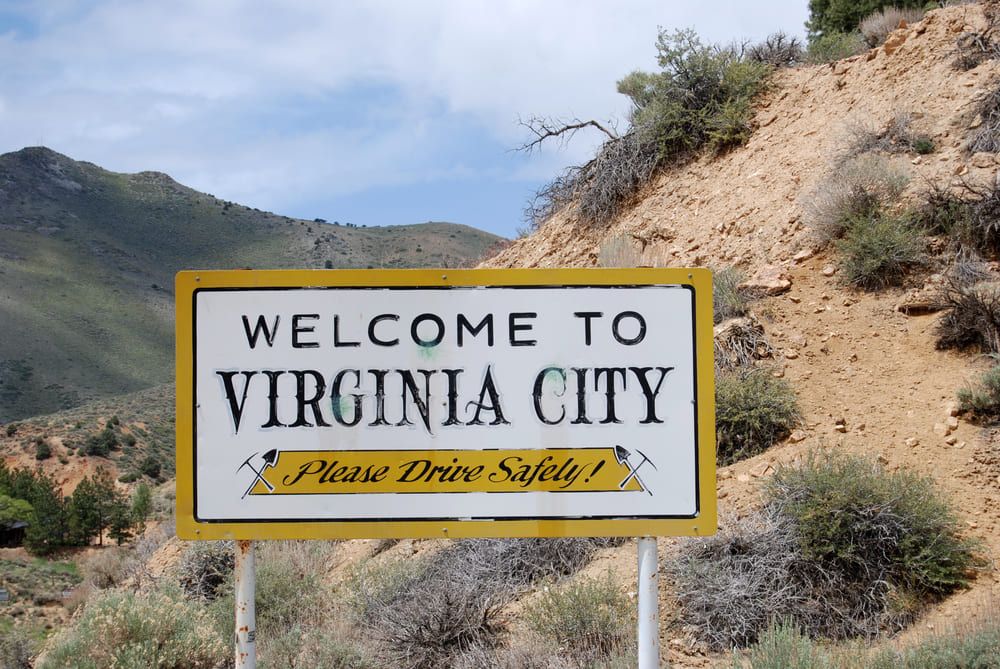
In just a few years, a rough mining camp grew into a real town, Virginia City, which quickly became one of the richest communities in the American West. Unlike the famous California gold rush, it was mainly silver that drew people here, although gold was also mined. New towns appeared across the desert, fortunes were made, and just as quickly lost.
The mining boom became so important that it helped lead to the official creation of the state of Nevada in 1864, right in the middle of the Civil War. The federal government wanted to secure these strategic mining resources, especially silver, to support the Union’s war effort. Nevada joined the Union with the nickname “The Silver State,” and the Comstock Lode alone produced hundreds of millions of dollars in gold and silver, an enormous sum for the time.
In Virginia City, theaters, banks, saloons, and hotels flourished. But like many boomtowns in the West, the excitement didn’t last forever. As the mineral veins slowly ran out, some mining towns declined and eventually turned into ghost towns.
This cycle of discovery, boom, and decline left a deep mark on Nevada’s history. Later, as mining slowed down, the state began looking for new ways to attract money and people. In 1931, Nevada legalized gambling.
Las Vegas then began a new kind of rush, no longer for gold, but for chance. And in many ways, that culture of risk, born in the mining camps, helped shape the unique identity of the state. Today, Virginia City still exists.
It has been preserved as a historic town, with wooden buildings, old boardwalks, and classic saloons. Visitors can explore mines, museums, and walk the same streets where some of the greatest mining fortunes in the country were made. However, the town is located more than six hours by road from Las Vegas, near Lake Tahoe.
In many ways, the spirit of the gold rush still lives on in Downtown Las Vegas, through hotel and casino names like Golden Nugget, Golden Gate, and Golden Goose. The word “golden” doesn’t only refer to the metal itself. It also recalls the era of prospectors, sudden fortunes, and the American dream in its Wild West form.
In the past, prospectors came to Nevada hoping to find a gold nugget that would change their lives. Today, visitors try their luck in a different way, not in the mines, but at blackjack tables and slot machines.
Aucun avis pour le moment
