




Walk
Behind the Scenes of Liberty
Boston, Estados Unidos
Walk
Behind the Scenes of Liberty
Boston, Estados Unidos
Distance
4.4 kmDurée
1h50Audios
27Parcours
Loop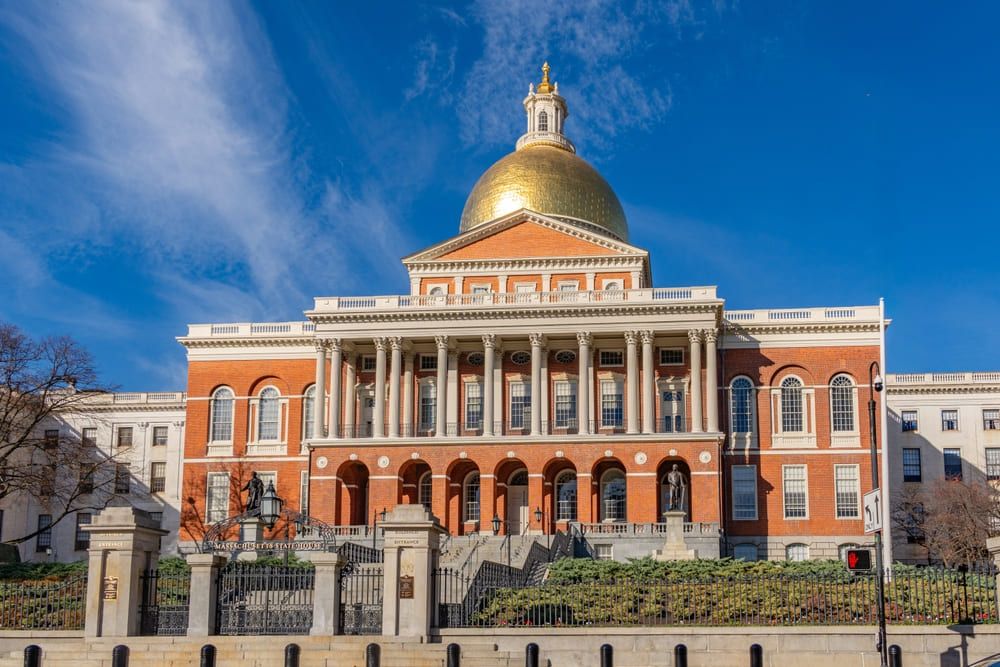
Shutterstock
You've arrived at the Massachusetts State House, one of Boston's most iconic landmarks. Designed by the celebrated architect Charles Bulfinch and completed in 1798, this architectural masterpiece proudly bears its famous golden crown. Yet believe it or not, this magnificent dome didn't always shine. When the building first opened, it was simply covered in humble wooden shingles. Persistent leaks soon emerged, threatening the structure, so in 1802, Paul Revere was called in to solve the problem by sheathing the dome in sturdy copper plates to make it watertight. It wasn't until much later, in 1874, that the dome received its elegant covering of 23-carat gold leaf. Even so, history forced it to give up its brilliance for a time. During the Second World War, fearing aerial bombardment, authorities took the drastic step of painting the entire dome dark grey so its reflections couldn't help guide enemy aircraft at night. Fortunately, its golden glow returned as soon as the war was over. Now, look right to the very top. What many people mistake for a pineapple is actually a gilded pine cone, a tribute to the vast forests that sustained the earliest New England settlers and made their survival and growth possible. There's another remarkable story just beneath your feet, too. This State House was built on what had once been the personal pasture of John Hancock, the first elected Governor of Massachusetts, forever remembered for the enormous signature he placed on the Declaration of Independence. Picture this very spot on July 4, 1795. To celebrate the laying of the building's cornerstone, a spectacular procession wound through the streets of Boston, led by Revolutionary heroes Samuel Adams and Paul Revere. Fifteen immaculate white horses pulled the procession, symbolising the fifteen states that made up the Union at that exact moment. Hidden beneath that cornerstone is a legendary time capsule still remaining there today and containing among other treasures, eleven historic coins, including an exceptionally rare 1652 silver Pine Tree Shilling. As you take in the facade, you'll notice three immense ceremonial doors at the top of the steps. Don't be surprised to find them closed. They remain shut most of the time, and are only opened on the rarest of occasions for ceremonies of the highest official importance. By tradition, they open to welcome a sitting President of the United States, a visiting foreign head of state, or the battle flags of regiments returning from war. Another important occasion, perhaps the most moving of all, is reserved for the Governor of Massachusetts. On the final day of a governor's term, they perform a solitary ritual known as "the Long Walk." Crossing the Great Hall alone, they pass through the ceremonial doors, opened just for that moment, descend the front steps before the curious eyes of passerbyes, and thus return to the life of an ordinary citizen. It's the one and only time during an entire term that this royal entrance is ever used as an exit. Perhaps you'll be lucky enough to witness it yourself.
Aucun avis pour le moment
