





Walk
The birth of a nation
Philadelphia, United States
Walk
The birth of a nation
Philadelphia, United States
4.7 km
Distance
2h00
Durée
24
Audios
Loop
Parcours
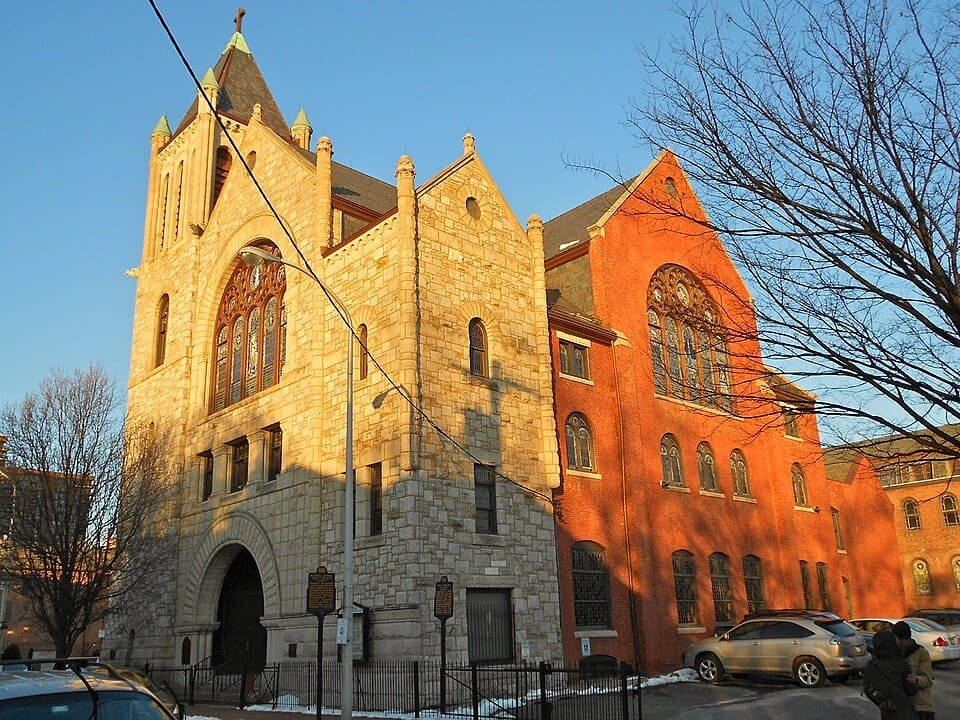
©Smallbones, CC0
A few meters in front of you, you’ll see a church that tells an essential part of African American history in Philadelphia: Mother Bethel A.M.E. Church. To understand its importance, we need to go back to the 17th century.
From that time on, people of African descent were present in the city, first through slavery, but also through free Black communities that gradually took shape. From the time of the American Revolution, Philadelphia became one of the main centers of Black urban life in the North. But this history is marked by a constant contradiction: the city represents ideals of freedom, while at the same time maintaining forms of exclusion, discrimination, and segregation.
In response, African Americans began building their own institutions very early on. In 1787, the creation of the Free African Society marked a turning point. Founded in part by Richard Allen and Absalom Jones, it allowed the community to organize independently.
From this movement came major institutions, including the church in front of you, the first of the African Methodist Episcopal tradition. These places were not only religious, they also became centers of education, solidarity, and political action. In the 19th century, Philadelphia was a major hub of abolitionism.
Figures like William Still played an active role in networks that helped people escape from slavery. But freedom remained fragile. In 1838, Black men in Pennsylvania lost the right to vote, which led to strong political mobilization.
After the Civil War, the struggle shifted toward equal rights. Octavius V. Catto embodies the issues of this period, fighting for voting rights and desegregation before being assassinated in 1871.
By the end of the 19th century, Philadelphia had become an important intellectual center, and in the 20th century, the Great Migration deeply transformed the city. Hundreds of thousands of African Americans from the South settled here, drawn by industrial jobs. The Black population grew significantly, leading to a vibrant cultural, religious, and political life, but also to new forms of urban segregation.
After World War II, Philadelphia became an active center of the civil rights movement, with boycotts, demonstrations, and local reforms. Over time, this led to greater political representation, symbolized by the election of Wilson Goode in 1984. Looking at Philadelphia today, it becomes clear that African American history is at the very core of American history, and that it has played a key role in pushing the country to live up to the ideals of freedom and equality it has claimed since its founding.
Aucun avis pour le moment
