



Walk
Behind the Scenes of Liberty
Boston, Estados Unidos
Walk
Behind the Scenes of Liberty
Boston, Estados Unidos
Distance
4.4 kmDurée
1h50Audios
27Parcours
Loop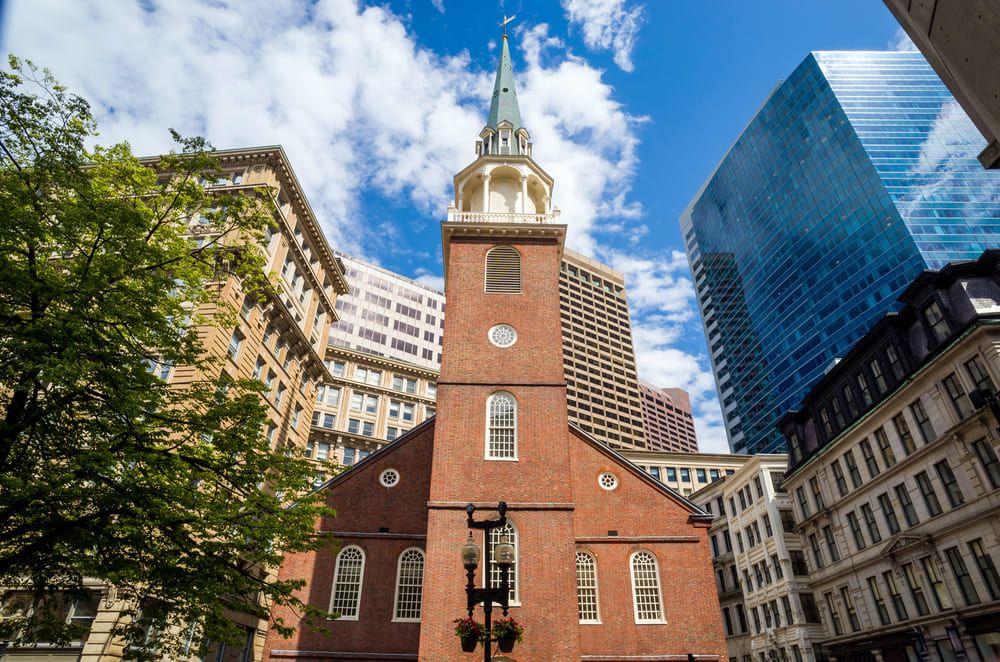
Shutterstock
Stop at the entrance to Milk Street. On your left stands the imposing Old South Meeting House. Built in 1729, this red-brick Puritan meeting house was the largest building in colonial Boston. Its size made it the natural gathering place for some of the city’s most important public debates. The congregation included remarkable figures such as Phillis Wheatley, the first published African American woman poet. And it was here, in an earlier building on this site, that one of Boston’s greatest native sons was baptised. To find his story, turn your back to the meeting house and look at the black façade across the street. Benjamin Franklin was born here in 1706, in a modest wooden house that was destroyed by fire in 1811. Look up at the second floor of the present building, and you will see his bust set into the façade. On the very day he was born, the infant Benjamin was carried across the street through the January cold to be urgently baptised in the original Old South Meeting House that stood on this site at the time. In fact, the building you see today came very close to disappearing altogether. The Old South Meeting House paid a heavy price for helping to ignite the American Revolution. During the Revolutionary War, British troops vandalised it in retaliation, tearing out the pews and turning the sanctuary into a stable and riding school for their cavalry. Then, in 1872, the building was marked for demolition so that its valuable materials could be sold. It was saved by a historic campaign led by twenty Boston women, with the support of prominent writers. Their efforts became one of the earliest major acts of historic preservation in the United States.
Aucun avis pour le moment
