



Walk
Behind the Scenes of Liberty
Boston, Estados Unidos
Walk
Behind the Scenes of Liberty
Boston, Estados Unidos
Distance
4.4 kmDurée
1h50Audios
27Parcours
Loop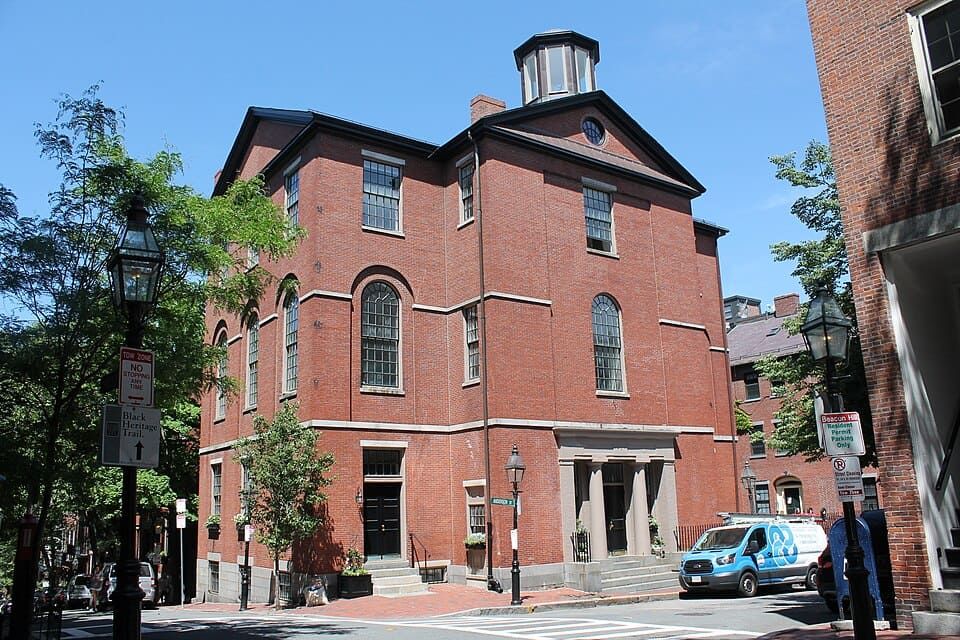
©NPS Photo, Public domain, via Wikimedia Commons
Originally designed to house one of the country’s first public high schools, the Phillips School has stood on the corner directly opposite you since 1824. From the outset, it was considered remarkably modern, with innovative heating furnaces and a rooftop cupola where students could observe the sky. In fact, the school may have been a little too far ahead of its time: in 1845, the building narrowly survived a serious fire caused by those very furnaces in the basement. Today, however, its greatest significance lies in the role it played in Boston’s historic move towards ending school segregation. Until 1855, Black children in the city were strictly confined to separate schools. After years of determined campaigning by local activists, Massachusetts became the first US state to outlaw segregation in public education, and the Phillips School was chosen as one of Boston’s first integrated schools. Tensions ran high on the first day of the 1855 school year. Newspapers reported that neighbours crowded around the windows of nearby houses, fearing that riots might break out. Fortunately, no trouble occurred, and the school’s principal, Mr Hovey, kept a close watch on proceedings. The school’s pioneering story did not end there. In the 1870s, it took another important step by hiring Elizabeth Smith, the daughter of a well-known local abolitionist. She became the first African American teacher to work in a Boston public school—one of several decisive advances towards greater equality.
Aucun avis pour le moment
