



Walk
Behind the Scenes of Liberty
Boston, Estados Unidos
Walk
Behind the Scenes of Liberty
Boston, Estados Unidos
Distance
4.4 kmDurée
1h50Audios
27Parcours
Loop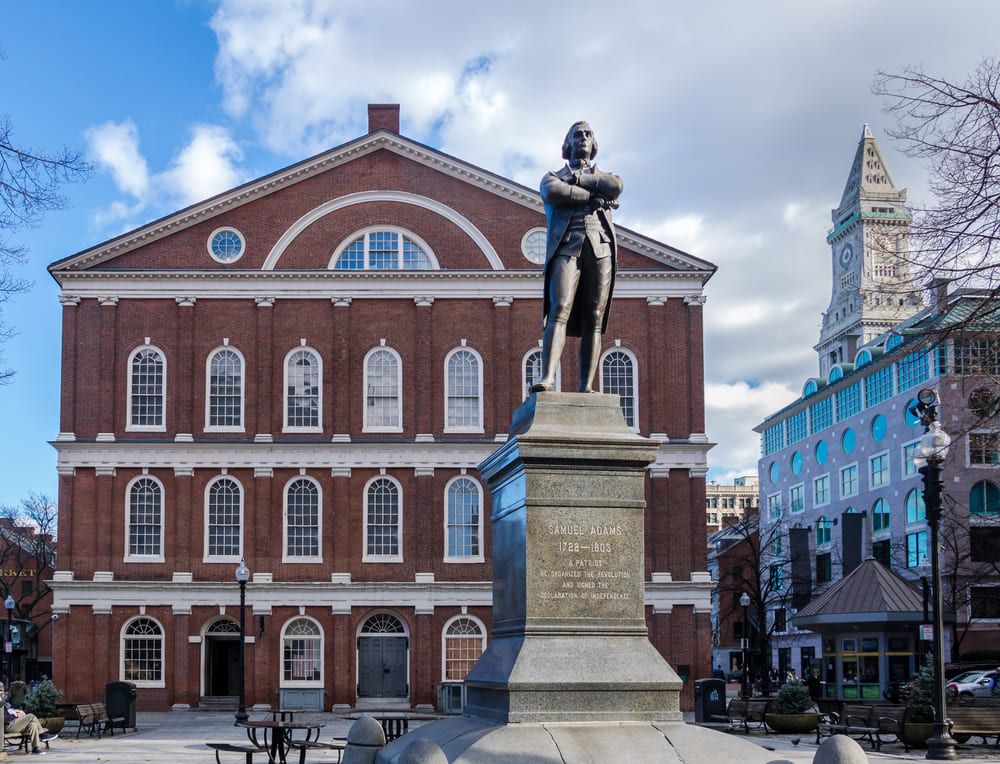
Shutterstock
At the heart of Faneuil Hall Square, to your right, stands the statue of Samuel Adams—the man the British considered the most dangerous rebel in America. And with good reason: he is remembered as one of the chief architects of the American Revolution in the 18th century. Educated at Boston Latin School and later at Harvard, Adams was a hopeless businessman. He went bankrupt and struggled to hold down a steady job. Politics, popular agitation and propaganda, however, were where his real genius lay. Far from being simply a gifted speaker, he was a formidable strategist who preferred to work behind the scenes. He wrote dozens of inflammatory pamphlets under pseudonyms such as “Vindex,” and in 1772 created the Committees of Correspondence—a kind of political internet for its time, allowing the colonies to exchange information in secret and coordinate their resistance to the Crown. After the Boston Massacre and the famous destruction of the tea, he openly celebrated the growing radicalism in the streets. The British Crown feared him so deeply that, after the first battles of the war, the King offered a pardon to every rebel except two: John Hancock and Samuel Adams, both marked for the gallows. In an ironic twist, his own cousin, John Adams, supported the English monarchy and even defended the British soldiers at their trial. A signer of the Declaration of Independence and later Governor of Massachusetts, Samuel Adams was the man who turned the anger of a street corner into the birth of a nation.
Aucun avis pour le moment
