





Walk
A town built on legends
Cody, United States
Walk
A town built on legends
Cody, United States
3.2 km
Distance
1h20
Durée
16
Audios
Loop
Parcours
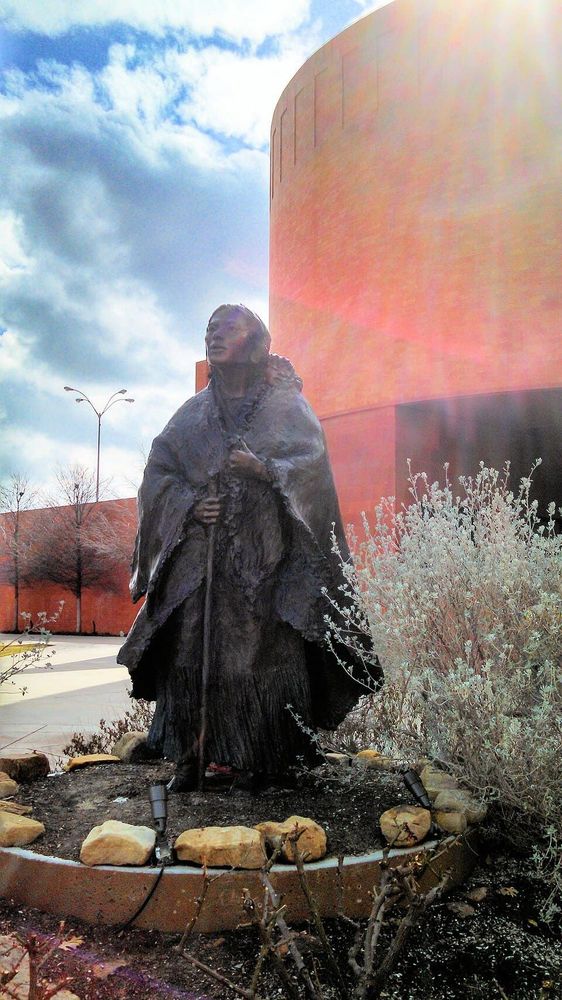
©UserAbbygails, CC BY-SA 4.0 <https://creativecommons.org/licenses/by-sa/4.0/deed.fr>via Wikipedia Commons
Across the street on your left, you’ll see a statue of Sacagawea, one of the most iconic figures in the exploration of the American West. She was born around 1788 among the Lemhi Shoshone, but as a child, she was captured during a raid and taken far from her homeland. As a teenager, she was married to a French-Canadian trapper, Toussaint Charbonneau.
In 1804, her life changed dramatically when explorers Meriwether Lewis and William Clark recruited her husband for their expedition to the Pacific Ocean, and Sacagawea joined them, carrying her newborn son, Jean-Baptiste, on her back for much of the journey. She quickly became an essential member of the expedition, helping as an interpreter between tribes, guiding them through unfamiliar territory, and sharing her knowledge of edible plants, and the fact that she was traveling with an infant also reassured the groups they encountered, signaling peaceful intentions. One of the most remarkable moments came in 1805, when the expedition met a group of Shoshone and Sacagawea recognized their leader as her own brother, whom she hadn’t seen since her capture, and thanks to this connection, the explorers were able to obtain the horses they needed to cross the Rocky Mountains.
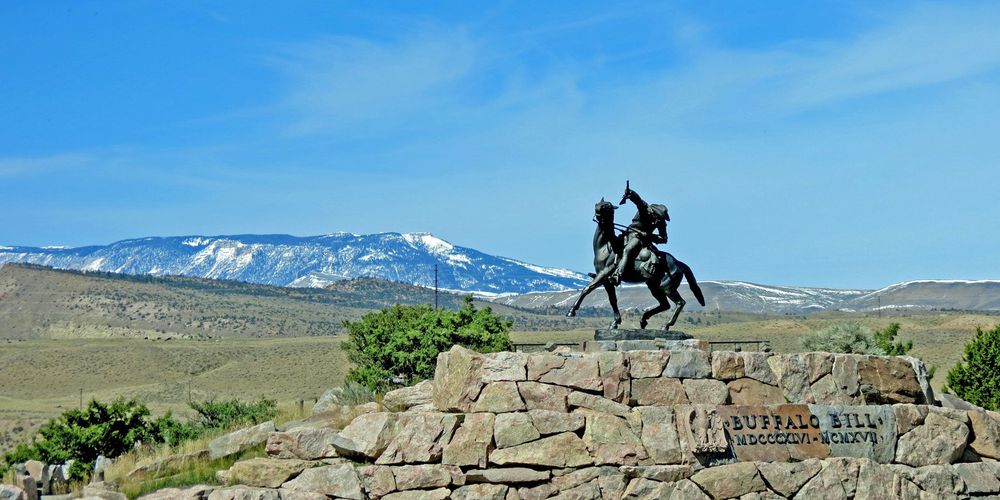
After the expedition, her story becomes less clear, most historians believe she died in 1812 at a young age, though some oral traditions say she may have lived much longer among the Shoshone in Wyoming, and today, she is remembered as a national symbol, even appearing on the U.S. one-dollar coin since 2000. Right in front of you, you’ll also notice another figure of Buffalo Bill, shown here as a teenager riding at full speed as a Pony Express rider, part of a mail service that once stretched nearly 3,000 kilometers between Missouri and California, with young riders switching horses at relay stations to deliver letters in about ten days.
The title, “Hard and Fast All the Way,” captures that spirit of constant motion, pushing forward without stopping, and together, these two stories offer a glimpse into the history and identity of Wyoming.
Aucun avis pour le moment
