





Walk
The birth of a nation
Philadelphia, United States
Walk
The birth of a nation
Philadelphia, United States
4.7 km
Distance
2h00
Durée
24
Audios
Loop
Parcours
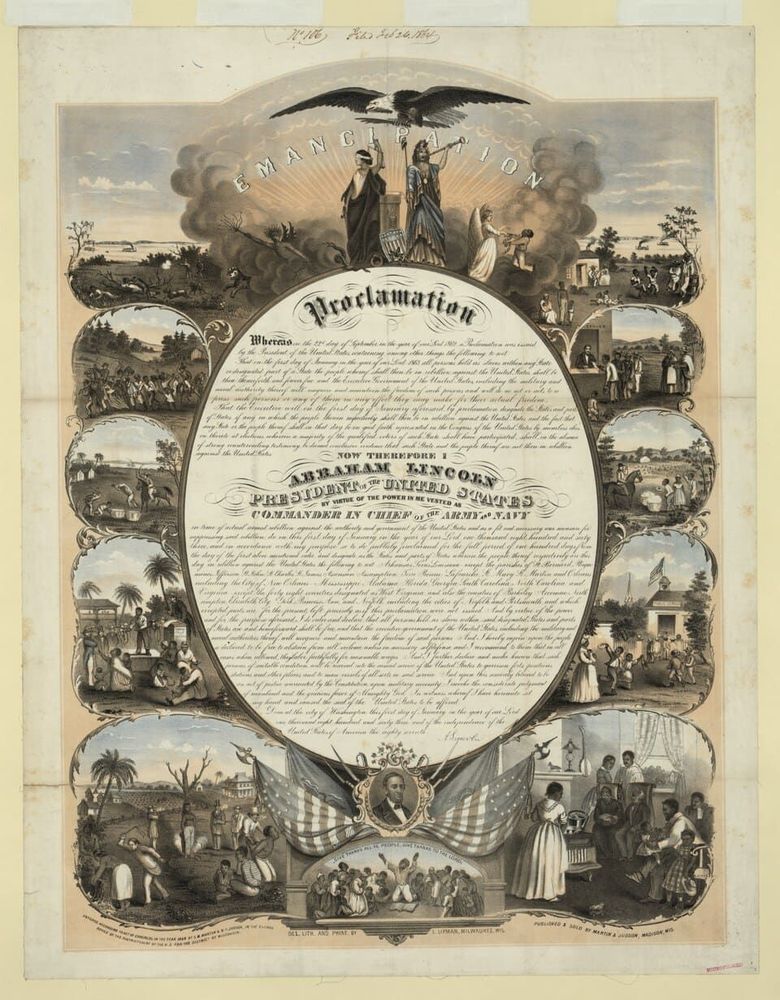
©Popular Graphic Arts, Public domain
The history of slavery is a central part of understanding the history of the United States. For more than two centuries, millions of men, women, and children, most of them of African origin, were enslaved and treated as legal property. This system was part of a wider network known as the transatlantic slave trade, which forcibly transported between 10 and 12 million Africans to the Americas.
On the territory that would become the United States, slavery existed from the early 17th century. At the time of the American Revolution in the late 18th century, some believed it might eventually disappear, but the opposite happened. In the early 19th century, the invention of the cotton-cleaning machine, known as the cotton gin, transformed the economy.
Cotton became extremely profitable, and the demand for labor grew rapidly, leading to the expansion of slavery, especially in the Southern states. In these regions, enslaved people worked mainly on cotton plantations, but also in tobacco fields, agriculture, and in cities. Days were long, often from sunrise to sunset, under constant supervision.
But slavery was not only about labor. It meant having no control over your life, your family, or your future. And yet, despite this system of violence, enslaved people were never passive.
Resistance was constant. It could be quiet, like slowing down work, preserving cultural traditions, or learning in secret. It could also be more visible, through escape, revolt, or by joining networks like the Underground Railroad, which helped some reach free territories.
Slavery was also deeply tied to the American economy. It was not a marginal system, it shaped society, politics, and wealth for nearly 250 years. The major turning point came with the Civil War, a conflict between the North and the South, largely over the question of slavery.
In 1863, President Abraham Lincoln announced emancipation in the rebellious states, and in 1865, the 13th Amendment to the United States Constitution officially abolished slavery. But abolition did not bring immediate equality. After 1865, formerly enslaved people continued to face major challenges, including lack of resources, discrimination, and new systems of segregation.
Even today, slavery remains essential to understanding the United States. It has deeply shaped institutions, inequalities, and ongoing debates about freedom and citizenship. It is not just a part of the past, but a long and complex history, marked by violence as well as resistance, that still influences the country today.
Aucun avis pour le moment
