




Walk
Beyond the Picture Perfect Image
San Diego, États-Unis
Walk
Beyond the Picture Perfect Image
San Diego, États-Unis
7 km
Distance
2h50
Durée
24
Audios
Loop
Parcours
Shutterstock
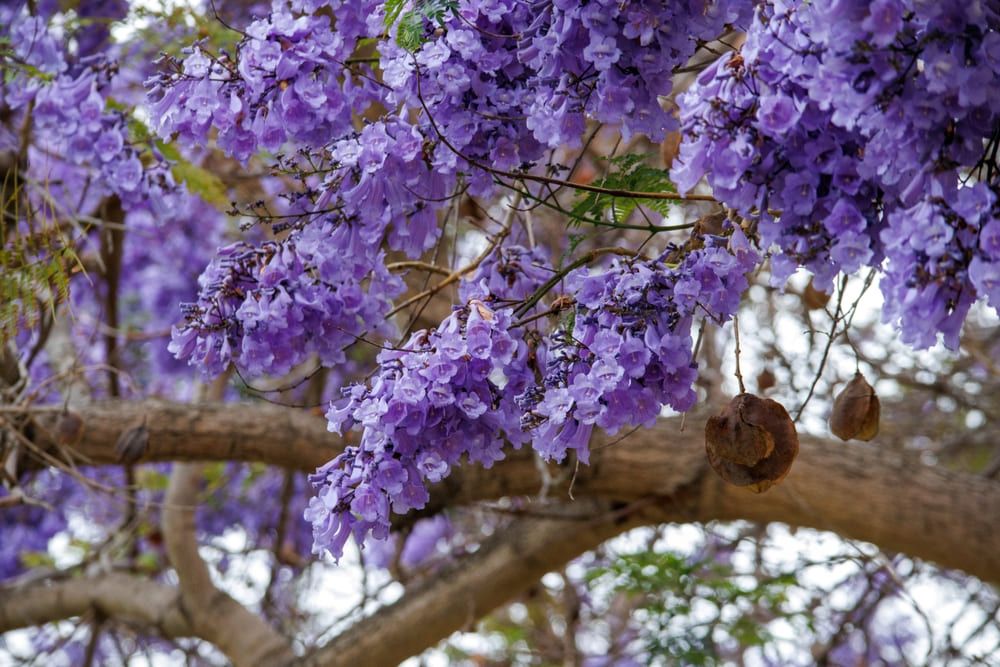
In the spring, San Diego turns purple. The trees that immediately catch your eye with their clusters of lavender-blue blossoms are jacarandas. Over time, they have become one of the city's most recognizable natural symbols.
In fact, the Jacaranda mimosifolia is now considered San Diego's official urban tree. Native to the subtropical valleys of Argentina and Bolivia, the jacaranda has adapted perfectly to Southern California's mild, sunny climate. Its delicate, feathery foliage resembles that of a fern, but it is the flowers that make the tree truly spectacular.
For a few weeks each year, usually between May and June, the leaves give way to purple blossoms that almost completely cover the branches, slowly carpeting the city's sidewalks in shades of violet. The close connection between jacarandas and San Diego is largely thanks to one woman: Kate Sessions, often called the "Mother of Balboa Park." In the late nineteenth century, this horticulturist played a major role in shaping the city's landscape. In exchange for a lease on the land that would later become Balboa Park, she agreed to plant hundreds of trees every year throughout San Diego.
Among the many species she introduced was the jacaranda. Over time, the trees flourished in several neighborhoods, including this one. Ironically, jacarandas are now considered vulnerable in parts of their native range in South America because of the destruction of their natural habitat.
In San Diego, however, they seem to have found an almost ideal balance: well adapted enough to thrive, yet without becoming invasive.
Aucun avis pour le moment