The Sand Creek Massacre

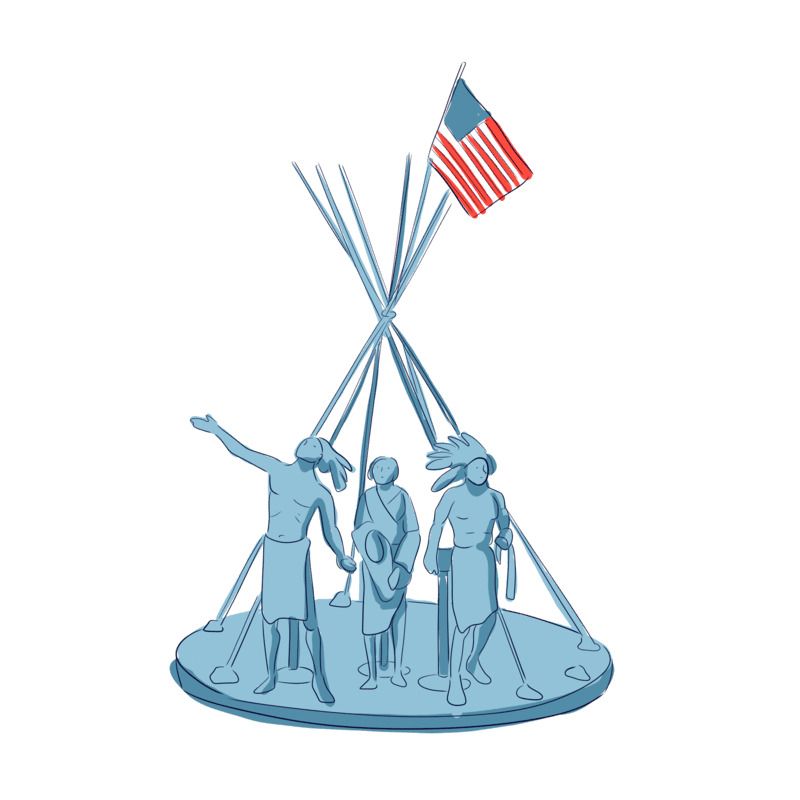
You’re in front of the Colorado State Capitol, at the spot where a statue of a Civil War soldier once stood. Erected in 1909, it honoured Union soldiers who fought during the Civil War. The statue stood here for over a century, until people began to ask, what exactly was being honored? In 2020, during a nationwide reckoning with public monuments tied to colonialism and racial violence, protesters toppled the statue, and it was later officially removed. It wasn’t the Civil War that sparked outrage, but a single line carved on the base, but one that reopened deep wounds. Among the battles listed was “Sand Creek.” In 2026, a new memorial will rise in its place, designed by sculptor Gerald Anthony Shippen from Wyoming. His bronze work will feature a nearly life-size tipi, beneath which stand three towering figures: a Native mother holding an empty cradle, and two chiefs who were killed at Sand Creek, Black Kettle of the Cheyenne and Left Hand of the Arapaho. These figures honour a resilience that was long pushed aside. To understand why this change matters, we need to go back to one of the darkest chapters in Colorado’s history. November 29, 1864. The nation was in the grip of the Civil War, but in the remote Colorado Territory, a different war was unfolding. Gold had been discovered. Settlers poured in, and Indigenous lands disappeared with alarming speed. Tensions rose between the newcomers and the tribes who lived here for generations. Near a small stream called Sand Creek, around 750 Cheyenne and Arapaho people were camped. Their chief, Black Kettle, believed he had secured peace. He flew a white flag and an American flag above the camp. He trusted the promises made. At dawn, while many men were away hunting, 700 soldiers from the Colorado militia charged in, led by Colonel John Chivington, a man who had openly called for the killing of Native people “large and small.” The attack was sudden, brutal, and lasted for hours. Over 230 people were killed that day, mostly women, children, and the elderly. Even some soldiers were horrified. They testified to violence so gruesome that the details are still hard to speak aloud. At first, the newspapers hailed it as a victory, but outrage quickly grew, and Witnesses came forward. The U.S. Congress launched an investigation and concluded that Sand Creek had not been a battle, it had been a massacre. Even in war, there are rules. Sand Creek became a symbol of betrayal. For the Cheyenne and Arapaho nations, it still echoes today, not only as a memory of that day, but of broken treaties, lost lands, and a promise of peace answered with violence. That’s what was etched into the old monument, not as a tragedy to mourn, but as a “battle” to be proud of. The new memorial doesn’t try to erase that past. It gives it the weight and truth it deserves. It invites us to look history in the eye, to acknowledge what happened, and to make space for voices that were silenced for too long.

+1 million de voyages avec Ryo

Explore cities with our audio guides. Wander the most beautiful streets, savor every story.

Google Play

Your pace, our audio guides

Google Play