
Créé par Emilie, le 17 nov. 2026
Votre guide Ryo
Denver, United States
From the Golden Dome to the Blue Bear
Parcours audioguidé pour visiter Denver en 1 jour
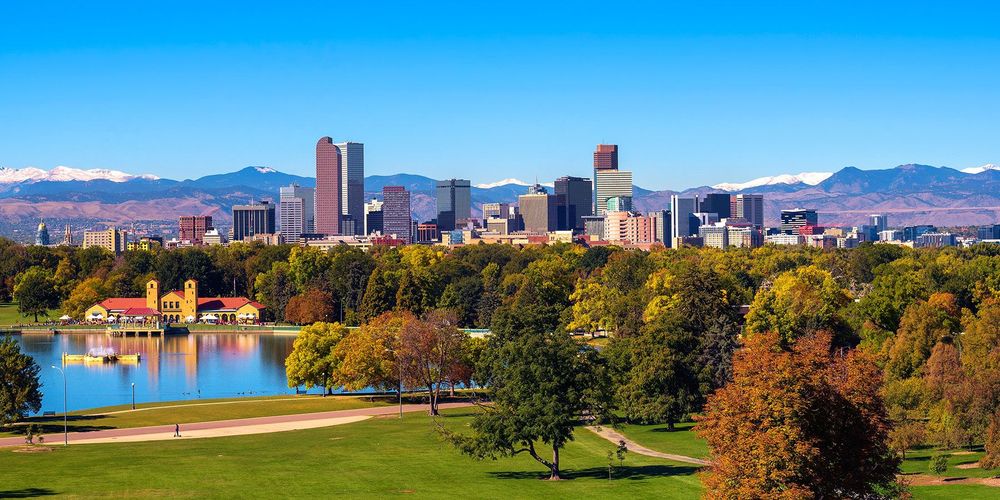
Perched at 1,600 meters above sea level, Denver blends the heritage of the American West with modern urban energy. With its museums, bold architecture, and lively neighborhoods, it also serves as an ideal gateway to the spectacular landscapes of the Rocky Mountains.
Quand partir à Denver ?
Jan.
0°
3
Feb.
2°
3
March
6°
5
April
10°
7
May
15°
9
June
22°
8
July
25°
9
Aug.
24°
8
Sept.
20°
6
Oct.
13°
5
Nov.
6°
4
Dec.
1°
3
Denver enjoys sunny weather most of the year, with more than 300 days of clear skies. Summers are hot but dry, with temperatures around 86°F during the day and pleasantly cool evenings. Winter is cold without being extreme, with often sunny days despite some snowfall. The best times to visit Denver are spring (April to early June) and fall (September to October): the weather is mild, the landscapes superb, and the atmosphere more peaceful than in summer. If you come in July or August, you'll enjoy a very lively city, perfect for outdoor activities. But if you want to enjoy the ski slopes of the Rocky Mountains, know that Denver can also be a beautiful winter discovery!
Départ conseillé
No need to worry about where to begin! Our tours are designed as a loop, so you can jump in wherever you are. The navigation system and audio-guide will automatically adjust to your location. However, if you happen to be nearby, we do have a preferred starting point: The Civic Center Park
Parking à proximité
Cultural Center Complex Garage, 65 W 12th Ave, Denver, CO 80204, United States. Open from 5 AM to 11 PM, rates from $2/hour, Early Bird at $9 (entry before 9 AM, exit before 6 PM). Free charging for electric vehicles (3rd floor)
To park easily in Denver, two practical solutions are available to you. First, apps like SpotHero and BestParking allow you to reserve spots in advance around downtown, particularly near 16th Street, the Convention Center or Coors Field, with often advantageous rates (between $7 and $27 depending on the day). If you find a street spot, the SpotAngels app is a goldmine for avoiding tickets and better time management. Then, if you're coming from the outskirts, opt for RTD's Park-n-Ride system: more than 30,000 spaces are distributed around the city and connected to train and light rail lines. Central Park station, for example, allows you to reach Union Station in just 13 minutes.
À savoir
In Denver, as everywhere in the United States, the currency is the US dollar (USD). Credit card payments are accepted almost everywhere, even for small amounts, but it's always good to have some cash on hand, especially for tips. And speaking of tips, the "tip" is a real institution! Unlike in Europe, service is not included in prices: it's therefore customary to leave a tip equivalent to 15 to 20% of the bill in restaurants, cafés or bars. Taxi drivers, tour guides, hairdressers or delivery drivers also expect a tip (generally $1 to $5, depending on the service). This may be surprising, but in the United States, these gratuities are an integral part of service employees' salaries.
Découvrez 21 lieux d'intérêt pour visiter Denver






What to see in Denver on your 2h tour?
This 4.7 km loop takes about 2 hours and links 20 stops. It starts at Civic Center Park, passes the library, museums and Capitol, then runs down 16th Street through the banking and theatre districts before climbing back via Larimer Square and the university campus to the big blue bear by the convention centre and city hall. With the Ryo app in your ears, Denver tells its civic story, its tribal past and its gold rush.
Information checked in October 2026 and subject to change.
1 - Civic Center Park
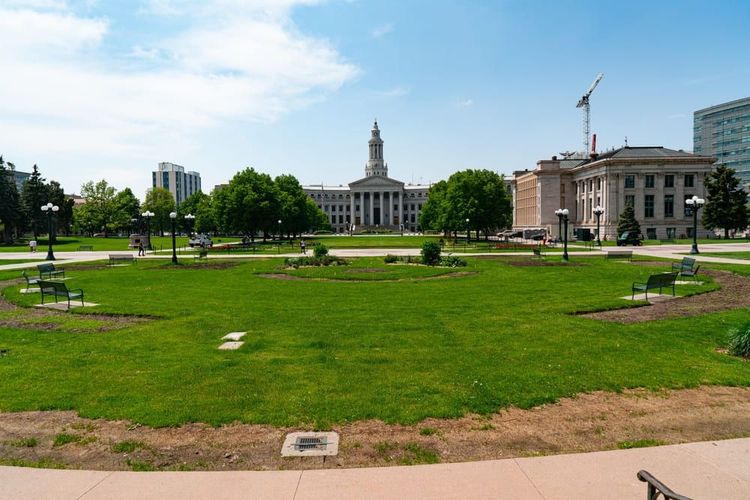
This wide open park embodies the ambition of a capital built around order and beauty, with mountains on the skyline. It follows the ideas of an early 20th-century planning movement convinced that handsome public spaces lift the spirit of citizens. Government buildings line up facing one another all around, while the centre stays fully open, home to a small open-air theatre with white columns.
Free entry
2 - Denver Public Library
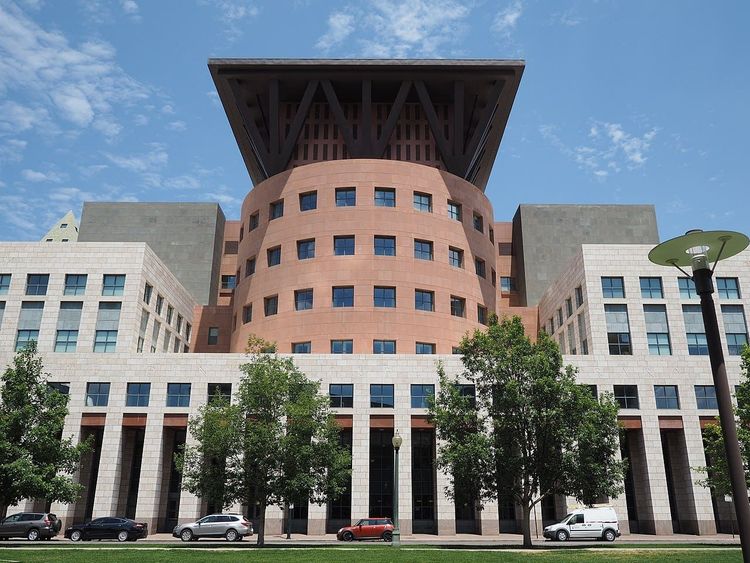
Hard to miss, this building shows off odd shapes and slightly tilted towers, the work of a postmodern architect fond of twisting classical forms. Behind its quirky facade sits one of the country's largest public libraries, holding millions of items. Expect exhibitions, archives on the American West and sometimes even loans of unusual objects, far from the dusty image libraries often carry.
Free entry
3 - Denver Art Museum
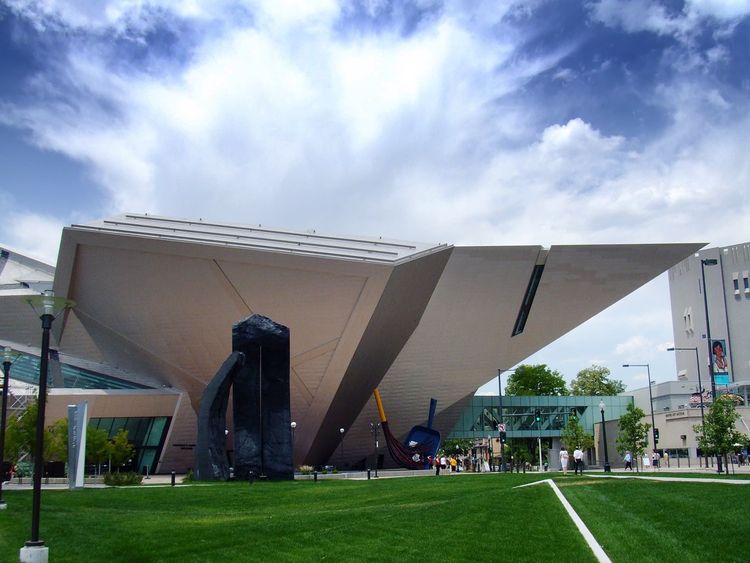
Impossible to overlook, this museum bristles with sharp peaks and metallic surfaces, as if a cubist mountain had erupted from the pavement. Designed by the architect behind the World Trade Center memorial, the building piles up angles to echo Colorado's rugged landscape. Inside, a collection devoted to Native nations sits alongside contemporary art, between bold exhibitions and hands-on workshops.
Paid entry (about $27) · Best on weekdays
4 - Acoma Plaza of the Arts
Squeezed between two towering institutions, this small pedestrian square bets everything on surprise, with its tilted volumes and sharp angles. Centre stage stands a giant blue broom tipped into a dustpan, a playful work by a pop-art duo who loved turning everyday objects into monuments. Just behind, through a modest doorway, hides a whole museum devoted to a master of abstract painting.
Free entry
5 - History Colorado Center
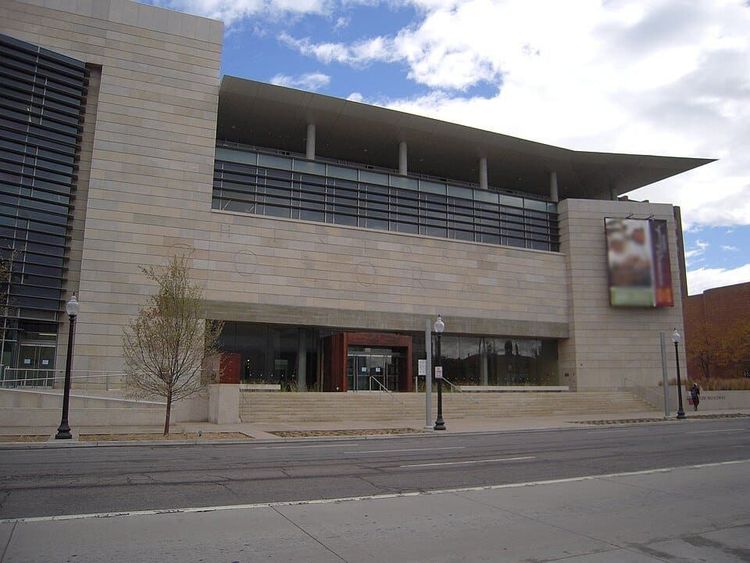
This interactive museum dives into the state's turbulent past, from early builders who carved villages into cliff faces to the gold rush that turned Denver from a canvas camp into a city overnight. Visitors can steer a pioneer wagon, watch a simulated tornado sweep past, and learn why the state earned its nickname upon joining the Union in 1876.
Paid entry
6 - Ralph L. Carr Colorado Judicial Center
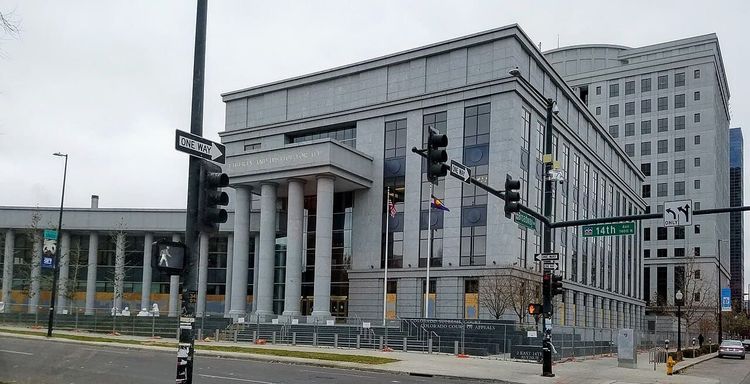
Seat of the state's highest courts, this granite and glass building opens freely to visitors on weekdays, with a learning space on how justice actually works and, sometimes, access to a real hearing. Out front, a small circle of white marble figures seems caught mid-conversation, a quiet reminder that justice is also built through dialogue and listening.
Free entry
7 - The Sand Creek Massacre
A plain soldier once stood on this spot, raised early in the 20th century to honour those who fought in the Civil War. An inscription naming a massacre among the honoured 'battles' reopened an old wound, leading to its removal in 2020. A memorial designed by a Wyoming sculptor will soon give proper weight to the Cheyenne and Arapaho people killed here in 1864.
Free entry
8 - The Mile High City
Carved beneath your feet is a precise altitude marker that gave the city its best-known nickname. Only a handful of countries still cling to this old unit of measure, dropped almost everywhere else in favour of the metric system. Beyond that quirk, the sweeping view from these steps, civic buildings below and jagged peaks beyond, remains one of the most photographed in town.
Free entry
9 - State Capitol Building
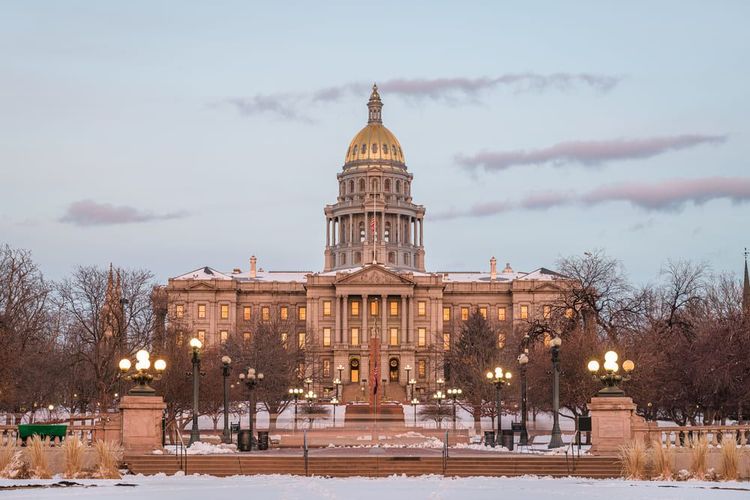
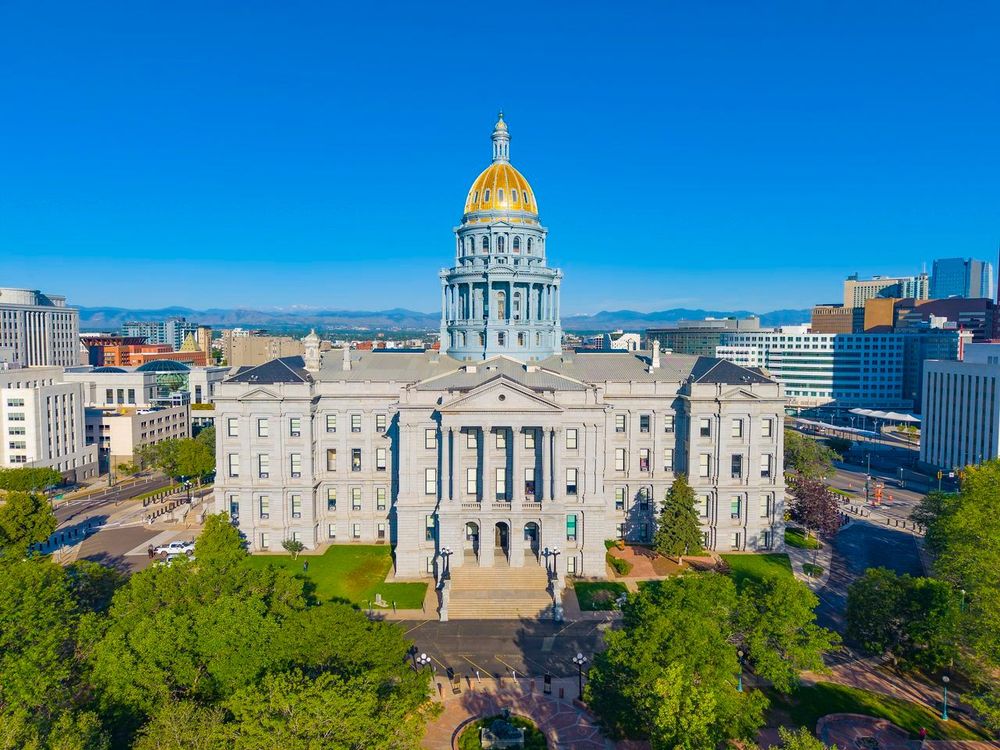
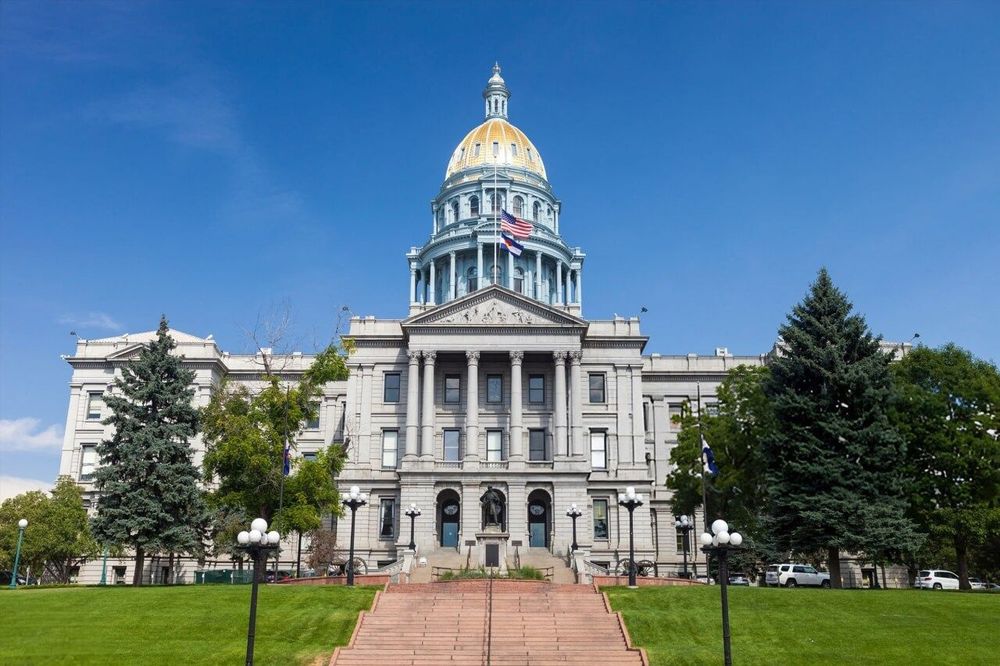
Quieter than the main entrance, this side reveals the famous dome covered in real gold leaf, a nod to the rush that shaped the region. Inside, free to explore, a staircase of pink stone from a now-exhausted quarry, stained glass added in the early 2000s and portraits of past governors lead up to a panoramic gallery tucked beneath the dome.
Free entry
10 - Pioneer Monument Foutain
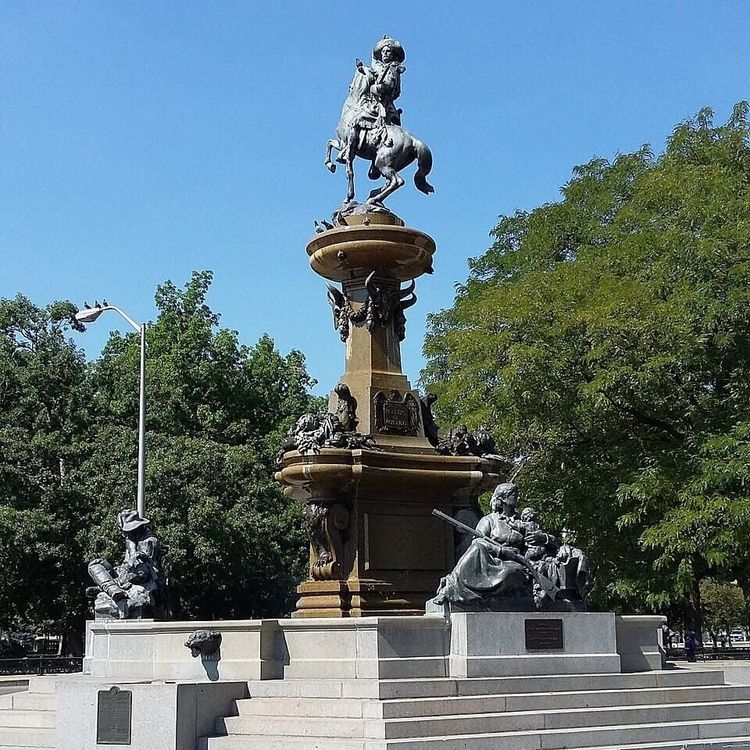
This square already carried the name of a Native nation back in the late 19th century, a rare gesture for its time. A grand fountain here honours settlers who braved a trail nicknamed the starvation route. The original plan to crown it with a Native warrior sparked such outrage that the sculptor swapped him for a frontier scout, who later became a controversial figure in his own right.
Free entry
11 - 16th Street Mall
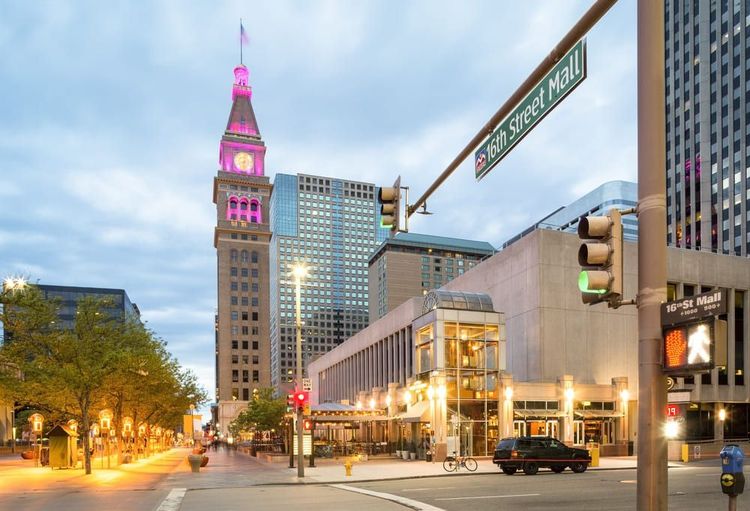
Nearly two kilometres long and entirely car-free, this street was laid out by the architect behind the Louvre pyramid during a push to reinvent downtown. Its granite pavers form geometric patterns borrowed from Southwestern design, while a free shuttle spares walkers the full stretch. Shops, cinemas and street musicians keep the place buzzing at every hour.
Free entry
12 - Food and Crafts
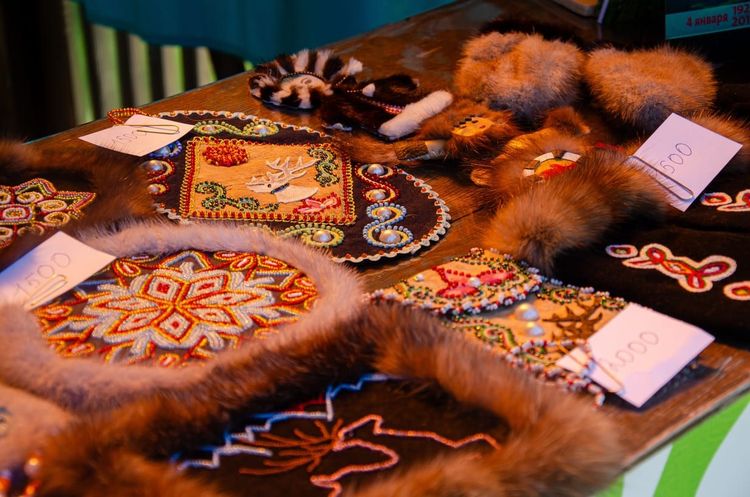
This quieter stretch is a good spot to think about souvenirs worth taking home: turquoise jewellery, ceramics and hand-woven textiles draw on Indigenous traditions, provided their authenticity is certified. On the food side, a hearty omelette stuffed with peppers and ham counts as the local classic, while braver visitors can try the famous Rocky Mountain oysters, nowhere near any ocean.
Free entry
13 - Money Museum
Behind the plain, almost severe front of this regional bank hides a free and unexpected stop: a museum devoted entirely to money. Expect rare banknotes, counterfeits seized by federal agents, counting machines and even a case holding a genuine million dollars under glass, a fun way to grasp how American currency actually works.
Free entry
14 - Daniels & Fisher Tower
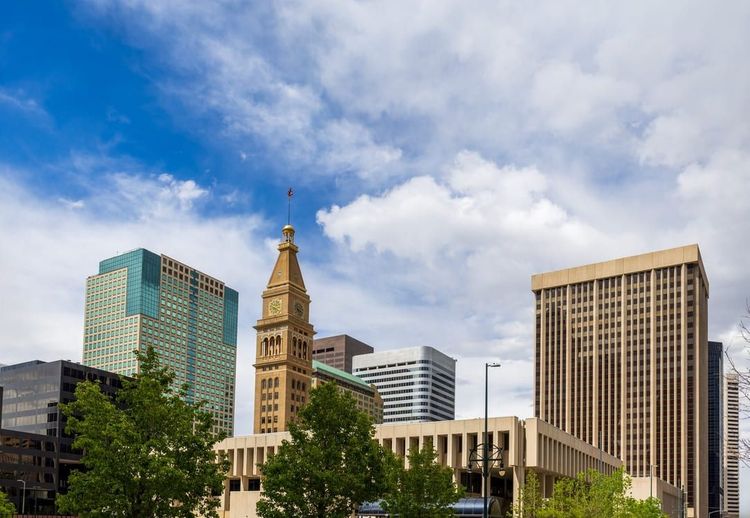
With its clock, columns and slender spire, this tower borrows directly from a famous Venetian bell tower, commissioned early in the 20th century by a department store chain eager to flaunt its commercial muscle. For decades no building rose higher anywhere in the American West, and it nearly fell to the wrecking ball before local campaigners saved it; it now houses offices and a small theatre.
Free to see from outside
15 - Larimer Square Historic District

A rough riverside camp in the late 1850s, this street became the very first laid out in the young city, right as the gold rush took hold. Threatened with demolition by the mid-20th century, it survived thanks to a visionary businesswoman who restored its Victorian facades. Strings of lights, independent shops and restaurants now keep its atmosphere unlike any other in town.
Free entry
16 - University of Colorado Denver
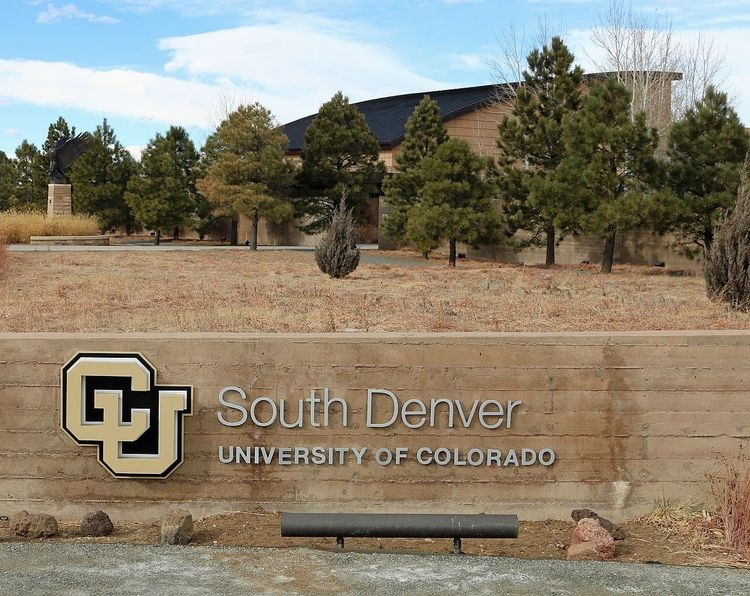
This campus, unique in the country, brings together three institutions with complementary missions, united here only in the 1970s, long after the great universities of the East Coast were founded. Born of a region once roamed by tribes, trappers and gold seekers, local higher education grew step by step, starting out as evening classes for working adults.
Free entry
17 - Denver Performing Arts Complex
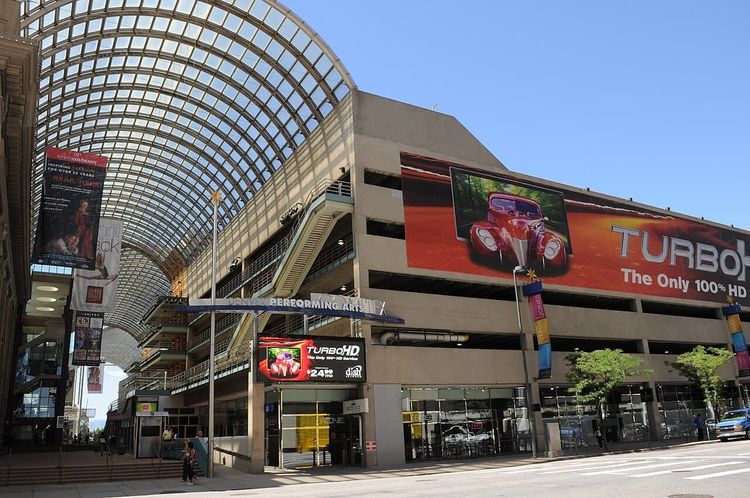
With nineteen stages spread across several buildings linked by glass walkways, this complex ranks as the largest arts venue between Chicago and the West Coast. Dancers warming up or singers rehearsing mid-stride are not an unusual sight here, between a symphony hall and a grand musical theatre. In the lobby, two rounded bronze figures carry the unmistakable touch of a Colombian master.
Free entry
18 - Ellie Caulkins Opera House
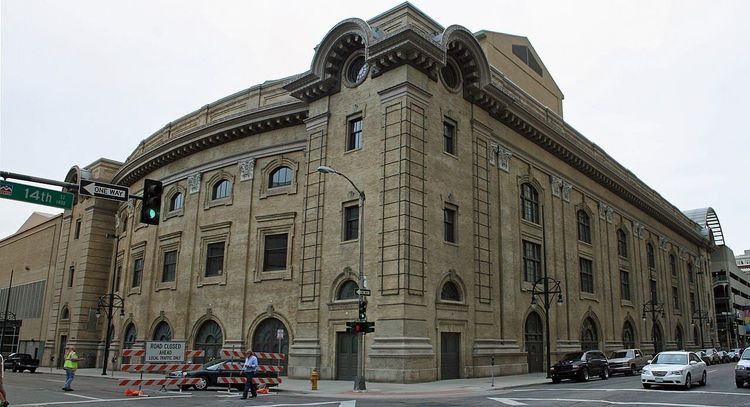
Its name honours a local patron who fought hard to give the city a true home for opera, built on the foundations of an old municipal auditorium raised in the early 1900s. Reopened in 2005 after a full renovation, the horseshoe-shaped hall, draped in crimson and gold, seats over two thousand, with supertitles projected above the stage so the plot stays clear even without a word of Italian.
Free to see from outside
19 - The Big Blue bear
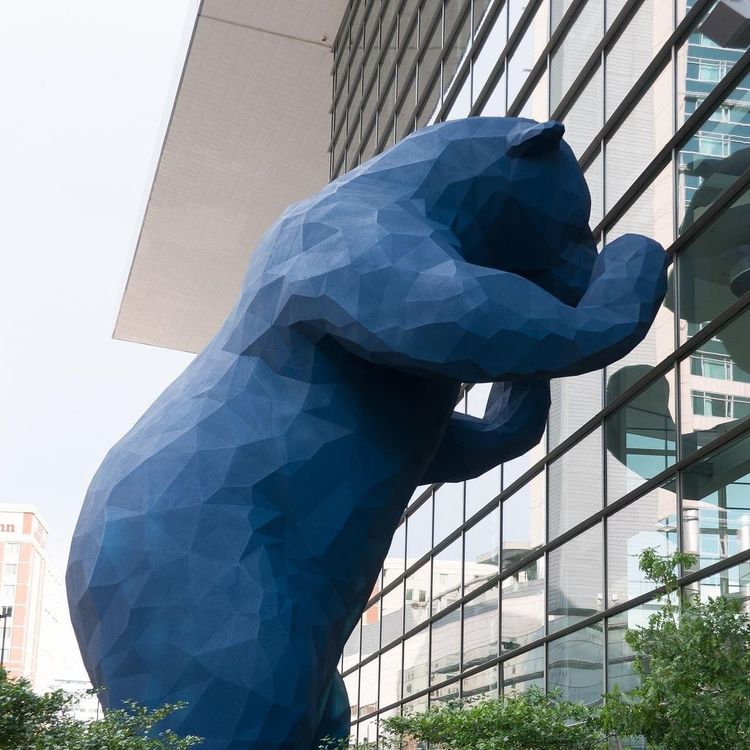
The city's favourite mascot, this forty-foot blue resin bear appears to be peering straight through the convention centre's huge glass wall. Installed in 2005 by an Australian-born artist, it carries a name that is both plain and sly. Having become a local celebrity, it gets dressed up for games and photographed from every possible angle.
Free entry
20 - Denver City Hall
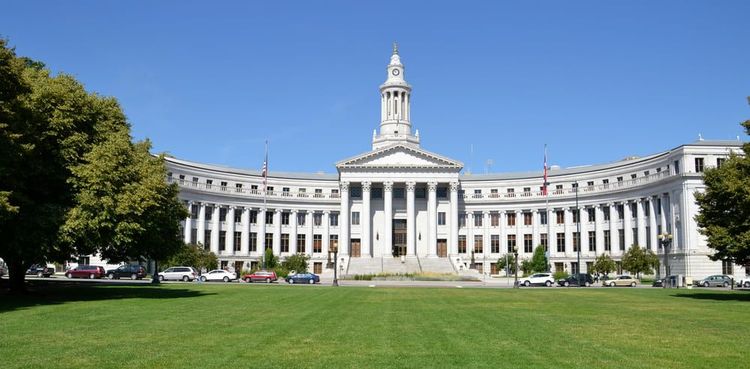
Its tall white colonnade seems to welcome visitors with open arms, standing in perfect symmetry with the Capitol facing it across the park. Raised in the 1930s in a neoclassical style touched with Beaux-Arts flourishes, the building houses the mayor and the city council. Every year just after Thanksgiving, a much-loved light display turns the facade into a neighbourhood celebration.
Free entry
What to do in Denver in 2 or 3 days?
Allow about 2 hours to cover the 4.7 km and 20 stops of this loop, from Civic Center Park to the edge of the convention center. With 2 or 3 days in the city, Denver opens up further, between historic districts, its art scene and the fresh air of the Rockies.
The next day suits a walk through RiNo, a former warehouse district northeast of downtown now covered in murals and breweries, with a lunch stop at Denver Central Market, set inside a 1920s building shared by a butcher, a pizzeria and a bakery. A little further southeast, the Denver Botanic Gardens cluster several themed gardens across 24 acres, among them a Japanese garden, and host open-air concerts in summer.
Day three heads for the first folds of the Rockies, about 25 minutes by car to the southwest: Red Rocks Park, a natural amphitheatre carved into red rock, seats 9,525 people between sandstone walls 300 feet high. A little further on, Golden, 19 km to the west, is known for its Coors brewery tour. The whole three-day plan is laid out in our weekend itinerary for Denver.
Which neighbourhoods does the tour cross?
As a loop, the route crosses several sides of Denver, from the civic campus shaped by the City Beautiful movement to the warehouses turned into an arts scene, before circling back to the start.
The walk begins at Civic Center Park, this civic park between the public library and the Denver Art Museum, whose metal volumes echo Colorado's peaks (stops 1 to 4). It then passes the History Colorado Center and the Ralph L. Carr Judicial Center on the way to the Capitol and its golden dome, which gives Denver its Mile High City nickname (stops 5 to 9).
The route then reaches 16th Street Mall, the pedestrian spine designed by urban planner I. M. Pei in 1982, where craft shops and local tastings come before the museum tucked inside the old Federal Reserve, ahead of the Venice-inspired silhouette of the Daniels & Fisher Tower and the Victorian fronts of Larimer Square, Denver's first street, laid out in 1858 (stops 11 to 15).
The final stretch crosses the Auraria university campus, shared by three institutions since 1976, then the Denver Performing Arts Complex and its nineteen stages, before reaching the big blue bear outside the convention center and city hall, which faces the Capitol across the park (stops 16 to 20).
How much does it cost to visit Denver?
Of the 20 stops on the route, 18 ask for no ticket at all: most can be visited freely, and two more, the Daniels & Fisher Tower and the Ellie Caulkins Opera House, are best admired from outside. Only two stops charge for entry:
- the Denver Art Museum, at $27 (cheaper on weekdays, excluding Friday, Saturday and Sunday);
- the History Colorado Center, also ticketed, though no published rate is on record.
To combine visits, the Denver CityPASS comes in two versions: at $54 it covers 3 attractions out of 8, including the Denver Art Museum and the History Colorado Center; at $76 it covers 5, enough to add the zoo or the botanic gardens. Both versions stay valid for 7 consecutive days from the first visit.
Information checked in October 2026 and subject to change.
Where to stop for a bite along the tour?
The route sets aside one stop entirely for local food, between dishes to try and beer to take home, on a quieter stretch past 16th Street Mall.
At stop 12, two dishes sum up the local kitchen: the Denver omelette, loaded with peppers, onion, ham and melted cheese, and the bolder Rocky Mountain oysters, which are in fact deep-fried bull testicles served with a spicy sauce. The city also counts dozens of microbreweries, some playing with unexpected flavours such as pine, chili or locally roasted coffee, worth a bottle to carry home.
What should you know before visiting Denver?
A few practical points help make the most of the route without surprises, from a temporary closure to a couple of local customs worth knowing before setting off.
At stop 13, the Federal Reserve building normally houses the Money Museum, dedicated to how American currency is made; this stop is currently closed for an unknown period, so it's best skipped in favour of heading straight on to the next tower.
As everywhere in the country, service is never included in the bill: at a restaurant, café or bar, 15 to 20% of the total is customary, and $1 to $5 covers a driver, a guide, a hairdresser or a delivery person. Far from a simple courtesy, this gratuity directly supplements service staff's pay.
As in most big American cities, it's best to keep passports and payment cards close and leave nothing visible inside a parked car; a recent rise in carjackings also calls for extra caution after dark.
One more local custom worth knowing: recreational cannabis is legal here, as detailed in our guide for a first visit to Denver.
What to see around Denver?
Denver also opens the door to the first folds of the Rockies, between a historic brewery and an amphitheatre carved into the rock, less than half an hour from downtown.
19 km to the west, the town of Golden is known for its Coors brewery tour, one of the best-known in the country. On the same road, about 25 minutes from downtown, Red Rocks Park seats 9,525 people between sandstone walls 300 feet high: the site can be visited freely outside concerts, and the neighbouring Mount Falcon Park overlooks both the amphitheatre and the plains.
What's on in Denver right now?
In the coming weeks, Denver sets aside a whole stretch of time for arts and culture, carried by the city's major institutions.
From 6 to 15 November, Denver Arts Week brings together hundreds of arts and culture events across the city, opened by the traditional First Friday Art Walks.
Information checked in October 2026 and subject to change.
Le plein d'inspirations
Explorez le monde en totale liberté, à pied au cœur des villes ou au fil des routes. Nos guides audios transforment chaque destination en une découverte culturelle immersive et unique.










FAQ for visiting Denver
When is the best time to visit Denver?
Denver is at its best in spring, from April to early June, or in autumn, from September to October. During these periods, you'll enjoy mild temperatures and beautiful landscapes, with a calmer atmosphere than in summer. The city enjoys exceptional sunshine throughout the year, with more than three hundred days of clear skies. If you prefer summer buzz, July and August offer a vibrant atmosphere, perfect for outdoor activities despite temperatures that can reach thirty degrees. Winter remains pleasant with often sunny days, and is an excellent option if you'd like to combine city sightseeing with a getaway to the nearby Rocky Mountain ski resorts.
How many days do you need to visit Denver?
To discover Denver in a satisfying way, ideally plan for three to four days. Two full days will let you explore the historic downtown, visit the main museums and wander through a few iconic neighbourhoods. With an extra day, you can delve deeper into the various districts, enjoy the local culinary scene and perhaps even take a trip into the foothills of the Rockies. If you have more time, Denver makes an excellent base for exploring the surrounding natural wonders, notably Rocky Mountain National Park or the charming mountain towns. A week-long stay would offer you the perfect balance between city discovery and getaways into the great outdoors.
How do you get around Denver without a car?
Denver has an efficient public transport system that will let you get around easily without a car. The RTD (Regional Transportation District) runs a network of buses and light rail that serves downtown and the main neighbourhoods well. The A Line connects the airport directly to downtown in around forty minutes. In the heart of Denver, the Free MallRide travels the 16th Street Mall, a major shopping thoroughfare, free of charge. Bike-sharing is also very popular, with numerous safe cycle paths. For short trips, electric scooters are everywhere. Finally, ride-hailing services remain a convenient and affordable option, particularly in the evening or for reaching neighbourhoods less well served by public transport.
Which neighbourhoods are must-sees in Denver?
LoDo (Lower Downtown) is the historic heart of Denver, with its red-brick buildings converted into trendy restaurants and shops. RiNo (River North Art District) will win you over with its colourful murals, art galleries and creative atmosphere. Capitol Hill offers a bohemian vibe with its independent cafés and lively nightlife. Highlands, on the other side of the Platte River, draws visitors for its panoramic views and gourmet spots. Cherry Creek combines upmarket shopping with pleasant green spaces. The Ryo audioguide guides you through these various neighbourhoods, revealing their history and secrets along routes designed for walking. Each district has its own personality, reflecting the cultural diversity that gives Denver its charm.
What are the must-dos in Denver in a single day?
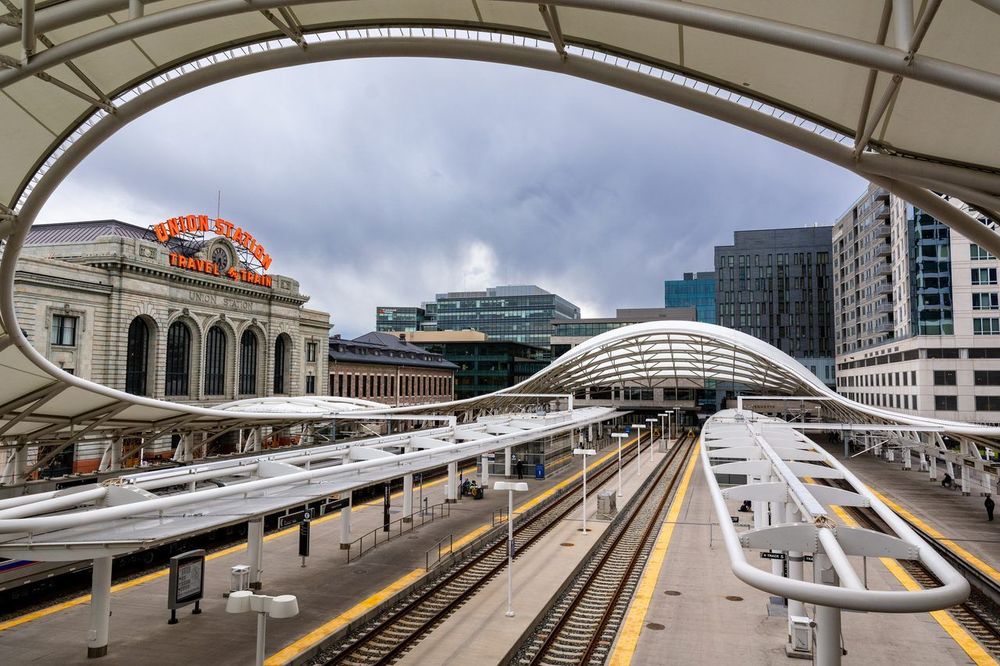
Start your day with a visit to the Colorado State Capitol and its impressive golden dome, then head down to Civic Center Park to admire the surrounding architecture. Next, make your way to LoDo and the famous Union Station, beautifully restored. Don't miss the Denver Art Museum and its remarkable collections, before strolling along the 16th Street Mall for lunch. In the afternoon, explore the RiNo arts district with its spectacular murals, or opt for a nature break at the Denver Botanic Gardens. The Ryo audioguide offers a one-day route that cleverly links these major points of interest, enriching your discovery with historical and cultural anecdotes. End with a sunset from one of the city's rooftops for a breathtaking view of the Rockies.
Where can you shop and sample the local cuisine in Denver?
For shopping, the Cherry Creek Shopping Center offers an upmarket experience with its major brands and designer boutiques. The 16th Street Mall provides a more accessible alternative with its varied stores and lively atmosphere. Fans of local and vintage goods will enjoy South Broadway and its independent shops. When it comes to food, Denver excels in American Southwest cuisine and grilled fare. Food halls such as Denver Central Market and Avanti F&B bring together the best of the local culinary scene. Be sure to try the famous green chile and the craft beers, as Denver is nicknamed the craft beer capital. The RiNo and Highlands neighbourhoods are brimming with innovative restaurants, while LoDo is home to traditional steakhouses and historic breweries.
What makes Denver unique compared with other American cities?
Denver stands out for its privileged position at the meeting point of modern urban life and magnificent nature. Few American cities offer such immediate proximity to snow-capped peaks and outdoor adventure opportunities while still maintaining a rich cultural life. Its high altitude gives it a distinctive light and pure air that surprise visitors. The city also cultivates a unique pioneering spirit, a blend of Western heritage and technological innovation, visible in its bold architecture and dynamic arts scene. Denver is also a pioneer in sustainable development and urban quality of life, with its many green spaces and cycle paths. This combination of access to the great outdoors, cultural energy and a laid-back vibe creates an atmosphere found nowhere else in the United States.
Which Rocky Mountain day trips can you take from Denver?
Denver is the gateway to the mountains, and several places are less than two hours' drive away. Red Rocks, with its natural amphitheatre wedged between ochre cliffs, can be visited freely during the day when no concert is scheduled. Golden, a former mining town tucked against the foothills, and Idaho Springs, known for its hot springs, make easy first outings.
Further out, Rocky Mountain National Park unfolds high-altitude lakes, meadows and a scenic road that climbs very high, usually open from late spring to autumn depending on the snow. Boulder, to the north, charms visitors with its pedestrian street and its trails at the foot of the Flatirons. A car remains the most flexible option for these escapes, although seasonal shuttles serve some sites.
Which museums are worth visiting in Denver?
The Denver Art Museum, recognisable by its sharp-angled extension designed by Daniel Libeskind, holds one of the richest collections of Native American art in the country. A short walk away, the Clyfford Still Museum is devoted entirely to that abstract expressionist painter, while the History Colorado Center tells the story of the gold rush and the birth of the state.
For families, the Denver Museum of Nature and Science, set in City Park, combines dinosaurs, a planetarium and views of the Rocky Mountain range through its wide windows. The Molly Brown House, the Victorian home of a Titanic survivor, takes about an hour to see. Most of these addresses cluster in the Golden Triangle and downtown, which the Ryo audio guide explores on foot with a dedicated Denver route.
How do you adjust to the altitude in Denver?
Nicknamed the Mile High City, Denver sits roughly a mile above sea level, and you feel it within the first few hours. The air is dry and the sunshine intense, so drink more water than usual, protect your skin and eyes, and keep a gentle pace on your first day.
Some visitors get headaches, feel short of breath when exercising or sleep poorly, signs that usually fade after a day or two. Alcohol and caffeine hit faster than at sea level, so go easy on your first evening. If you plan to head up into the Rockies afterwards, where the altitude is far higher, this gradual acclimatisation in Denver will serve you well.
What are the best things to do in Denver, from the gold-domed Capitol to Red Rocks Amphitheatre?
Start at the Colorado State Capitol, its dome sheathed in 24-karat gold leaf, with free weekday tours: the true mile-high mark sits on the 13th step. The Denver Art Museum holds more than 70,000 works, including an Indigenous arts collection of over 18,000 objects. About 30 minutes away, Red Rocks Amphitheatre, set in 280-million-year-old sandstone, hosts concerts from May to October. The Denver Museum of Nature and Science rounds out the list with its fossil halls.
Find all 30 ideas in our list of the best things to do in Denver.
How should you plan a three-day weekend in Denver?
Spend day one downtown on foot: Union Station, a 1914 Beaux-Arts building turned social hub, Victorian Larimer Square, Coors Field, the 40-foot Blue Bear outside the Convention Center, then Meow Wolf, which needs booking and at least two hours. On day two, rent an e-bike to explore the RiNo murals, lunch at Denver Central Market and ride on to the 24-acre Botanic Gardens. Day three is for Red Rocks and the Coors Brewery in Golden.
Follow the detailed plan in our 3-day Denver weekend itinerary.
What should I know before visiting Denver for the first time?
Denver sits a mile above sea level, which changes your hiking pace and your alcohol tolerance, and temperatures can swing 40 degrees in a single day, so pack a light rain shell and a warm layer. From the airport, the A-Line train reaches Union Station in about 37 minutes for around $10. Downtown (LoDo, 16th Street, Civic Center) is walkable, but the farther edges of RiNo, Red Rocks and Golden call for a rideshare or a car. Two days cover downtown, RiNo and the museums; four or five let you add Red Rocks and a mountain day trip.
To plan your trip, read our first-time visitor's guide to Denver.
Vos commentaires, idées et suggestions
Aucun avis pour le moment