



Walk
Behind the Scenes of Liberty
Boston, Estados Unidos
Walk
Behind the Scenes of Liberty
Boston, Estados Unidos
Distance
4.4 kmDurée
1h50Audios
27Parcours
Loop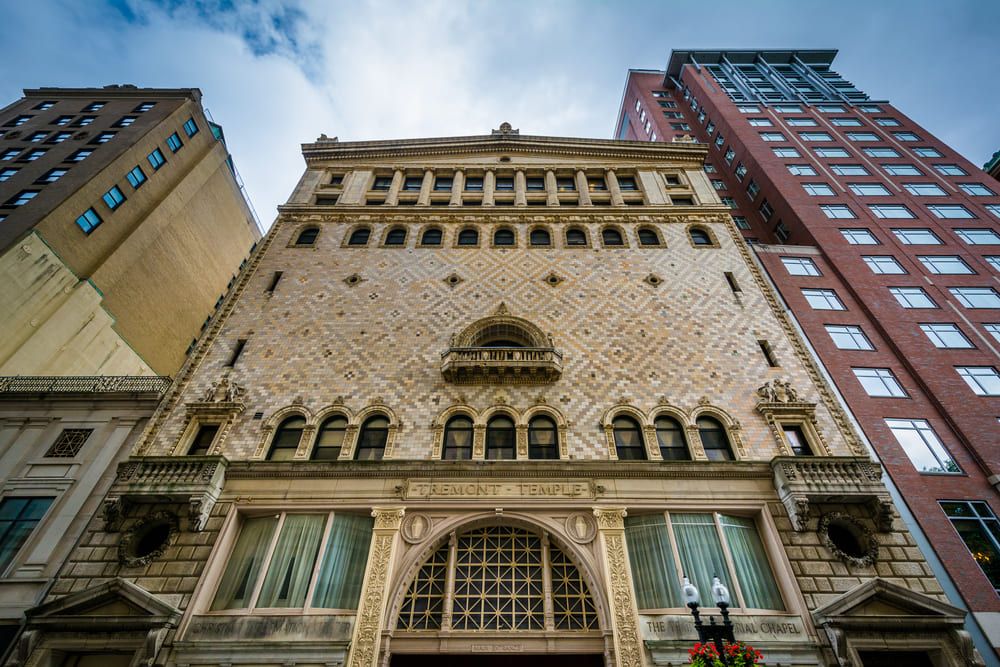
Shutterstock
The magnificent façade at number 88 is sure to catch your eye. With its mosaics and richly carved reliefs, Tremont Temple Baptist Church certainly makes an impressive entrance. But this building is far more than a place of worship. It is also one of the pioneering landmarks in the history of civil rights in the United States. The story begins in 1839, when a Boston piano manufacturer named Timothy Gilbert invited a Black family to sit beside him in the church he attended. When other members of the congregation objected and responded with open racism, Gilbert walked out. Together with several like-minded worshippers, he went on to found the Free Baptist Church. A few years later, in 1843, he spent 55,000 dollars of his own money to buy the former Tremont Theatre and convert it into a home for the new congregation. At the time, many churches rented out their pews by the year to wealthy families, reinforcing both racial and social divisions. Tremont Temple made a radical choice instead: every seat would be free, and the church would welcome everyone, regardless of skin colour or social background. The church’s history is also one of the most turbulent in Boston. The building you see today had to rise from the ashes three separate times, after devastating fires destroyed earlier structures in 1852, 1879 and 1893. Those were hardly its luckiest years, but Tremont Temple always found remarkable ways to reinvent itself. In 1850, for example, it even hosted a ticketed exhibition featuring a genuine Egyptian mummy. Above all, however, Tremont Temple became one of the great centres of Boston’s abolitionist movement. It served as an important gathering place linked to the Underground Railroad, the secret network that helped people escaping slavery reach the free states and Canada. And it was far more than a place of refuge. This sanctuary also gave the oppressed a public voice. Even after slavery was abolished, the spirit of resistance lived on. Tremont Temple continued its fight for equality by opening its doors to the suffragists and hosting major gatherings in support of women’s right to vote. In this way, every chapter of Tremont Temple’s history has secured its place in the broader story of American freedom.
Aucun avis pour le moment
