



Walk
A city of ideas, art and memory
Philadelphia, United States
Walk
A city of ideas, art and memory
Philadelphia, United States
Distance
7 kmDurée
3h00Audios
26Parcours
Loop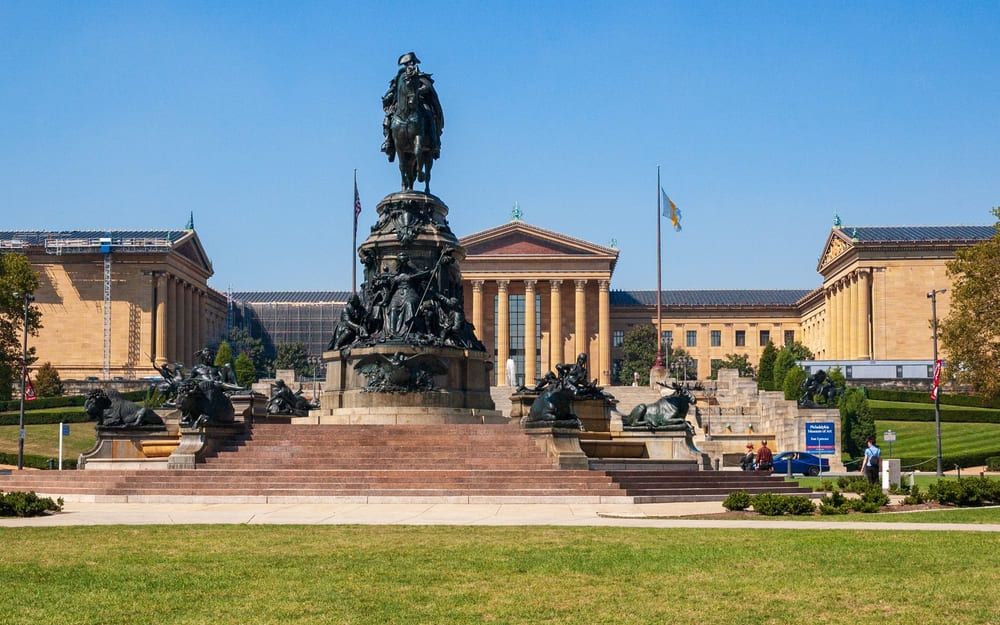
Shutterstock
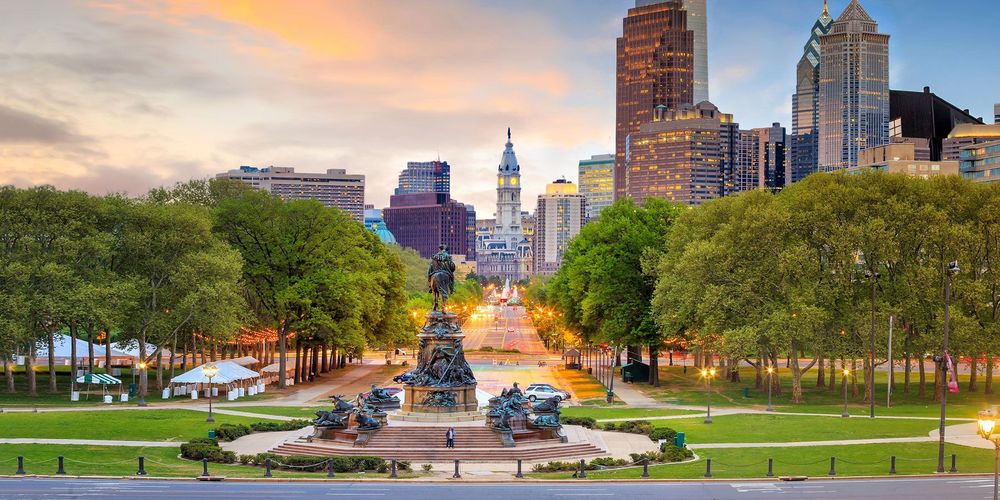
In front of you stands the Washington Monument. At first glance, you mainly notice the equestrian statue of George Washington, but the whole composition is much more than a simple sculpture. The monument was inaugurated in 1897 and created by Rudolf Siemering. At the top, Washington is shown on horseback, facing toward the city center along the axis of the Benjamin Franklin Parkway, portrayed both as a military leader and a founding figure of the nation. As you look lower, you’ll notice that the monument unfolds across several levels. At the center, allegorical figures represent the birth of the United States and its expansion, with symbolic scenes linked to the army’s march and the westward movement. But it’s really at the base that the monument becomes more unexpected. Instead of a simple pedestal, you’ll find a sculpted landscape, with figures of bison, bears, and birds, along with representations of major American rivers like the Mississippi, the Delaware, the Potomac, and the Hudson. Originally, the entire structure also functioned as a fountain. The monument itself has even been moved. It was first installed at the entrance of Fairmount Park before being dismantled and rebuilt here in the 1920s during the creation of the Parkway, with each stone carefully numbered and repositioned. Today, it marks the end of the city’s grand monumental axis. Behind you stretches the Parkway, and just ahead rise the steps of the Philadelphia Museum of Art. All that’s left now is to lace up your shoes!
Aucun avis pour le moment
