





Walk
Land of the Ancient Dragon
Hanoi, Vietnam
Walk
Land of the Ancient Dragon
Hanoi, Vietnam
7 km
Distance
3h00
Durée
29
Audios
Loop
Parcours
Shutterstock
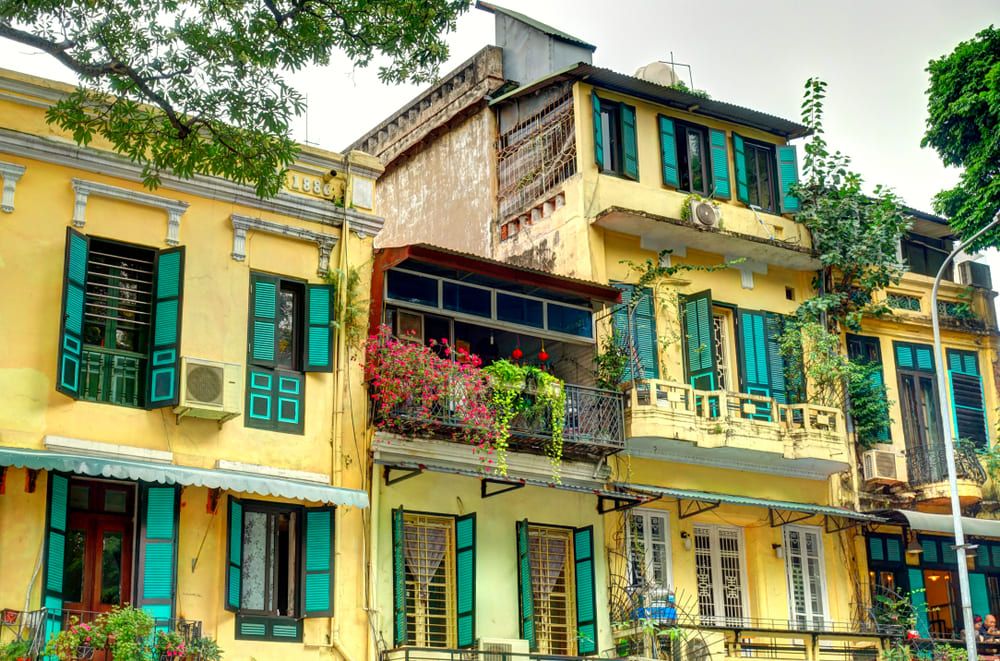
On Trang Tien Street, you enter the French Quarter of Hanoi, nicknamed the little Paris for its elegant atmosphere. The Hanoi audio-guided tour stops here to evoke this area with fine colonial buildings, a legacy of the French presence in the capital.
Located in the southeastern part of Hoan Kiem Lake, the French Quarter of Hanoi keeps many well-preserved colonial buildings, with wide avenues and elegant façades. Laid out in the era of French Indochina, it brings together the opera, prestigious hotels, banks and administrative palaces. Its refined atmosphere, blending European architecture and Vietnamese life, earned it the nickname of little Paris.
Here you wander between wide avenues, colonial façades, shops and cafés, in an elegant atmosphere. The district houses the opera, the Sofitel Legend Metropole and fine administrative buildings. It is a major stop of Hanoi for lovers of architecture and history, a stone's throw from Hoan Kiem Lake.
The French Quarter lies to the southeast of Hoan Kiem Lake, in the heart of Hanoi, reachable on foot. It is an urban district freely accessible, explored on foot to discover its colonial buildings; shops, cafés and institutions have their own hours. The area is savoured during a walk.
For its elegant atmosphere and its many well-preserved colonial buildings, a legacy of the era of French Indochina.
To the southeast of Hoan Kiem Lake, in the heart of Hanoi, around Trang Tien Street.
Aucun avis pour le moment
