






Walk
The Eternal Imperial Capital
Hanoi, Vietnam
Walk
The Eternal Imperial Capital
Hanoi, Vietnam
5 km
Distance
2h00
Durée
18
Audios
Loop
Parcours
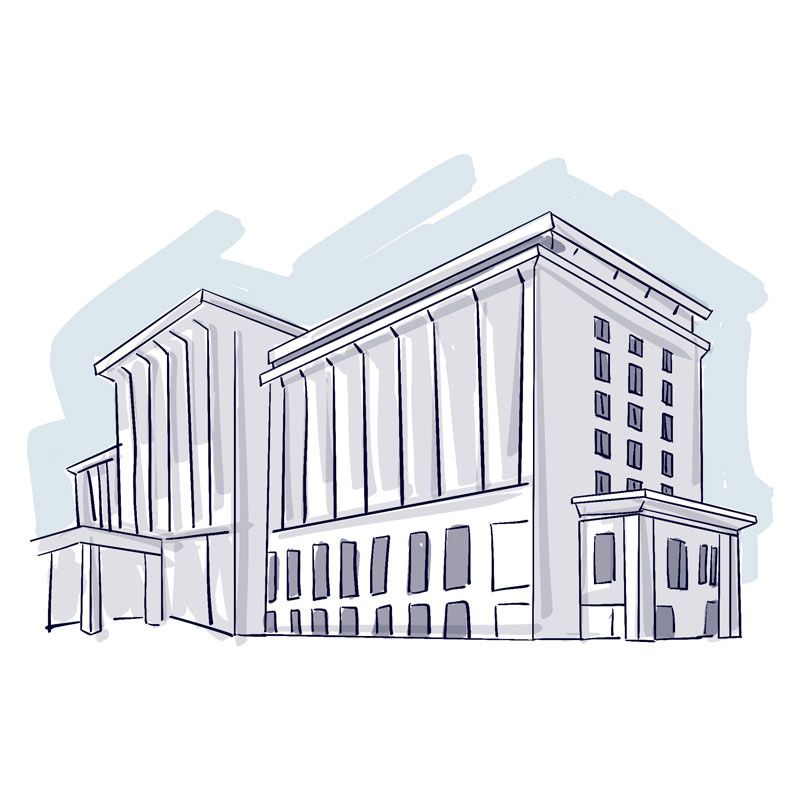
The Government Office of Vietnam is an imposing white and guarded building, a key organ of the administrative system of the country, attached to the Prime Minister. The Hanoi audio-guided tour stops here to evoke this operational brain of the government, closed to the public, and the occasion to present the political functioning of Vietnam.
On your left you glimpse an imposing building of white colour, whose entrance is very guarded: it is the Government Office of Vietnam. Strictly forbidden of access to the public, it is a key organ of the Vietnamese administrative system. It plays the role of operational brain of the government, ensuring the coordination, the planning and the execution of the political decisions. This office is directly attached to the Prime Minister and facilitates the communication between the government, the ministries and the provinces. It is the occasion to evoke briefly the political system of Vietnam. The country is a socialist Republic, led by the Vietnamese Communist Party, a single party that occupies a central place in political life. The power is organised around several great functions: the general secretary of the Party, the president of the Republic, who is the head of State, and the Prime Minister, who leads the government and the administration on a daily basis. The National Assembly, elected, votes the laws and the budget. Since the economic reforms launched in the 1980s, known under the name of Đổi Mới, Vietnam has opened its market economy while keeping its political regime, which has made it one of the most dynamic countries of Southeast Asia. This building, in the heart of the administrative district of Ba Đình, is one of its essential cogs. An official building and a cog of the State, the Government Office is a stop of the discovery of Hanoi.
Here you discover an imposing white very guarded building, the Government Office of Vietnam, a key organ of the administration attached to the Prime Minister, that coordinates and executes the political decisions; strictly closed to the public, it illustrates the system of the socialist Republic led by the Communist Party, and the administrative district of Ba Đình that surrounds it. The Government Office is a cog of the State in Hanoi. It is a stop, to be explored on foot.
The Government Office lies in the Ba Đình district, in Hanoi, in the administrative quarter near the Ba Đình Square, reachable on foot. It is an official building strictly closed to the public and guarded, that you observe only from the outside, from the street. You discover it during a walk in the district.
It is the operational brain of the government, that ensures the coordination, the planning and the execution of the political decisions; attached to the Prime Minister, it facilitates the communication between the government, the ministries and the provinces, within the socialist Republic of Vietnam led by the Communist Party. The building, strictly closed to the public, is in the administrative district of Ba Đình.
In the Ba Đình district, in Hanoi, near the Ba Đình Square, in Vietnam.
Aucun avis pour le moment
