






Walk
Land of the Ancient Dragon
Hanoi, Vietnam
Walk
Land of the Ancient Dragon
Hanoi, Vietnam
7 km
Distance
3h00
Durée
29
Audios
Loop
Parcours
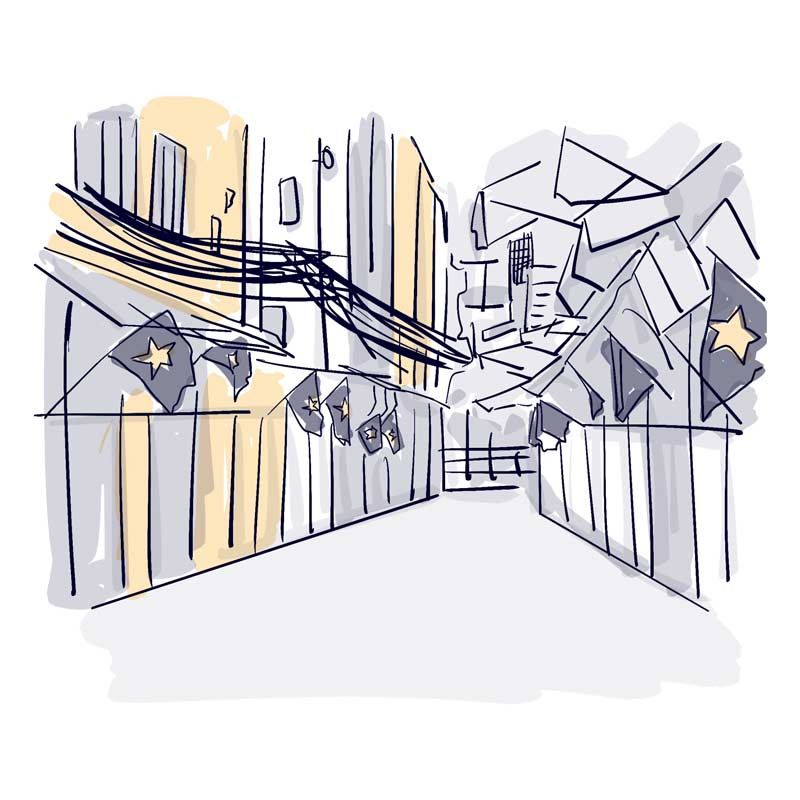
This part of the city is the old quarter of Hanoi, the historic and still very lively heart of the capital. The Hanoi audio-guided tour dwells here to evoke this maze of commercial lanes, where the authentic pulse of the city beats.
The old quarter of Hanoi developed around streets traditionally dedicated each to a trade or a commerce, many of which still bear the name. Its narrow lanes, its tube-houses, its stalls and its permanent liveliness make it the historic and popular heart of the capital. Between discreet temples, markets and scooters, it is one of the liveliest and most authentic areas of Hanoi.
Here you wander between commercial lanes, old houses, temples, markets and street stalls, in incessant liveliness. The old quarter houses treasures like the Bach Ma Temple and the old house of Ma May. It is a must-see stop of Hanoi, ideal for feeling the soul and the daily life of the city.
The old quarter of Hanoi lies to the north of Hoan Kiem Lake, in the heart of the capital, reachable on foot. It is an urban area freely accessible, explored on foot along its lanes; shops and stalls have their own hours. Very lively and busy, it requires vigilance with the traffic of scooters.
Because it is the historic and lively heart of the capital, organised around craft streets, with its tube-houses, its temples and its markets.
To the north of Hoan Kiem Lake, in the heart of the Vietnamese capital.
Aucun avis pour le moment
