







Walk
Land of the Ancient Dragon
Hanoi, Vietnam
Walk
Land of the Ancient Dragon
Hanoi, Vietnam
7 km
Distance
3h00
Durée
29
Audios
Loop
Parcours
Shutterstock
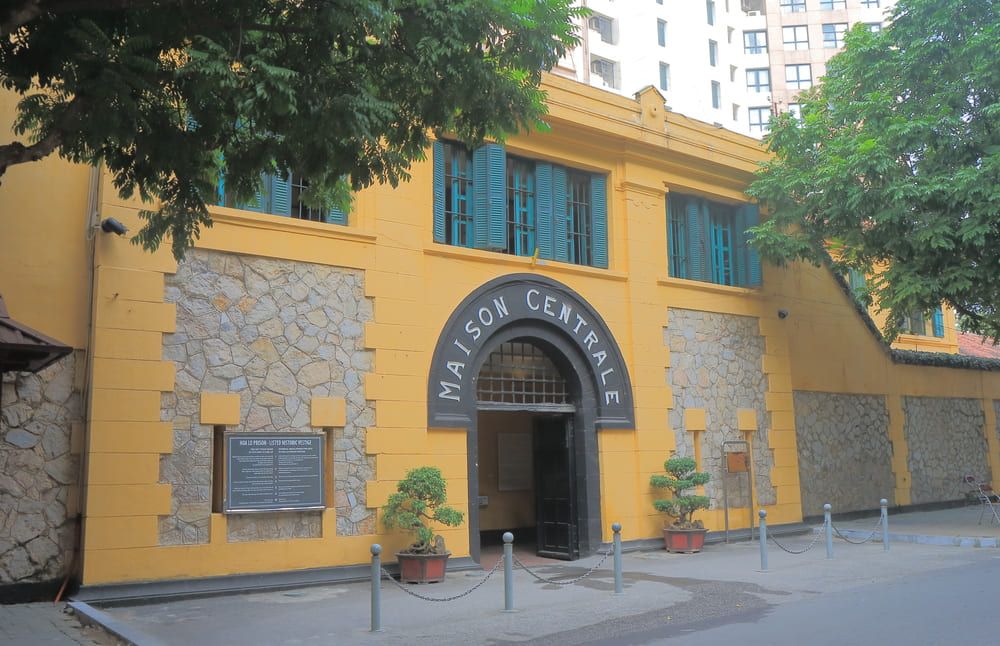
Hoa Lo Prison, also called the Maison Centrale, is one of the most history-laden places of Hanoi. The Hanoi audio-guided tour stops here, with respect, to evoke this memorial site become a museum, a witness of painful pages of the history of Vietnam.
Before being a prison, the site housed the artisanal village of Phu Khanh. Hoa Lo Prison was built by the French in the colonial era and remained sadly known for its harsh detention conditions. Become a museum, it preserves the memory of the prisoners who were locked up there and the events that took place there, through cells, objects and testimonies. It is an essential memorial site of Hanoi.
Here you discover the preserved cells, the vestiges of the prison and an exhibition retracing its history and that of its detainees. The place, marked by gravity, invites contemplation and reflection. It is a powerful and instructive stop of Hanoi, to understand a painful part of the history of Vietnam.
Hoa Lo Prison lies on Hoa Lo street, in the Hoan Kiem district, in Hanoi, reachable on foot. Become a museum, it can be visited; its hours and prices vary by day and season. It is best to check the arrangements before coming and to walk through the place with the respect due to a memorial site.
It is a former prison built by the French, also called the Maison Centrale, now a museum and memorial site of the history of Vietnam.
On Hoa Lo street, in the Hoan Kiem district, in Hanoi, in Vietnam.
Aucun avis pour le moment
