




Walk
The Eternal Imperial Capital
Hanoi, Vietnam
Walk
The Eternal Imperial Capital
Hanoi, Vietnam
5 km
Distance
2h00
Durée
18
Audios
Loop
Parcours
Shutterstock
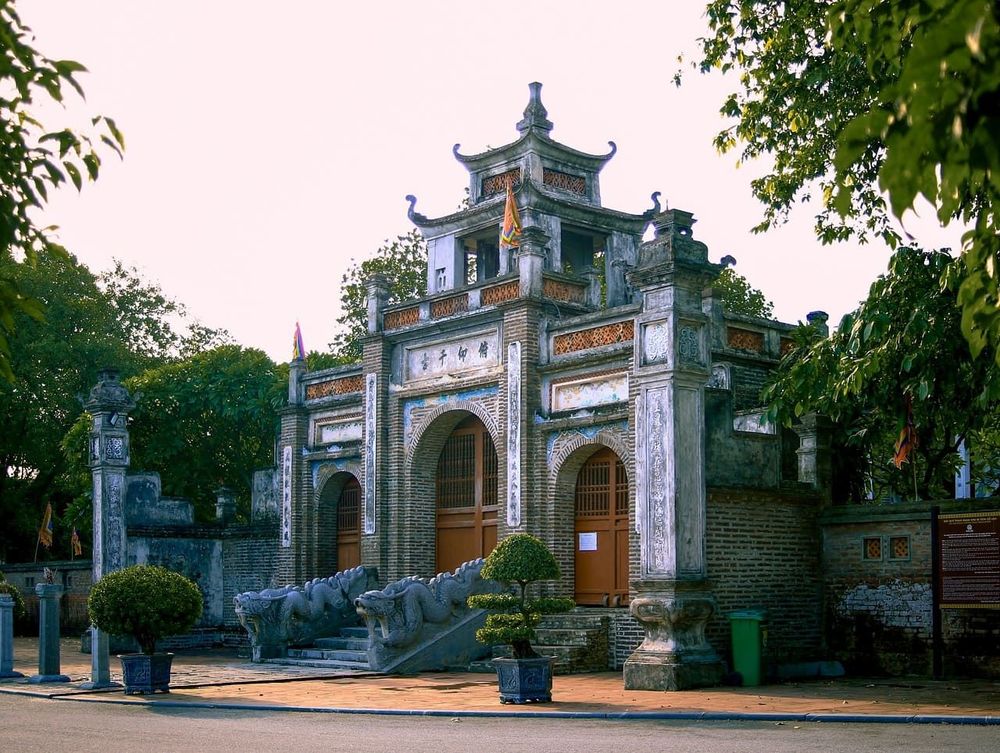
The imperial citadel of Thang Long is one of the major sites of Hanoi, the heart of Vietnamese power for nearly a thousand years, listed as World Heritage of Unesco. The Hanoi audio-guided tour stops here to evoke this former imperial centre founded in 1010 by King Lý Thái Tổ, under the great Lý, Trần and Lê dynasties.
You are here in front of the entrance of one of the major sites of the Vietnamese capital: the imperial citadel of Thang Long. Thang Long is the former name of Hanoi; it means 'the dragon taking flight' and became the name of the capital in 1010, when King Lý Thái Tổ decided to install there the centre of power. Founded at that time, the citadel rises on older vestiges, dating from the periods of Chinese domination, up to the seventh century. For nearly a thousand years, under the Lý, Trần and Lê dynasties, it constituted the political heart of Vietnam. Behind its walls were then the imperial palaces, the ceremonial spaces and the residences of the court. Over the centuries and the upheavals, a great part of the original buildings has disappeared, but the site keeps precious vestiges: the main gate, the imposing Flag tower, foundations of palaces, staircases adorned with sculpted dragons, as well as a rich archaeological ensemble brought to light recently, that has delivered objects of all eras. During the war, the citadel also sheltered the headquarters of the people's army, adding a page of contemporary history to this thousand-year-old place. Listed as World Heritage of Unesco, it testifies to the long continuity of Vietnamese civilisation. An imperial city and a cradle of power, the citadel of Thang Long is a fine stop of the discovery of Hanoi.
Here you discover the former heart of Vietnamese power, founded in 1010 by King Lý Thái Tổ on older vestiges, political centre of the country under the Lý, Trần and Lê dynasties for nearly a thousand years; listed as World Heritage of Unesco, the site keeps the main gate, the Flag tower, foundations of palaces, staircases with sculpted dragons and a rich archaeological ensemble. The citadel of Thang Long is a major site of Hanoi. It is a fine stop, to be explored on foot.
The imperial citadel of Thang Long lies on Hoàng Diệu street, in the Ba Đình district, in Hanoi, reachable on foot. It follows its own days and opening hours, variable, and entry is generally subject to a fee. It is best to enquire before coming.
The former heart of Vietnamese power, founded in 1010 by King Lý Thái Tổ on vestiges going back to the Chinese domination, and political centre of the country under the Lý, Trần and Lê dynasties for nearly a thousand years; listed as World Heritage of Unesco, it keeps the main gate, the Flag tower, foundations of palaces and a rich archaeological ensemble.
On Hoàng Diệu street, in the Ba Đình district, in Hanoi, in Vietnam.
Aucun avis pour le moment