






Walk
Land of the Ancient Dragon
Hanoi, Vietnam
Walk
Land of the Ancient Dragon
Hanoi, Vietnam
7 km
Distance
3h00
Durée
29
Audios
Loop
Parcours
Shutterstock
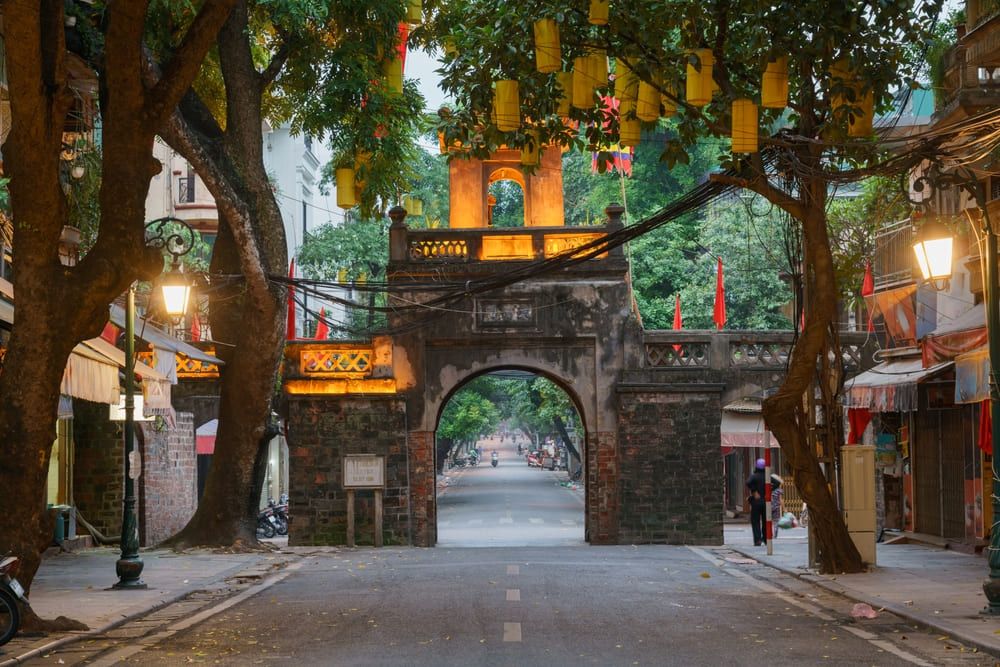
The Quan Chuong gate is the only one still standing among those that once protected the old town of Hanoi. The Hanoi audio-guided tour stops here to evoke this unique vestige of the old fortifications of the capital.
Built in 1749, the Quan Chuong gate, in Vietnamese Ô Quan Chưởng, is the last of the gates that once marked the enclosure protecting the old town of Hanoi. Massive and well preserved, it stands on Hang Chieu Street and testifies to the defensive system of the capital at the time. It is a precious vestige of the historic heritage of the old quarter.
You admire the massive arch of the Quan Chuong gate, the unique vestige of the old ramparts of Hanoi, in the liveliness of the old quarter. The gate recalls the fortified past of the city. It is a stop for lovers of history and heritage, during a walk in the lanes.
The Quan Chuong gate lies on Hang Chieu Street, in the old quarter of Hanoi, reachable on foot. It is an open-air monument, freely accessible at all times, with no ticket office; you observe it and pass nearby on the level. The place is discovered during a walk in the old quarter.
Because it is the only gate still standing among those that once protected the old town of Hanoi; it was built in 1749.
On Hang Chieu Street, in the old quarter of Hanoi, in Vietnam.
Aucun avis pour le moment
