© Shutterstock
 Votre guide Ryo
What to Do in Sofia in 2026: 15 Experiences to Live in the Bulgarian Capital
Sofia rarely tops European city-break lists, yet the Bulgarian capital lines up four places of worship from different religions within less than ten minutes' walk of each other, Roman ruins beneath its marble pavements and a skiable mountain visible from the city centre. Wondering what to do in Sofia really comes down to choosing between Byzantine catacombs, an open-air popular market and a summit at 2,290 metres — often on the same afternoon.
In just a few days, you can climb the golden steps of Alexander Nevsky Cathedral, haggle over grilled peppers at the Women's Market, spot a fresco painted in 1259 in a chapel the size of a garage, then take a cable car up Vitosha before coming back down to dinner over a shopska salad and a glass of rakia. Sofia works just as well as a two-day trip as a four-day stay, and the surroundings — from Rila Monastery to Pancharevo Lake — are well worth a dedicated excursion in their own right. The city also remains one of the most affordable European capitals, which partly explains why so many travellers end up extending their stay well beyond their original plans.
On the safety front, Sofia is far from a dangerous city: travellers who worry before booking their ticket generally discover a fairly calm capital where basic precautions are more than enough. That said, the pace here is different from a Western European capital: buses are less frequent outside rush hours, the metro closes relatively early, and it is better to build some flexibility into your itinerary rather than racing from one sight to the next.
If you are visiting other European capitals this year, the Ryo app offers audio-guided tours in several dozen cities across the continent — a great way to complement this guide, written specifically for Sofia, with other audio-guided experiences once you move on to destinations already covered by our audio guides.
1. Marvel at Alexander Nevsky Cathedral
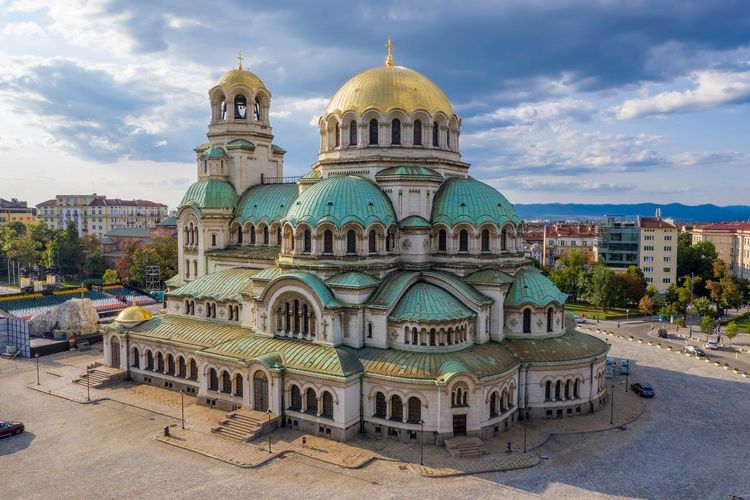
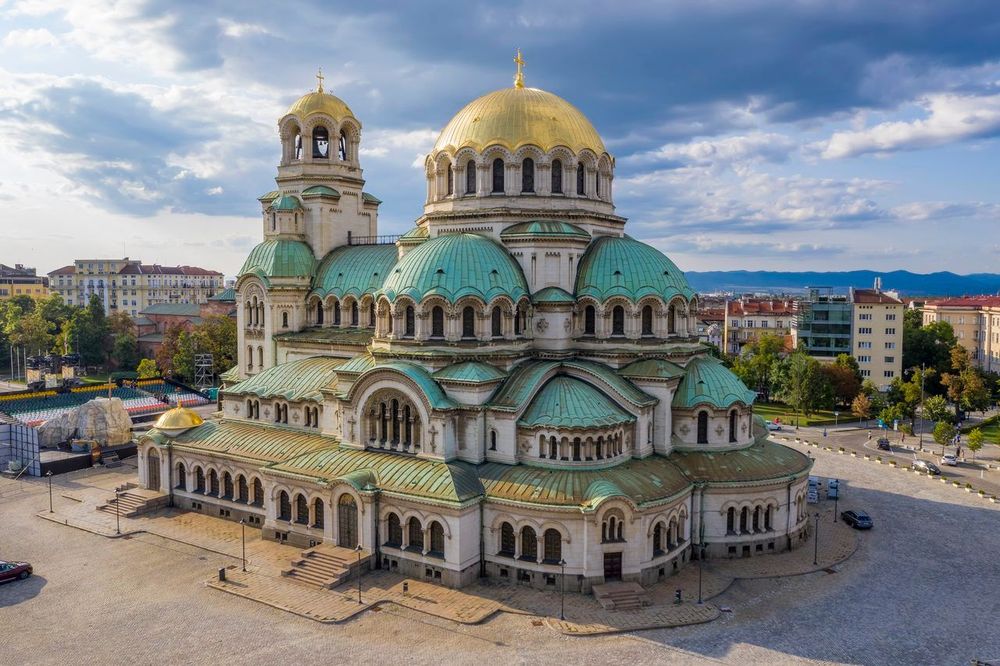
Alexander Nevsky Cathedral (Alexander Nevsky Square, 1000 Sofia, rated 4.8/5 on Google from 26,546 reviews) has dominated Sofia for over a century and remains the almost obligatory starting point for any visit. Built between 1882 and 1912 to honour the 200,000 Russian soldiers who fell during the Russo-Turkish War that freed Bulgaria from Ottoman rule, it bears the name of the patron saint of Tsar Alexander II, the liberating tsar. The neo-Byzantine structure rises to 45 metres beneath a central dome covered in gold leaf, visible from several surrounding hills — including certain viewpoints on Mount Vitosha on a clear day.
Inside, the space can hold up to 5,000 worshippers beneath mosaics and marble imported from Italy, Brazil and Egypt at the time of construction. Twelve bells ring from the bell tower, the heaviest weighing over 12 tonnes; their resonance can sometimes be heard deep in the lanes of the neighbouring university district. The crypt, accessible through a separate entrance on the left side of the building, houses one of the richest collections of Orthodox icons in the Balkans, with pieces dating from the 14th century and originating from monasteries that have since disappeared or been closed to the public.
Entry to the main nave is free, but the crypt requires a modest entrance fee of a few leva. Avoid Sunday mornings if you want to photograph the interior without the crowds attending religious services: opt instead for a weekday afternoon between 2 pm and 4 pm, when light streams through the side stained-glass windows and illuminates the gilded ceiling frescoes. Shoulders and knees must remain covered, even for casual visitors unfamiliar with Orthodox customs, and a shawl is sometimes lent at the entrance to women in lighter clothing.
The construction of the sanctuary was interrupted several times, delayed by funding issues and then by the First World War, so the final consecration did not take place until 1924, twelve years after the main structure was completed. Just behind the building, the small church of Sveta Sofia — much older and far more austere — ultimately gave its name to the entire city: built as early as the 6th century, it only passed its name to the settlement much later, around the 14th century, a useful reminder that the gilded cathedral, impressive as it is, is not the oldest sanctuary in the neighbourhood. The National Gallery of Foreign Art, housed just opposite on the square, makes a pleasant addition to the visit for those wishing to extend the stop by an extra hour.
Just south of the square, the government district groups the National Assembly — recognisable by its golden inscription evoking the unity and strength of the Bulgarian people — and the Council of Ministers, whose austere architecture deliberately contrasts with the religious grandeur of the nearby cathedral. You will often come across students from St Kliment Ohridski University, whose main neoclassical building borders the same axis and remains one of the most photographed in the capital, even without going inside.
On the esplanade in front of the cathedral, an antiques market sets up every morning, spread out along the pavement. You will find a jumble of old icons, Soviet cameras, military medals from the communist era and vinyl records you would be hard pressed to find elsewhere. It is an excellent vantage point for understanding how thoroughly Sofia layers its historical strata — from Russian imperial splendour to the decades of the Eastern Bloc — without ever quite erasing them. Allow a good hour for the whole stop, cathedral and market included, before walking across to St George Rotunda five minutes away.
2. Step Back in Time at St George Rotunda and the Serdica Ruins
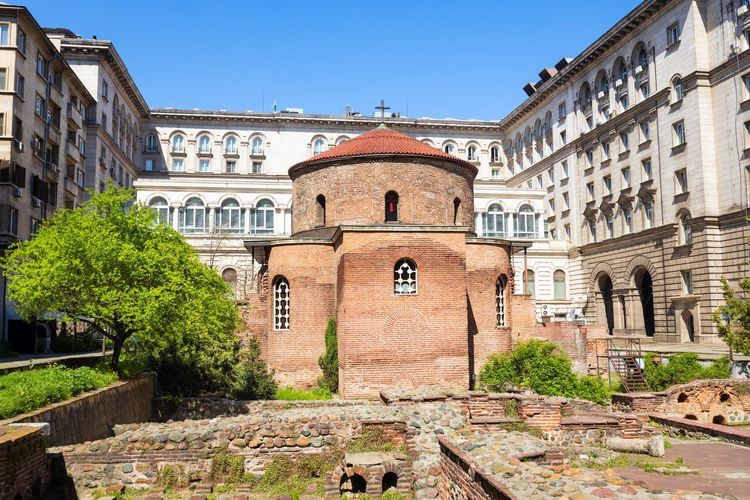
A stone's throw from the cathedral, tucked inside the inner courtyard of a Sheraton hotel, stands St George Rotunda (2 Dondukov Boulevard, 1000 Sofia, rated 4.6/5 on Google from 3,767 reviews), a small red-brick building dating from the 4th century. It is one of the oldest structures still standing in the Balkans, predating the modern city by several centuries. Its circular plan, typical of late Roman architecture, passed without interruption through the Roman, Byzantine and Ottoman periods, serving in turn as a Christian place of worship, then a mosque, before returning to use as an Orthodox church.
The interior preserves superimposed layers of frescoes, the oldest dating from the 6th century and the most recent from the 14th. Restorers have deliberately left certain strata visible rather than covering them over, offering a striking shortcut through sixteen centuries of religious painting in a space no bigger than a living room. Access is free with no fixed opening hours, making it an easy stop to slip in between two other visits, even early in the morning before the other sites open.
A few hundred metres away, the Serdica ruins were uncovered during the construction of the metro line, right in the city centre, beneath the square now occupied by the Presidency building and the TSUM department store. The ancient Roman city of Serdica, founded in the 1st century, now spreads in the open air across several hundred square metres: you literally walk between the columns of an ancient forum, on glass walkways that allow pedestrians to move around without disturbing the site. Explanatory panels in English and Bulgarian explain the baths, paved streets and residential foundations that were unearthed.
What strikes you most is how naturally the site is integrated into daily city life: Sofia residents cross these ruins every day on their way to the metro or the nearby shopping centre, with no barrier really separating Antiquity from the present. Emperor Constantine himself reportedly once declared he preferred Serdica to Rome — an anecdote that local guides love to share to underline the city's historical importance well before the founding of modern Sofia. The Serdika metro station itself displays, behind glass panels, an additional section of remains uncovered during construction work, a discreet way of extending the visit without even leaving the transport network. The surface archaeological site remains free to enter and accessible at all hours — a rarity for remains of this scale in the heart of a European capital.
3. Discover the Frescoes of Boyana Church
Listed as a UNESCO World Heritage Site since 1979, Boyana Church (3 Boyansko Ezero Street, 1616 Sofia, rated 4.5/5 on Google from 7,541 reviews) nestles at the foot of Vitosha, in a residential neighbourhood about twenty minutes from the centre. From the outside, nothing hints at the importance of the place: a small stone building with three successive naves, built between the 10th and 19th centuries. It is inside that the magic happens.
The most celebrated frescoes date from 1259 and rank among the finest examples of medieval European painting still visible in situ. The portrait of despot Kaloyan and his wife Desislava, painted with a realism rare for the period, predates the Italian Renaissance by several decades in its treatment of faces and expressions. Art historians regard it as one of the major milestones of pre-Renaissance painting — an argument that local guides enjoy sharing with visitors surprised by the small scale of the site.
The visit is strictly managed: groups of no more than ten people, for ten minutes inside, in order to preserve the humidity and temperature that protect the original pigments. Book your time slot in advance during high season, especially between June and September, as tickets are sold in limited hourly batches. Photography inside is not permitted — a point that often disappoints visitors who were not warned in advance.
The building narrowly escaped demolition in the early 20th century, before a restoration campaign in the 1930s revealed the exceptional scope of the paintings beneath layers of soot accumulated over centuries of liturgical candles. A second restoration, partly funded by UNESCO in the 2000s, permanently stabilised the pigments and enabled their definitive listing. Combine this visit with the nearby National History Museum: the two sites are fifteen minutes' walk from each other, at the foot of the same mountain range, and a single taxi ride from the centre comfortably covers both stops.
4. Explore the Thracian Treasure at the National History Museum
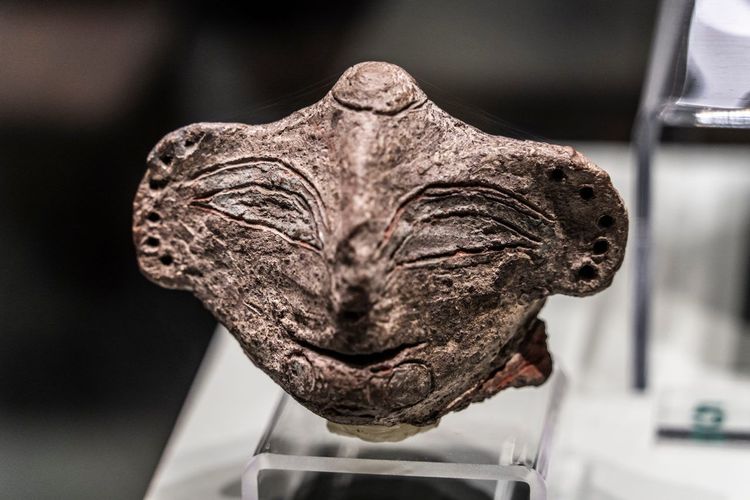
Housed in the former government residence of Boyana — a massive building constructed under the communist regime for Todor Zhivkov — the National History Museum (16 Vitosha Boulevard, 1618 Sofia, rated 4.6/5 on Google from 5,468 reviews) is the largest museum in the Balkans by exhibition space. Its collections span nearly eight millennia, from the earliest traces of Neolithic settlement to Bulgarian independence in the 19th century.
The most spectacular section remains the one devoted to Thracian goldsmithing: gold and silver pieces 2,500 years old, found in burial mounds in the centre of the country, bear witness to a civilisation as refined as it is little known. The Panagyurishte Treasure, displayed on a rotating basis, includes rhytons shaped like animal heads of remarkable craftsmanship for the period.
The rooms dedicated to the Ottoman period and the Bulgarian National Revival of the 19th century are also worth a visit, with embroidered traditional costumes and domestic objects that tell the story of rural life before industrialisation. A more discreet wing traces the communist decades through propaganda posters, uniforms and everyday objects — a useful counterpoint to the visit of the Soviet Army Monument mentioned later in this guide. A section dedicated to the April Uprising of 1876 and the National Revival completes the picture for those wishing to understand how Bulgaria built its identity between two successive occupations.
Allow a good two hours to walk through all the rooms, starting with the ground floor devoted to Antiquity before working your way up to the Ottoman and modern periods. The museum remains relatively uncrowded compared to the city-centre sites, allowing you to take your time in front of the display cases without jostling. A dedicated bus connects the nearest metro station to the museum — a practical option if you are not combining the visit with Boyana.
5. Hike or Ski on Mount Vitosha
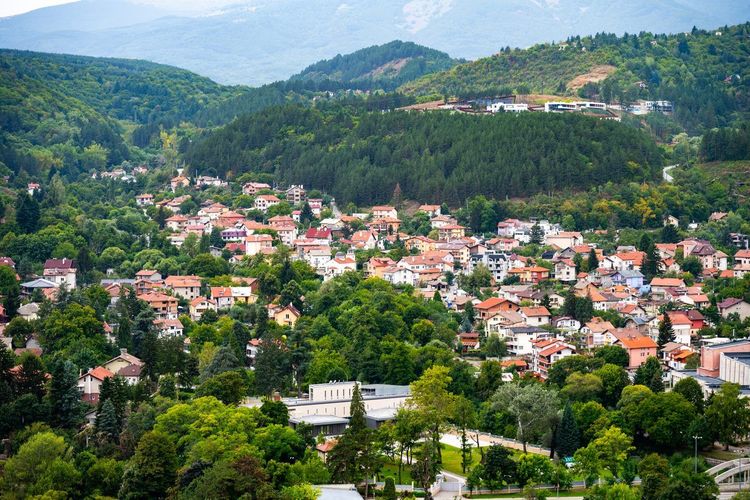
Few European capitals offer a mountain of over 2,000 metres within less than an hour of the city centre. Mount Vitosha (Vitosha Nature Park, Sofia, rated 4.8/5 on Google from 9,823 reviews) peaks at 2,290 metres at the summit of Cherni Vrah and can be reached by city bus from the metro terminus, with no car required.
In summer, the nature park offers dozens of kilometres of marked trails, from family-friendly routes around the Aleko plateau to the more demanding ascent to the summit. The most photographed rock formation is the Stone River (Zlatnite Mostove), a field of granite boulders fifteen million years old stretching for nearly two kilometres through the forest. Sofia residents come here to picnic at weekends, and the spot remains surprisingly quiet on weekdays.
The nature park also shelters a small reserve for Carpathian brown bears rescued after being removed from circuses or illegal breeding operations elsewhere in the Balkans. The enclosure, managed by a local association, can be visited for free from an observation path at a respectful distance from the animals. Higher up, a few mountain huts serve simple refuge cooking — soups and grilled meats — much appreciated by hikers after several hours on the trail.
In winter, the Aleko ski resort operates with several lifts and slopes suitable for both beginners and experienced skiers, at prices noticeably lower than those of Western Alpine resorts. A day pass often costs less than 40 leva, with equipment rental included at some plateau chalets. Group lessons for beginners are also affordable — an appealing option for anyone who has never skied before and wants to try without committing to a dedicated winter sports holiday.
Pack warm clothing even in summer: the temperature at the summit can easily drop 10 degrees compared to the city centre, and fog can roll in within minutes. The Simeonovo cable car on the eastern side of the mountain offers the fastest and most panoramic ascent in clear weather, with views stretching on a fine day as far as the foothills of the central Balkans.
6. Contemplate the Soviet Army Monument
Erected in 1954 to mark the ten-year anniversary of Bulgaria's liberation by the Red Army, the Soviet Army Monument (Liberty Park, 1000 Sofia, rated 4.7/5 on Google from 367 reviews) remains one of the most debated remnants of the communist era in the capital. The central sculptural group depicts a Soviet soldier surrounded by grateful civilians, flanked by two lateral friezes recounting the victory over Nazism.
Since the fall of the regime in 1989, the monument has regularly served as a canvas for anonymous artistic interventions. In 2011, a collective repainted the soldiers overnight as American superheroes, sparking a national debate about memory of that period. Further interventions have followed over the years, sometimes wiped away within hours, sometimes tolerated for several months by the city authorities before eventually being cleaned off.
The debate over the monument's future remains heated in Bulgaria: some elected officials call for its outright removal, in line with many Soviet monuments toppled elsewhere in Eastern Europe, while others defend its preservation in the name of historical memory, whatever reading one places on it today. This tension, unlike in other former Soviet-bloc capitals, has so far led to no definitive decision.
The site can be visited in about fifteen minutes, in Liberty Park where joggers and families cross paths at weekends. It makes a useful complement to the National History Museum visit for those interested in communist-era Sofia and the way the city is still negotiating its Soviet legacy today — between heritage preservation and the desire to turn the page.
7. Stroll Through Borisova Garden
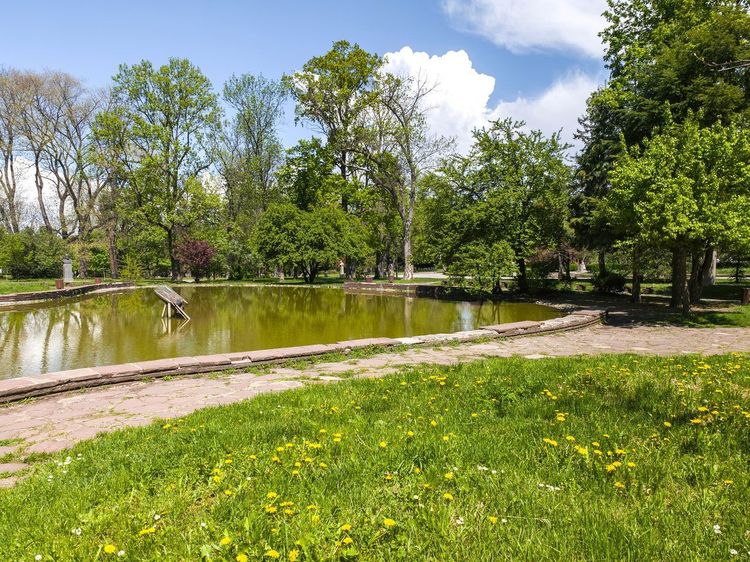
The largest green space in the capital, Borisova Garden (Tsar Osvoboditel Boulevard, 1421 Sofia, rated 4.6/5 on Google from 29,288 reviews) (Borisova Gradina) spreads over more than 300 hectares between the city centre and the residential neighbourhoods to the east. Laid out in the late 19th century on the model of Western European landscape parks, it blends shaded avenues, an artificial lake and sports facilities.
Vasil Levski Stadium, the national football ground with a capacity of over 43,000 spectators, borders one side of the park. Inside, the small Ariana Lake attracts boating enthusiasts in summer and improvised skaters during the rare winters cold enough to freeze its surface. Local joggers consider the full loop of the park their go-to training circuit — approximately 6 kilometres depending on the route taken.
Not far from the main entrance, fixed stone tables are permanently occupied by chess players, often retired residents from the neighbourhood who come to play several games over the course of an afternoon. It is also near the park that the National Palace of Culture (NDK) stands — a vast cultural complex built in 1981 for the celebrations of the thirteenth centenary of the Bulgarian state, now converted into a concert hall and temporary exhibition venue.
Come in the late afternoon, when the low light filters through the centuries-old tree canopy and the café terraces along the edge of the park fill with regulars. It is also one of the few places in Sofia where you encounter as many Bulgarian families as tourists, far from the bustle of the historic centre.
8. Walk Down Vitosha Boulevard
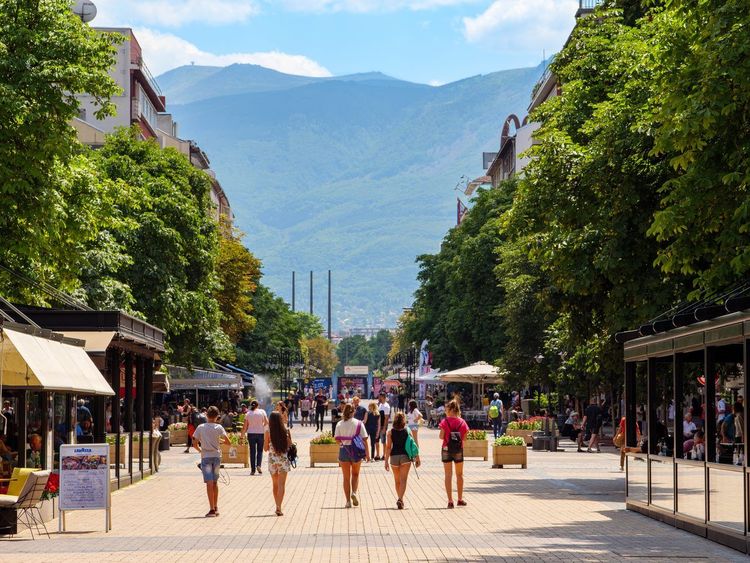
The capital's main pedestrian artery, Vitosha Boulevard (1000 Sofia, rated 4.5/5 on Google from 9K reviews) runs from Sveta Nedelya Square to the foot of the mountain of the same name, offering an unobstructed view of the snow-capped peaks for much of the year. This is where international brands, pavement cafés and street vendors selling handmade jewellery and souvenirs are concentrated.
As evening falls, the terraces fill with locals out for dinner or a drink, and street musicians take up position at the busiest intersections. Prices remain well below those in Western European capitals: a full meal at a traditional tavern on the boulevard rarely comes to more than 15 euros per person, drinks included.
Midway along, look up at the Art Nouveau façades restored in recent years, remnants of a commercial prosperity that predates the Second World War. The Ivan Vazov National Theatre, a few streets away, is also worth a detour for its illuminated neoclassical façade in the evening, even without attending a performance. Several contemporary art galleries, tucked into discreet inner courtyards behind the boulevard, complete the cultural offering of the neighbourhood for those who like to stray from the main shopping streets.
You can move effortlessly from the boulevard to Sveta Nedelya Square, St George Rotunda or the Women's Market — all reachable on foot in under ten minutes. It is often the natural thread running through a first half-day of exploration, before venturing into more outlying neighbourhoods.
9. Shop at the Women's Market
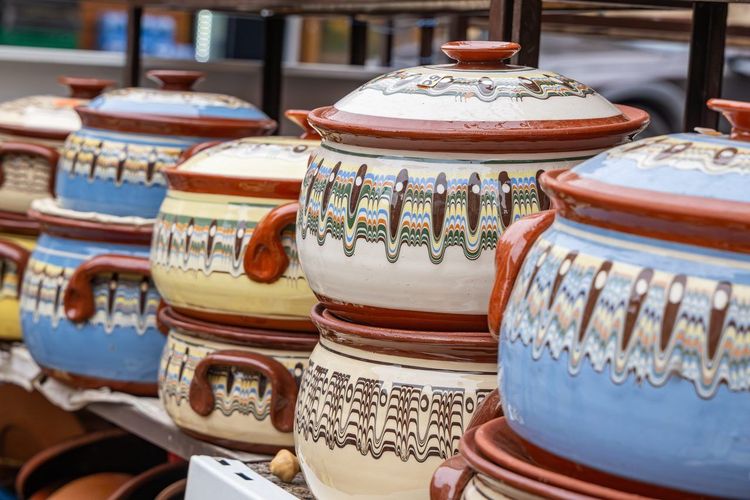
A long-standing institution in the neighbourhood of the same name, the Women's Market (Stefan Stambolov Boulevard, 1202 Sofia, rated 3.8/5 on Google from 15,234 reviews) (Zhenski Pazar) has gathered producers, wholesalers and small traders across several pedestrian streets in the city centre for over a century. People come for seasonal fruit and vegetables, spices sold by weight and farmhouse cheeses, at prices noticeably lower than in supermarkets.
The market owes its name to the historical role of Bulgarian women in street trading — a tradition that continues today, even if the stalls have diversified over time. You will find everything from dried herbs sold in bulk to haberdashery and cheap clothing, in an atmosphere far more authentic than the tourist streets of the historic centre.
The surrounding neighbourhood, long considered working-class and somewhat overlooked, has been attracting more tourist footfall in recent years without losing its character as a local market. You encounter a mixed population — Turkish, Roma and Bulgarian — that has coexisted around the same stalls for generations, with its own specialist grocery shops and street vendors selling still-warm flatbread.
Come in the morning, between 8 am and 11 am, to make the most of the freshest produce and avoid the afternoon heat in summer. A few basic words of Bulgarian, even approximate, are often enough to earn a smile and sometimes a small discount from vendors used to rushed tourists. Keep an eye on your bag in the busiest aisles, as in any well-attended popular market.
10. Cross the Square of Religious Tolerance
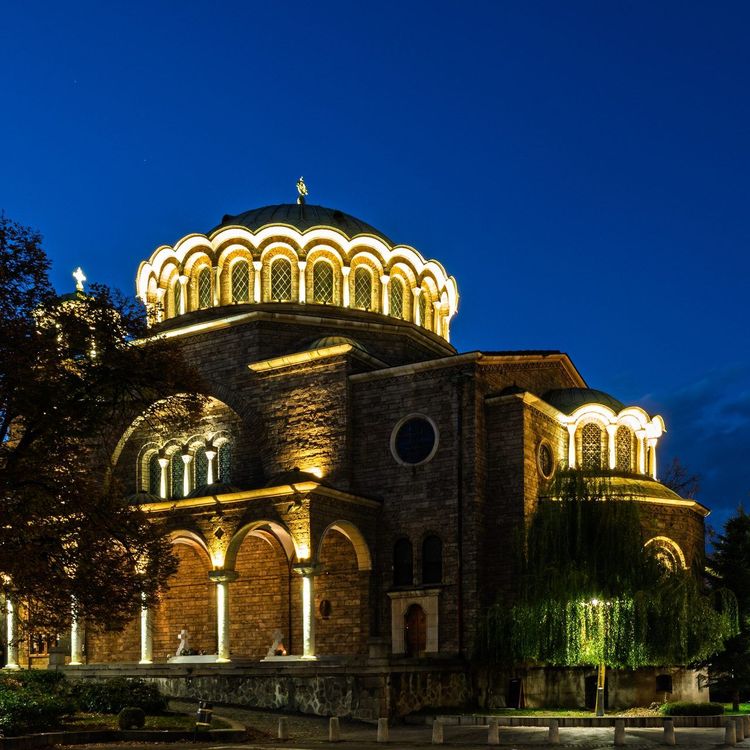
A few hundred metres from the Women's Market, one of Europe's rarest ensembles comes into view: four places of worship from different faiths visible from the same intersection, nicknamed the Square of Religious Tolerance. Here you will find the Sofia Central Synagogue — one of the largest in Europe, with its nearly two-tonne bronze chandelier — the Banya Bashi Mosque (1 Maria Louisa Boulevard, 1000 Sofia, rated 4.4/5 on Google from 3,706 reviews), built in the 16th century by Ottoman architect Mimar Sinan, Sveta Nedelya Church and the Catholic Cathedral of St Joseph.
The mosque remains active and can be visited outside prayer times, provided you remove your shoes and cover your shoulders if you are a woman. Its single dome and slender minaret stand out against the surrounding neo-Byzantine architecture — a visible reminder of the five centuries of Ottoman presence in the region.
The synagogue can be visited by prior arrangement, often as part of a brief presentation on the history of the Bulgarian Jewish community — known for having been largely spared from deportation during the Second World War thanks to the mobilisation of public opinion and the local Orthodox Church. A small adjoining museum traces this episode through period documents and testimonies, a useful complement for understanding the symbolic significance of the place.
The Catholic Cathedral of St Joseph, more recent — having been rebuilt in the 2000s after the original building was destroyed in the 1944 bombings — quietly completes the religious picture of the crossroads, often overlooked by hurried visitors in favour of the three more spectacular monuments. Each year, an informal gathering brings together representatives of the four religious communities on the square — a deliberate symbol promoted by the municipality to convey an image of a tolerant Sofia, claimed heir to a country that long coexisted among Orthodox Christians, Muslims and Jews without major open conflict. Allow about an hour to visit all four buildings on foot, within a radius of no more than 400 metres.
11. See the Central Mineral Baths and the Sofia History Museum
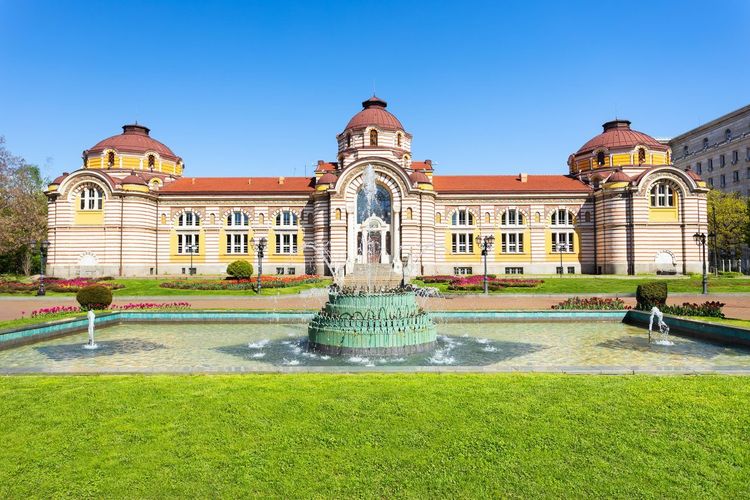
A former public bathhouse closed in 1986, the yellow and orange domed building along Maria Louisa Boulevard now houses the Sofia History Museum (4 Maria Louisa Boulevard, 1000 Sofia, rated 4.4/5 on Google from 5,174 reviews). The carefully restored Art Nouveau architecture frames a clear chronological journey through the capital's development from Antiquity to the 20th century.
Outside the building, public fountains continuously dispense warm mineral water drawn from several hundred metres underground at around 40 degrees. Locals come to fill entire jerrycans — a daily scene that often surprises passing visitors. The water is considered drinkable and is free, available around the clock. The city's very name, derived from the Greek word for wisdom, coexists in local memory with an older origin linked to the thermal springs exploited since Roman times, when Serdica was already renowned for its healing waters.
Just opposite, the historic covered market (Halite) — recognisable by its richly decorated early-20th-century façade — houses shops and stalls across several floors, a more touristy but pleasant alternative to the Women's Market for a quick food souvenir. The museum visit takes about an hour and does not require booking outside peak-season weekends.
12. Visit Vrana Royal Park and Palace
On the south-eastern outskirts of Sofia, Vrana Palace was the summer residence of the Bulgarian royal family until the abolition of the monarchy in 1946. The landscape park surrounding it, designed in the English style on the orders of Tsar Ferdinand I, blends local and imported tree species across nearly 800 hectares.
The palace itself is only open on special occasions, but the park remains accessible year-round and provides a bucolic escape much appreciated by Sofia residents in search of fresh air at weekends. Greenhouses, ponds and small stone bridges punctuate the avenues, offering a striking contrast to the urban density of the city centre, less than 20 minutes away by car.
A rose garden planted by Tsar Ferdinand — a keen botanist — gathers several dozen varieties still maintained today, particularly spectacular in bloom in May. The neighbouring greenhouses shelter a collection of orchids and exotic plants brought back from European expeditions in the early 20th century, open to the public on occasional open days announced on the city council website.
If you are travelling without a vehicle, a taxi from the centre costs only a few leva and remains the simplest option, as the buses serving the area are infrequent outside rush hours.
13. Relax by Pancharevo Lake
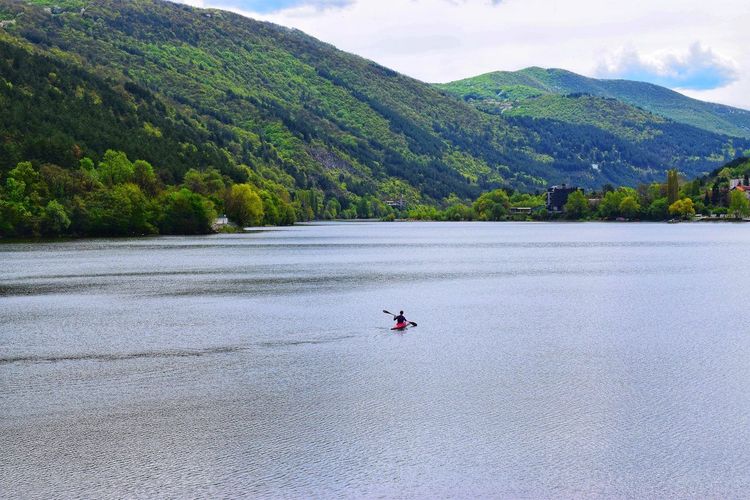
About thirty minutes from the centre, Pancharevo Lake (Pancharevo, 1137 Sofia, rated 4.5/5 on Google from 1,184 reviews) is an artificial reservoir created in the 1950s at the confluence of two rivers descending from Vitosha. Sofia residents come here to canoe, fish or simply sit on a terrace overlooking the water on fine days.
Several restaurants line the shore with views of the surrounding hills, serving freshwater fish specialities at reasonable prices. A cycle path runs along part of the lake and extends towards the neighbouring village — a pleasant option for those who rent a bike in the city rather than staying confined to the historic centre.
A few kilometres away, the small monastery of Kokalyane, nestled in the wooded gorges of the Iskar, rounds off the outing nicely for those with a car or willing to walk a short distance from the nearest bus stop. It makes for a peaceful alternative to the busier sites in the centre, particularly pleasant in the late afternoon when the summer heat subsides.
14. Taste Bulgarian Gastronomy

What to eat in Sofia is almost as important a question as which monuments to visit. Bulgarian cuisine relies on simple, often fermented ingredients and generous portions served at all hours in traditional taverns called mehana.
Shopska salad — a mix of tomatoes, cucumbers, onions and grated sirene cheese — traditionally opens the meal and appears on every menu, from tourist restaurants to neighbourhood canteens. Banitsa, a filo pastry filled with cheese and eggs, can be eaten at any time of day, from breakfast bought at a street kiosk to an improvised snack between two sights. Sweet variants exist too, filled with apples or pumpkin depending on the season.
Among main dishes, kavarma — a slow-braised stew of meat and vegetables served in a small earthenware pot — remains one of the staples of traditional mehana. Tarator, a cold soup of yoghurt, cucumber and walnuts, refreshes effectively on hot summer days. Bulgarian yoghurt, kiselo mlyako, enjoys a reputation that extends well beyond the country's borders: its particular fermentation, due to a bacterium identified locally at the beginning of the 20th century, gives it a thicker texture and a more tangy flavour than most industrial European yoghurts.
On the drinks front, rakia — a fruit brandy distilled artisanally — is served as an aperitif in almost all traditional restaurants. Many Bulgarian families still distil their own rakia from plums or grapes, and every region claims its recipe is the best. Wine lovers will also be well served: the Melnik area, a few hours to the south, produces full-bodied reds traditionally aged in clay amphorae, available in most city-centre wine shops.
For a reliable dinner, the neighbourhoods around Vitosha Boulevard and Slaveykov Square have the highest concentration of decent mehana, while the more residential Lozenets district has in recent years attracted a new generation of restaurants offering a revisited take on Bulgarian cuisine — lighter portions and careful presentation — at prices that remain reasonable nonetheless. Sofia also boasts a thriving specialty coffee scene that has been growing for a decade, driven by a new generation of roasters set up in former workshops in the city centre. Expect to pay between 10 and 20 leva for a main course in a neighbourhood mehana — a budget that remains very accessible compared to Western European capitals.
15. Escape to Rila Monastery
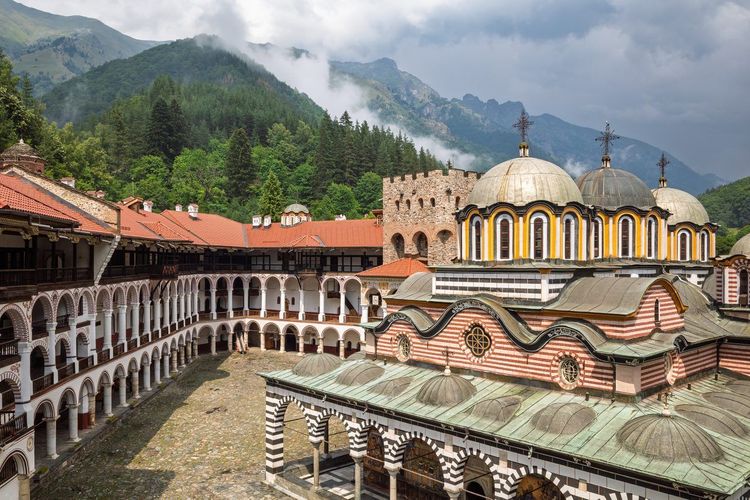
About 120 kilometres south of the capital, Rila Monastery (Rila, 2643, rated 4.8/5 on Google from 24,729 reviews) is the most popular day excursion for those wondering what to do around Sofia. Founded in the 10th century by the hermit Ivan of Rila, rebuilt in the 19th century after a fire, it is today listed as a UNESCO World Heritage Site and remains the largest Orthodox monastery in Bulgaria.
The interior architecture of the courtyard makes an immediate impression with its arcades striped in black and white, topped by dark wooden galleries that contrast with the whiteness of the outer walls. The main church, at the centre of the courtyard, preserves 19th-century frescoes depicting biblical scenes and figures of local saints, in a style blending Byzantine and Bulgarian folk influences.
The drive or organised minibus journey takes about two hours from Sofia, through mountain scenery that is particularly spectacular in autumn when the beech forests turn russet. A public bus also connects the capital to the village of Rila several times a day — a far more economical option than an organised tour, though it requires a little more travel time and a transfer to reach the monastery itself. Many visitors combine the trip with a stop at the cave of St John of Rila, a few kilometres from the monastery, where pilgrims squeeze through a narrow opening according to a centuries-old tradition, or with the small ethnography museum in the neighbouring village of Rila.
More experienced hikers sometimes extend the excursion to the Seven Rila Lakes — a group of glacial lakes reachable after several hours' walking from a nearby cable car, renowned for their turquoise waters framed by summits still snow-covered until June. This option requires a full day dedicated to it and good physical condition, but remains one of the most spectacular hikes in the entire country.
Plan to leave early in the morning — before 8 am if possible — to avoid the group coaches that arrive in the middle of the day and to enjoy softer light for photographing the inner courtyard. Clothing covering shoulders and knees is required, as in most Orthodox places of worship in the country.
While Rila Monastery remains the most requested excursion, other options are available to travellers staying more than four days in the region: the southern side of Vitosha Gorge, the Trigrad Caves further to the south-east, or the historic city of Plovdiv, reachable in just over an hour by train. Whether you plan your stay over two, three or four days, the surroundings of Sofia offer more than enough to complement an already packed urban programme, and the Ryo app can then accompany you on other stages of your European itinerary through its audio-guided tours.
FAQ
How many days should I plan to visit Sofia?
Two days are enough to cover the essentials of the historic centre, including the cathedral, Roman ruins and Vitosha Boulevard. With three days, add Vitosha and Boyana. Over four days, a trip to Rila Monastery ideally rounds out the stay without rushing, and even leaves time for a quieter morning at Pancharevo Lake.
Is Sofia a Dangerous City?
No, Sofia ranks among the safest European capitals for visitors, with very low violent crime. The usual precautions are sufficient: watch your belongings on crowded public transport, stay alert at the Women's Market during busy hours, and avoid certain isolated peripheral neighbourhoods at night.
Where to Stay in Sofia?
The neighbourhood around Vitosha Boulevard and Sveta Nedelya Square remains the most convenient for reaching the main sights on foot. Sofia also offers a wide choice of Airbnb apartments in the more residential Lozenets district, generally cheaper and quieter in the evenings than the historic centre.
What Can I Do in Sofia for Free?
The nave of Alexander Nevsky Cathedral, the Serdica ruins, Borisova Garden and a large portion of the Vitosha trails can all be visited without spending a lev. The Women's Market and the Square of Religious Tolerance can also be explored freely, apart from purchases and guided tours.
What Should I Absolutely Eat in Sofia?
Shopska salad, banitsa bought from a street kiosk and kavarma served in a traditional mehana make a great introduction to local cuisine, rounded off with Bulgarian yoghurt at breakfast and a glass of rakia at the end of a meal.
What Is the Best Time to Visit Sofia?
May–June and September offer pleasant temperatures without the sometimes oppressive heat of July–August. Winter suits skiing enthusiasts on Vitosha, with a resort directly accessible from the city centre by bus, without needing to rent a car.
How Do I Get Around Sofia and What Is There to Do Around the City?
The metro, affordable and punctual, serves the main sights and the foot of Vitosha. For the surroundings — Rila Monastery, Pancharevo Lake or Vrana Palace — count on an organised minibus, a taxi or a rental car depending on the distance and time available.
Sofia rarely reveals itself from the very first street you cross: it is a city that rewards a little patience, with its golden domes, Roman remains beneath the pavements and snow-capped summit visible from the tram. Whether you stay two days or a full week including the surroundings, the 15 experiences gathered here cover the essentials without ever spreading too thin, from the orthodox splendour of the cathedral to the tranquil shores of Pancharevo.
If this discovery makes you want to move on to other capitals on the continent, keep in mind that the Ryo app already offers audio-guided tours in many European cities — a natural way to continue the exploration begun in Sofia.