© Shutterstock
 Votre guide Ryo
Visiting Trogir Solo in 2026: Complete Guide to the Venetian Medieval City
At dawn, before the first cruise buses arrive from Split, Trogir still belongs to those who walk alone through its stone alleyways. This may be the best argument for visiting Trogir solo: the old town, a UNESCO World Heritage Site, fits entirely on a small island you can cross on foot in twelve minutes flat, Radovan's portal included. No need to match your pace to a group's or follow a human guide through the crowd: the Ryo audio tour of Trogir lets you explore the cathedral, the fortress, and the canal exactly when you decide, headphones on.
This guide covers everything you need to know for a solo trip to Trogir: a 15th-century Venetian fort whose towers you can still climb, a central square that fits in a handkerchief yet holds a cathedral, a town hall, and a loggia, a beach on the island of Čiovo reachable on foot in ten minutes from the historic center, and boat excursions to the Blue Lagoon that depart from virtually the same dock. We also cover the real budget for a solo stay, safety considerations for women traveling alone, and the best accommodation options so you never feel isolated without losing your independence.
Why Visit Trogir Solo
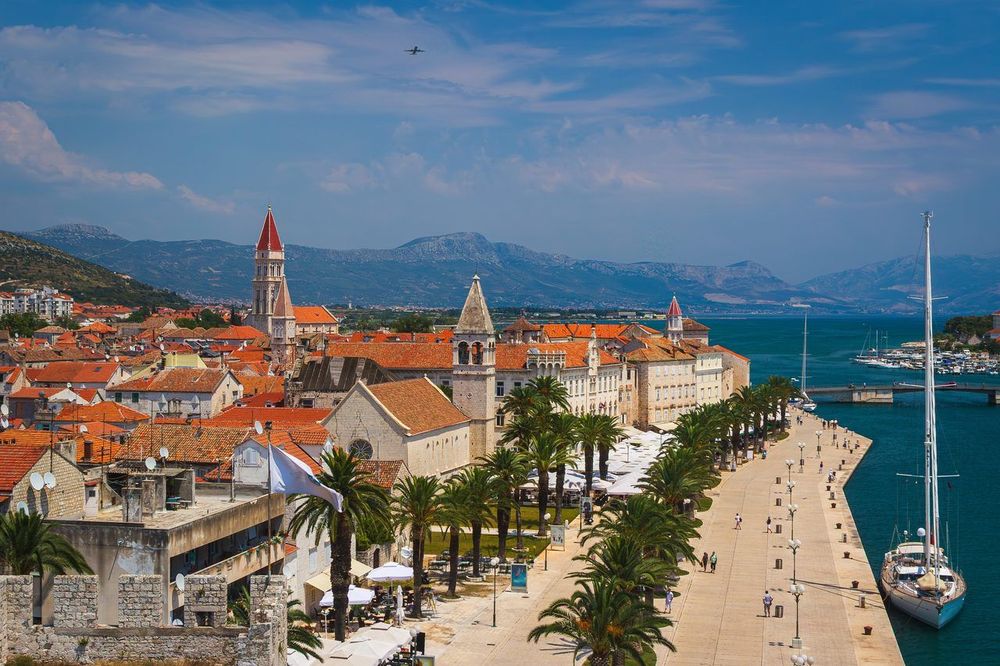
It is often called the other pearl of the Adriatic, overshadowed by Dubrovnik and Split, which dominate most travel guides. Trogir, however, has kept something those two Dalmatian heavyweights have lost: an entire medieval city, set on its island between two arms of the sea, that can be explored without ever needing a car, a tourist bus, or a travel companion. UNESCO, which inscribed it in 1997, describes it as the best-preserved Romanesque-Gothic ensemble not only on the Adriatic but in all of Central Europe. A status that owes as much to its modest size as to its insularity: the island is barely 500 meters long.
For solo travel, this compact format changes everything. No endless journey between two sites, no itinerary to negotiate with anyone: you decide to spend an extra hour in front of Radovan's portal or head straight to the beach on a whim. That is precisely the spirit of the Ryo audio tour, designed for fully independent exploration — no group, no human guide — where you move according to your energy of the day rather than an imposed schedule. This is no doubt what makes Trogir just as enjoyable to visit alone as it is with someone else.
Getting to and Around Trogir Solo
Getting to Trogir solo is one of the simplest journeys in all of tourist Croatia, and getting around once you are there requires even less planning.
From Split Airport
Trogir has an advantage few historic cities can claim: the region's international airport is only about 6 km from the center. Split Airport (Cesta Dr. Franje Tuđmana 96, 21217 Kaštel Štafilić, rated 3.9/5 on Google with 11,614 reviews) (Zračna luka Split), located in Kaštel Štafilić, receives direct flights from several major cities in high season, and a taxi drops you on the Riva in about fifteen minutes.
For a solo traveler, this is almost an unfair advantage: no need to book a private transfer in advance. Urban bus line 37, which connects Split to Trogir, stops on the main road in front of the airport and takes you to Trogir's bus station, right at the foot of the old town bridge, for just a few euros. Note: the Pleso Prijevoz shuttle, often mentioned, serves Split and not Trogir. Many solo travelers actually choose Trogir over Split for their first night, precisely because the airport is closer and the city is easier to get your bearings in right off the plane.
By Bus or Car from the Dalmatian Coast
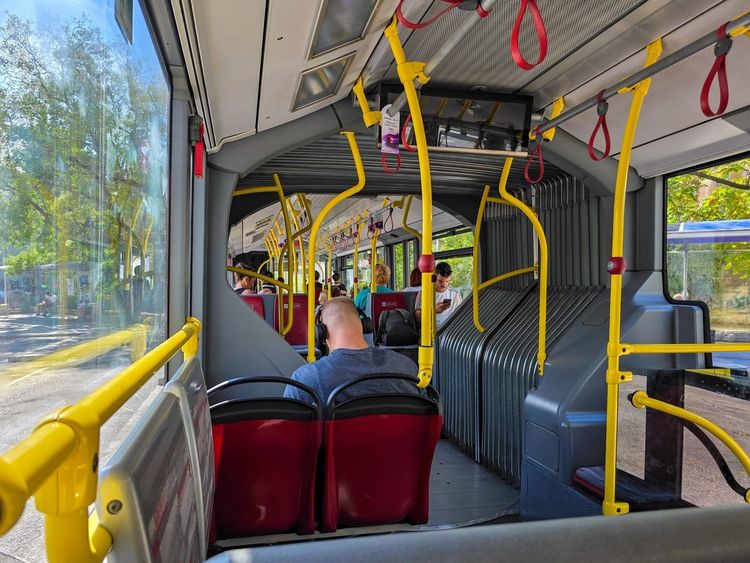
From Split, allow about 30 minutes by bus, with frequent departures in summer, for a ticket costing just a few euros. This is the simplest option if you are traveling alone and would rather not deal with a car rental. From Dubrovnik or Zadar, connections exist but add several hours to the journey; it is better to transit through Split than to look for a direct connection.
Renting a car remains worthwhile for combining Trogir with the natural parks of the Dalmatian hinterland, but adds little for visiting the city itself: the old town is closed to cars, and the paid parking lots around the island fill up quickly by 10am in July and August. For a stay focused on Trogir, public transport is more than sufficient.
On Foot Through the Old Town, Without a Car
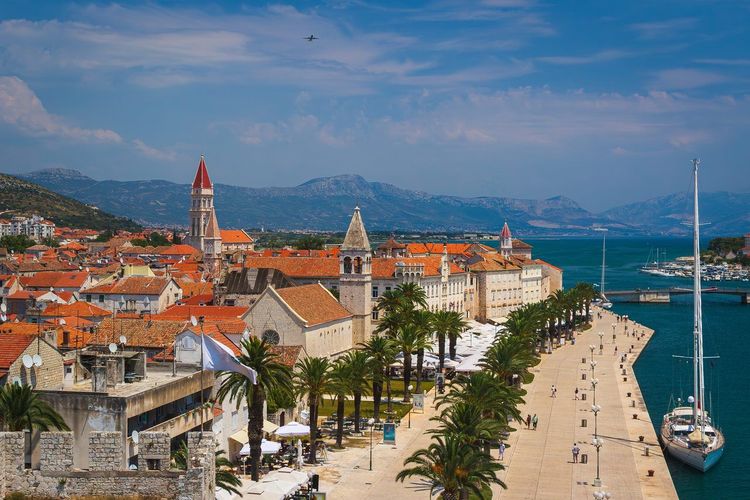
Once there, forget all motorized transport. Trogir's historic city is entirely pedestrian, set on an island you can cross from end to end in about twelve minutes. This is arguably one of the best arguments for a solo visit: you cannot get lost for long, and every alleyway eventually leads to the ramparts or the Riva.
A small pedestrian bridge connects the island to the mainland, near the land gate and the market, while a road bridge with sidewalks leads to the island of Čiovo: you can walk to Gradska Plaza beach without ever getting into a vehicle. No need for a bike, a scooter, or even a map app to find your way: the city reads itself, between the cathedral bell tower on one side and the fort towers on the other.
Trogir's Old Town and Its Historic Heart
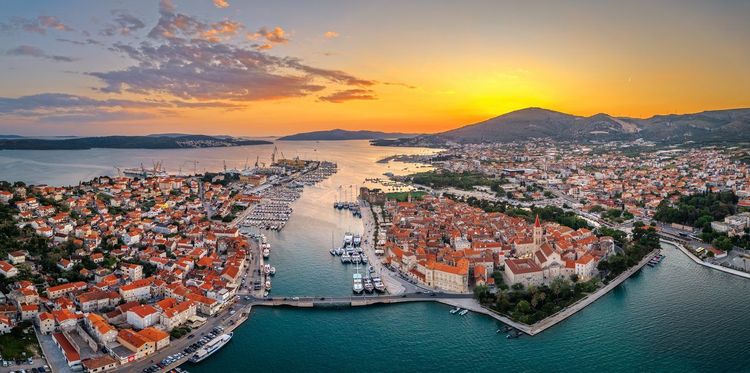
Trogir's historic heart fits within a stone rectangle barely larger than a few football pitches, yet it concentrates over 2,000 years of history: a Greek foundation, Roman urban planning, and then nearly four centuries of Venetian domination (1420–1797) that shaped every façade still visible today.
The Cathedral of St. Lawrence and Radovan's Portal
The Cathedral of St. Lawrence (Trg Ivana Pavla II 3, 21220 Trogir, rated 4.6/5 on Google with 3,638 reviews) (Katedrala svetog Lovre), begun in the early 13th century, dominates the central square with a bell tower you can still climb for a 360° view over the tiled rooftops and the canal. But it is the west portal that has earned its reputation well beyond Croatia: Radovan's Portal, signed in 1240 by the master who gave it his name, is considered one of the masterpieces of Romanesque-Gothic sculpture in Europe.
Take the time to stop and look: Adam and Eve, standing on lions, frame the arch, surrounded by scenes from the agricultural calendar and fantastical animal figures. Traveling solo, with no one to hurry you toward the exit, this is the kind of detail you can study for a good ten minutes. Entry to the complex (cathedral, baptistery, treasury, and bell tower) costs a few euros and is paid on the spot, with no reservation required.
John Paul II Square and the Town Hall
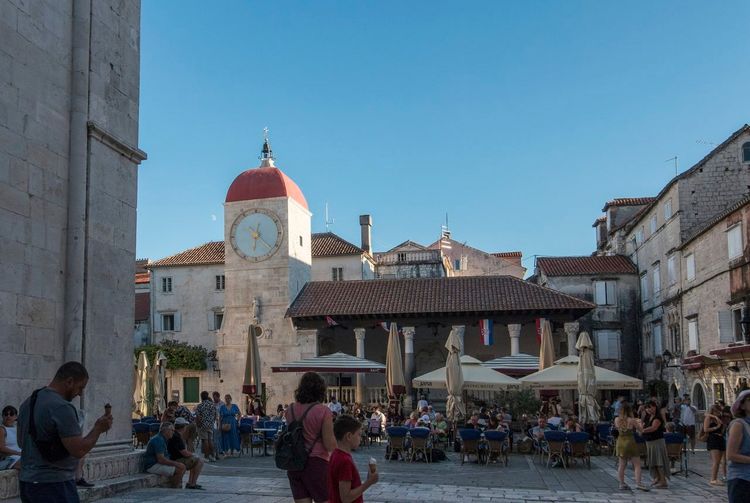
Right in front of the cathedral stretches John Paul II Square (Trg Ivana Pavla II), the city's main square. Around it cluster the loggia, a former open-air Venetian courthouse, the clock tower that tops the small Church of St. Sebastian, the town hall, housed in a 15th-century palace, and, facing the cathedral, the façades of the Cipiko palaces.
Don't hesitate to push open the town hall door: its inner courtyard, generally accessible during the day, offers a quiet moment with a stone staircase and arcades. It is one of the rare spots on the square where you can find shade at midday in summer — a detail that matters when you are visiting alone and have no one to delegate the search for a cool corner.
Medieval Alleyways and Inner Courtyards
Beyond the square, Trogir reveals itself by getting intentionally lost. The street plan inherited from the Greek founding of Tragurion in the 3rd century BC has survived almost intact, later overlaid with Romanesque, Gothic, and Renaissance façades. The result: paved alleyways so narrow you can sometimes touch both walls by stretching your arms out, and inner courtyards that open without warning behind an anonymous archway.
This is precisely what the Ryo audio tour of Trogir takes you through, with a section dedicated to the "museum city": it guides you step by step through these courtyards and archways that you might easily miss on your own, with an anecdote about the Venetian or Greek history of the place at every stop. A great way to complement a free-spirited wander through this stone labyrinth.
Kamerlengo Fortress and the Ramparts
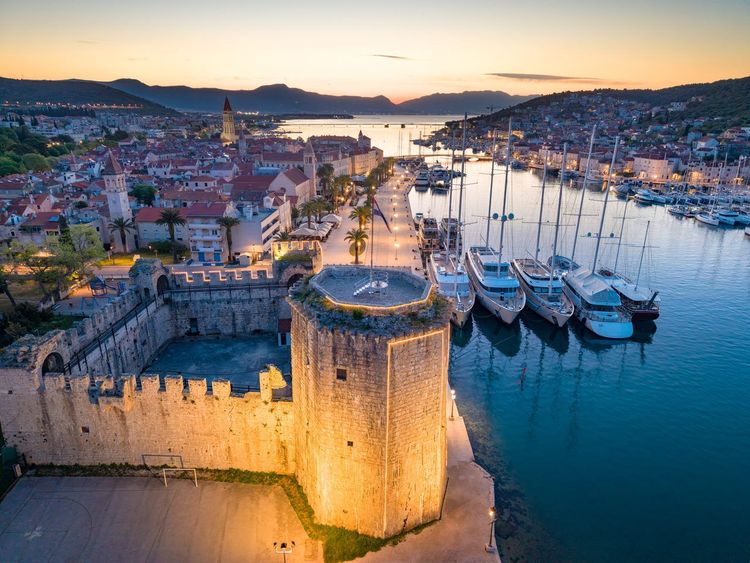
At the other end of the island, Venetian Trogir flexes its muscles: fortifications, watchtowers, and religious buildings are a reminder that the city long served as a strategic gateway on the Dalmatian coast.
Kamerlengo Fort and Its Towers
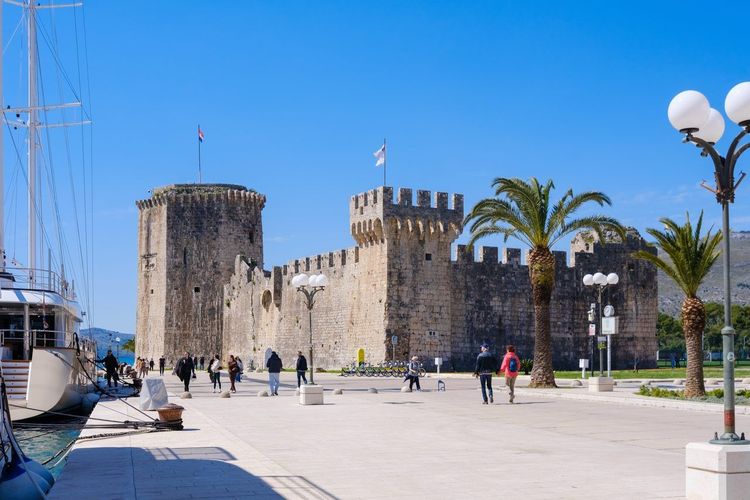
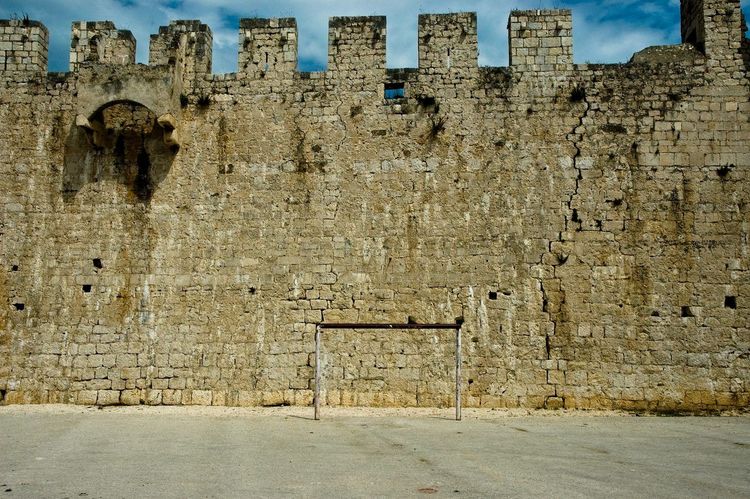
Built by the Venetians between approximately 1420 and 1437, Kamerlengo Fort (Tvrđava Kamerlengo) occupies the southwestern tip of the island, facing the open sea. Its crenelated ramparts and main tower can be climbed without a guide, offering one of the most spectacular viewpoints over the canal and the island of Čiovo.
In summer, the fortress transforms into an open-air stage for Trogir's cultural summer, including concerts and screenings. The rest of the year, it is a surprisingly peaceful place for a solo visit: allow 30 to 45 minutes to climb the towers, study the arrow slits, and take in the panoramic view of the bay. Admission is modest and paid directly on site.
The Gates and Walls of the Old Town
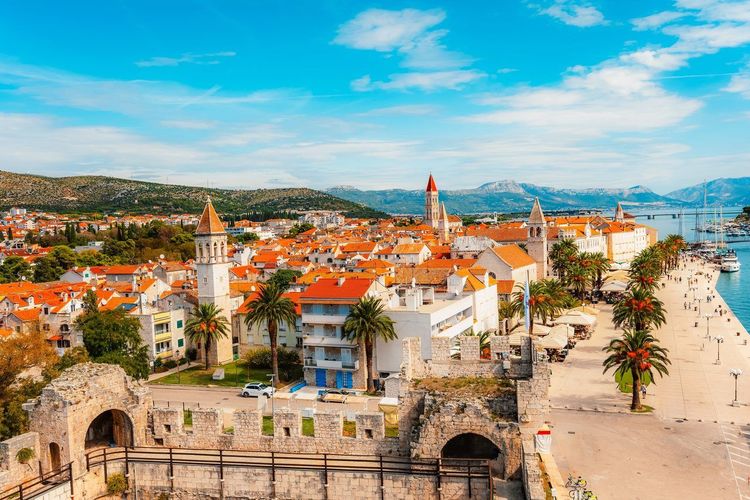
The rest of the enclosure has not withstood time as well: a large portion of the city walls was demolished in the 19th century to let the city breathe. Fragments remain on the northern side, as well as the land gate, topped by a statue of Blessed John of Trogir, the city's patron saint, which once marked the access point from the mainland. On the Riva side, the sea gate mirrors it.
Passing under the land gate at the end of the day, when the stone takes on a golden hue, is one of the city's simplest pleasures. It also makes a good landmark if you have lost your bearings in the alleyways, as the gate leads directly to the bridge toward the mainland.
St. Nicholas Monastery and the Church of St. Sebastian
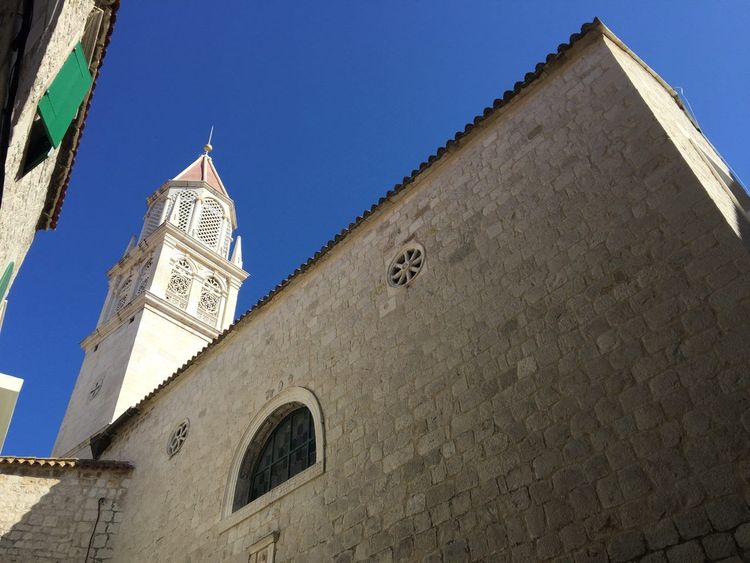
Not far from the sea gate, St. Nicholas Monastery (Gradska ulica 2, 21220 Trogir, rated 4.7/5 on Google with 35 reviews), run by Benedictine nuns, houses one of Trogir's most surprising treasures: a Greek marble bas-relief depicting Kairos, the god of the opportune moment, over two thousand years old and considered an extremely rare archaeological piece.
Back on the main square, the Church of St. Sebastian, built in 1476 and topped by the clock tower, now serves as a memorial to the city's war victims. Across from the cathedral, the façade of the Cipiko Palace deserves a close look: trefoil Gothic windows and delicate carvings tell the story of one of the city's most influential noble families.
The Ryo audio tour of Trogir passes right by the fort and along the old ramparts, with several stops dedicated to the Venetian history of the citadel, told directly on the spot.
The Waterfront, the Canal, and the Seaside Promenade
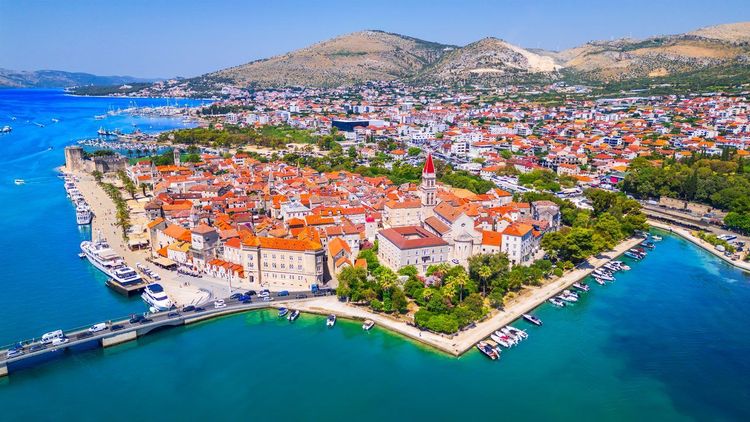
After the tightly packed stones of the center, it's time for water: the final part of your visit plays out by the sea.
The Riva Promenade and the Trogir Canal
The Riva offers an immediate breath of fresh air: this promenade runs along the entire southern façade of the old town, lined with palm trees, restaurants, and pleasure boats moored side by side.
The Trogir Canal, which separates the historic island from the island of Čiovo, can be crossed in a minute on foot via the Čiovo bridge. It is a must in the evening: excursion boats return to the dock, cafés come alive, and the last light of day reflects on the calm water between the two shores. Walking alone along the Riva at sunset, with the Ryo audio guide of Trogir in your ears as it traces the history of the canal step by step, remains one of the most appreciated solo moments among travelers.
Gradska Plaza Beach and the Surrounding Area
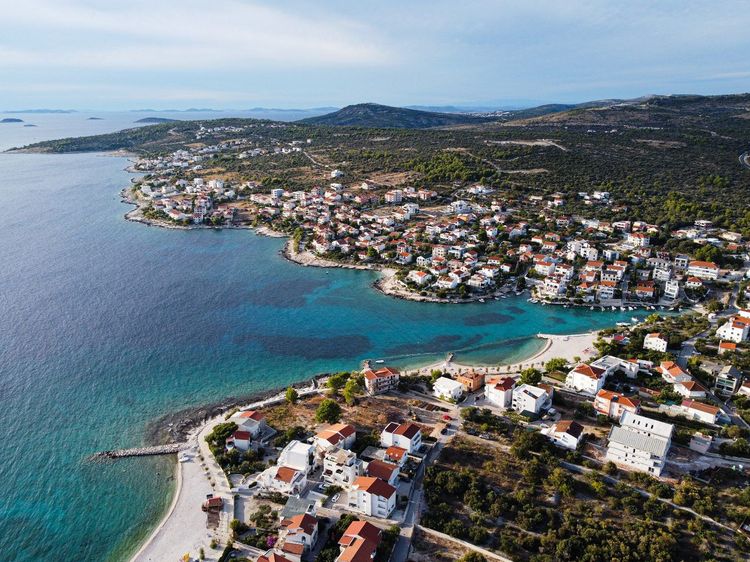
A ten-minute walk from the old town, on the island of Čiovo, Gradska Plaza beach (Put Gradske plaže, 21220 Trogir, rated 3.7/5 on Google with 304 reviews) offers easy access to the sea without needing to reserve a sun lounger. The seabed is partly rocky, partly made up of paved platforms, with some shaded areas that are welcome in high summer. For longer beaches, Okrug Gornji, further along Čiovo, is reachable by bus or water taxi.
For a solo traveler, this is a practical option for unwinding for an hour or two between visits: towel, sunscreen, and you're set. Beach bars serve food and drinks until late afternoon, so you can spend time there without feeling obliged to socialize if you'd rather simply read facing the sea.
Boat Trips to the Islands and the Blue Lagoon
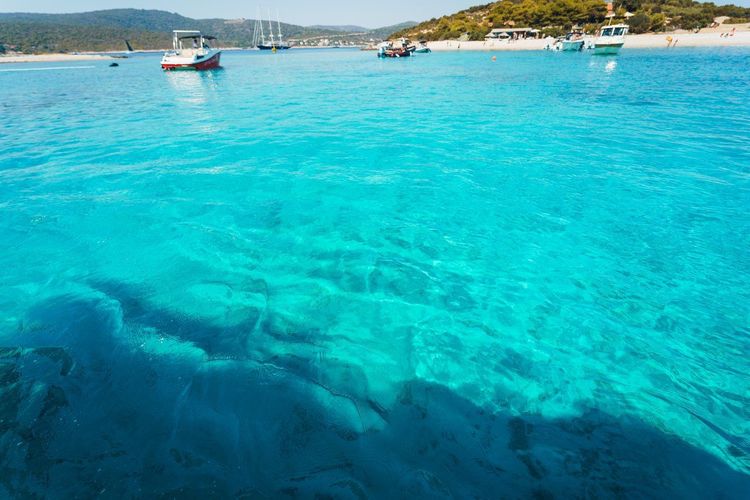
Trogir also serves as a departure point for several boat excursions that rank among the best solo activities in the region, precisely because they are run in organized small groups — no need to rent a boat or know anyone in advance.
The Blue Lagoon Half-Day Trip
The most popular excursion departs in the morning for the Blue Lagoon, a bay of shallow turquoise water nestled between the islands of Drvenik Mali and Drvenik Veli, about an hour by boat from Trogir. Agencies set up along the Riva offer the half-day package, with one or two swimming stops and sometimes a break on the island of Šolta.
Expect to pay generally between €35 and €60 depending on the season, the type of boat, and the number of stops. For a solo traveler, these outings are particularly enjoyable: groups remain a manageable size, the relaxed atmosphere makes it easy to chat with other passengers, and nothing stops you from simply swimming and watching the horizon from the deck.
The Islands of Split and Šolta
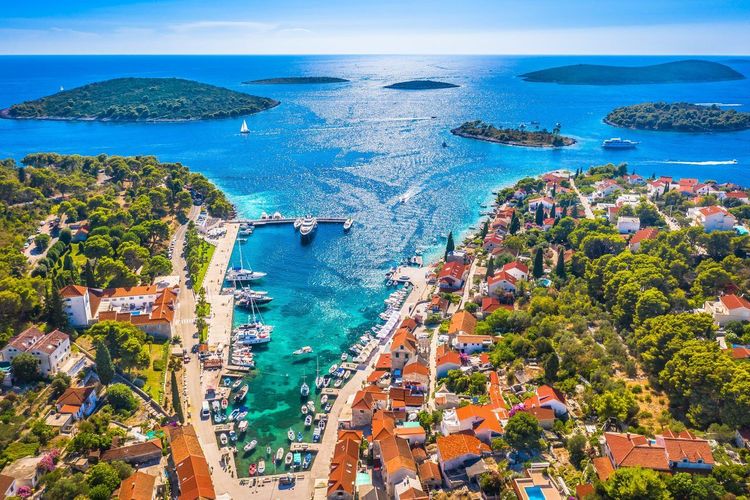
Beyond the Blue Lagoon, some full-day excursions head to the island of Šolta, less touristy than Hvar or Brač, with its secluded coves and fishing villages that are virtually deserted off season. Others combine Trogir with a stop in Split, pairing urban heritage with swimming in one well-filled day.
If you are traveling alone, these trips are also a chance to scout your next stop on your Dalmatian itinerary: many solo travelers use them as a preview before deciding whether to push on to the islands for two or three extra days.
Is Trogir Safe for Solo Travelers?
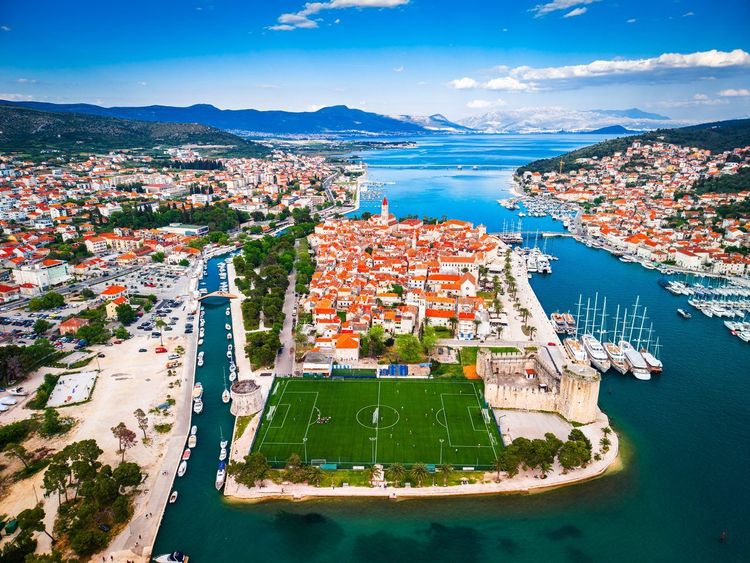
Trogir is one of the most reassuring destinations in Croatia for solo travel, for both men and women. The historic city is tiny, well-lit in the evening, and frequented until late by locals themselves who dine on the Riva terraces. Petty crime is rare, and most of the unpleasant experiences reported by solo female travelers amount to somewhat pushy hawking for boat excursions.
The main danger is not human but climatic and maritime: the July–August heat catches you out quickly on sun-baked cobblestones, and you are well advised to book sea excursions with operators who clearly display their license, especially in choppy conditions. Also avoid walking barefoot on the rocks around the beaches, where sea urchins are common.
In terms of hospitality, Croatians have a reputation for being warm toward solo travelers, including women traveling alone: it is not uncommon for a shopkeeper to strike up a conversation with no ulterior motive. Simply keep your usual habits: share your day's itinerary with someone back home, avoid the most deserted spots late at night, and remember the European emergency number, 112, valid throughout Croatia. Location-sharing apps like bSafe or Life360 reassure some female travelers, but the experience most report comes down to one sentence: it is one of the Croatian cities where you feel at home most quickly, alone or not.
Where to Stay in Trogir When Traveling Solo
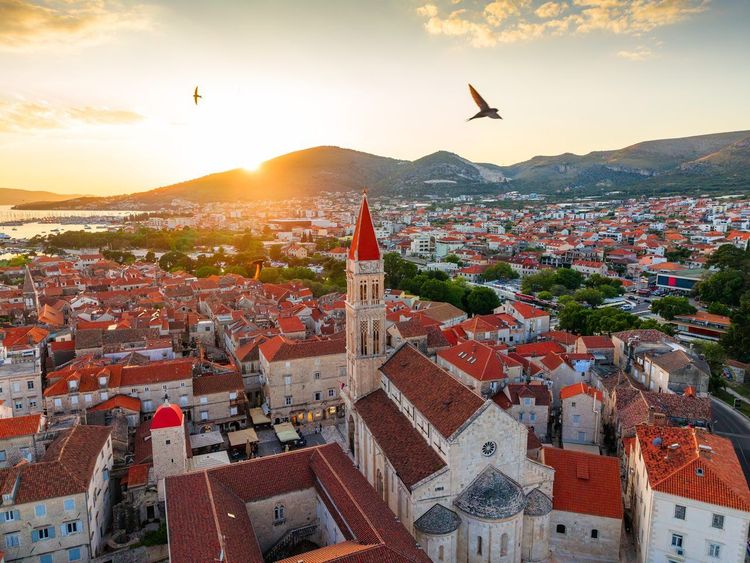
Choosing the right neighborhood matters as much as choosing the right accommodation for a successful solo stay in Trogir: an immersive experience on the historic island, or peace, quiet, and lower prices on the mainland side and Čiovo.
Sleeping in the Historic City or Outside It
Staying inside the old town, in a room above a cobbled alleyway, remains the most immersive experience: you are two minutes on foot from the cathedral, Kamerlengo Fort, and the Riva, and summer evenings hum gently with terrace life below. Accommodation here is mostly guesthouses, small hotels, and rooms in local homes, with prices that climb sharply in July and August.
Conversely, staying on the mainland (around Seget Donji) or on the island of Čiovo, a few minutes' walk away via the bridges, often means finding rooms 20 to 30% cheaper, with sea views and more peace and quiet at night. If you value rest as much as sightseeing, this is a sensible compromise: the old town remains accessible on foot, but you escape the bustle of the groups that swamp the center during the day.
Accommodations for Solo Travelers (Hostels, Guesthouses)
Trogir has fewer hostels than Split or Zagreb, but several guesthouses are happy to welcome solo travelers, with single rooms from around €35–45 per night in low season and shared spaces (kitchen, terrace) that make casual encounters with other guests easy.
Book ahead: the best addresses fill up as early as spring for July and August, and availability is more limited than in larger Dalmatian cities. A mid-range guesthouse with breakfast and hosts on site is often the most reassuring option for a first solo night: you can easily pick up last-minute tips about the next day's excursions without having to organize everything from your phone on your own.
Where to Eat Alone in Trogir
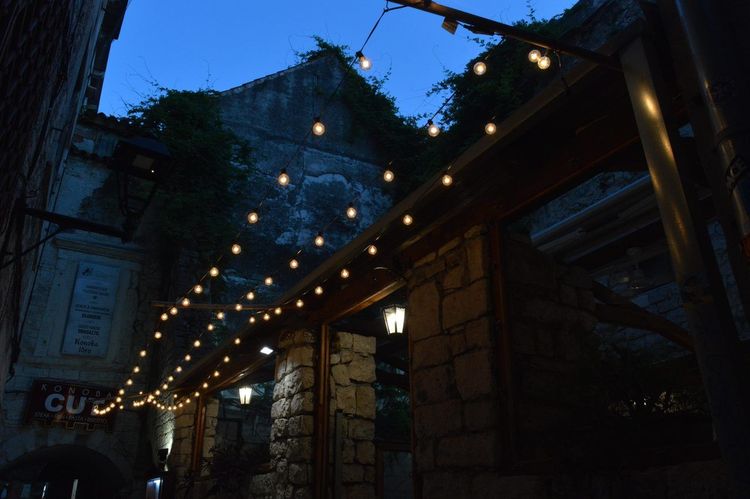
Eating alone in Trogir is not the least bit awkward: most konobas (traditional taverns) have small terrace tables where sitting down with a book raises no eyebrows, especially outside the dinner rush between 7:30 and 9pm.
For a quick meal, head to the burek bakeries or the ćevapi counters near the market, just steps from the land gate, where you can eat for just a few euros. For a proper sit-down meal, the konobas tucked away in the alleyways, far from the most touristy stretch of the Riva, often serve more authentic food at gentler prices: if locals are eating there too, it's a good sign.
On the specialty front, don't leave without trying peka (meat or octopus slow-cooked under an ember-covered bell, often ordered the day before), soparnik (a thin Dalmatian chard pie), and the grilled catch of the day. A glass of Dalmatian white wine — Pošip or Grk — pairs perfectly with a terrace dinner watching the sunset alone facing the water, and no one here will ever find that strange.
Budget for a Solo Trip to Trogir
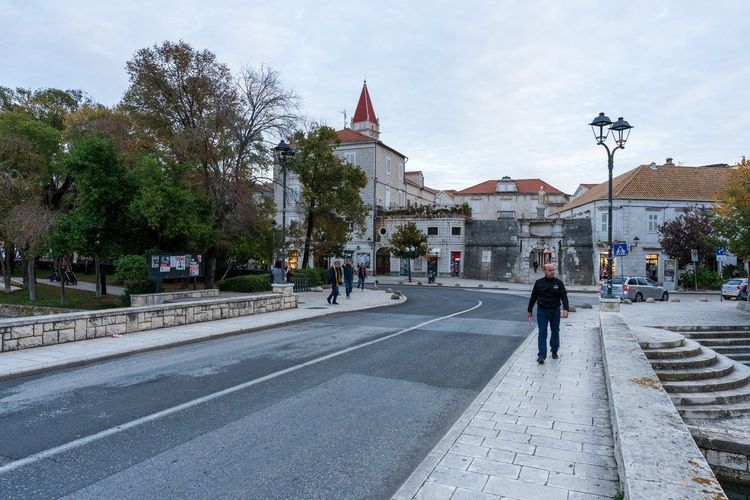
Trogir remains one of the most affordable Dalmatian destinations for solo travel — noticeably cheaper than Dubrovnik and slightly below Split for a comparable level of comfort.
Excluding flights, budget €60–85 per day in low and mid-season (May, June, September): roughly €35–45 for a guesthouse room, €15–25 for three simple meals, and €10–15 for local transport and monument entry fees. In July and August, this budget climbs easily to €90–130 per day, with accommodation and boat excursions being the biggest cost drivers.
For comparison: a Blue Lagoon excursion (€35–60) or a two-hour guided walking tour with a human guide costs considerably more than an audio tour listened to on your own phone — launched whenever you like and replayed as many times as you want, with no dependence on a group's schedule.
In short: Trogir can be visited comfortably solo for €350–550 for a 4–5 day stay, accommodation and one excursion included, making it one of the most budget-friendly stops on a Dalmatia tour.
Meeting Other Travelers and Enjoying Your Own Pace
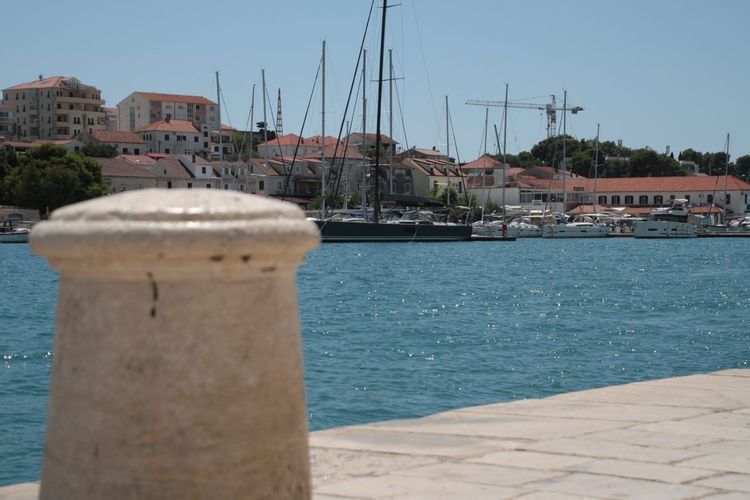
Traveling solo does not mean traveling in isolation, and Trogir makes spontaneous encounters fairly easy if that is what you are looking for. Boat excursions to the Blue Lagoon or nearby islands are probably the best setting: spending three or four hours on the same deck with the same small group naturally sparks conversation.
The terrace bars along the Riva in the late afternoon play a similar role: sitting at the counter rather than at an isolated table almost always opens the door to an exchange with other travelers or with locals curious about where you are from. Some guesthouses also offer communal breakfasts that make introductions easy first thing in the morning.
And if the mood of the day calls for not talking to anyone, the city is just as well suited to that: no one will think twice about seeing you have lunch alone with a book in hand, or spotting you walking the same alleyway three times just for the pleasure of it. Surrounded or alone, depending on your mood — it is the rhythm of your own desires that decides.
When to Go to Trogir for a Solo Trip
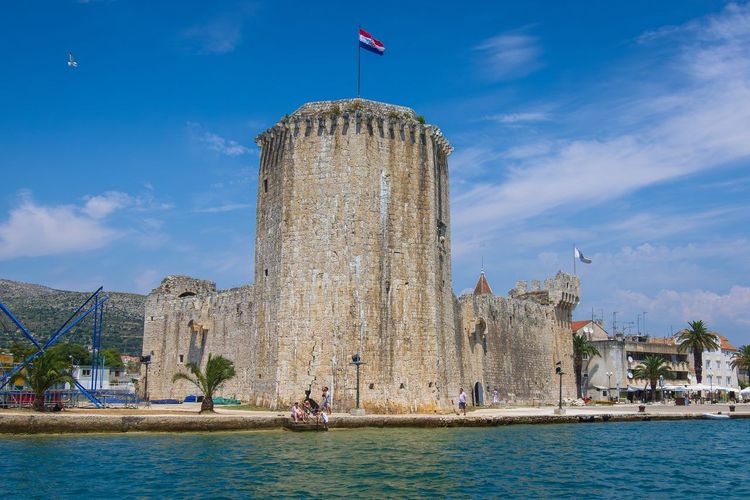
May–June and September remain the best windows for visiting Trogir solo: temperatures range between 22 and 28°C, the sea is already or still swimmable, and the city breathes much more freely than in high summer, when excursion boats and buses pour thousands of visitors onto the island within a matter of hours.
July and August offer the liveliest atmosphere, with Trogir's cultural summer taking over Kamerlengo Fort for open-air concerts and performances, but the heat can exceed 35°C and accommodation books up months in advance. If walking and peaceful sightseeing are your priorities, high season is clearly not the best time.
Winter, from November to March, turns Trogir into an authentic small Dalmatian town, almost deserted by tourists, with much lower accommodation rates but reduced schedules for boat excursions and some monuments. An interesting option for a contemplative solo trip, provided you accept shorter days and a sea too cold for swimming.
Trogir in a Solo Dalmatia Itinerary: What's Next?
Trogir lends itself perfectly to a 2–3 day stop within a broader solo itinerary through Dalmatia, and its location makes it a natural pivot point rather than an isolated destination.
To the east, Split is just 30 minutes by bus: the Diocletian's Palace, a lively market, and a more vibrant nightlife make it a useful contrast after the calm of Trogir. To the north, Šibenik — less well known but just as photogenic, with its Fortress of St. Michael dominating the city — pairs well with an itinerary designed to avoid summer crowds. Zadar, further still, adds its famous sea organ and sunsets renowned as some of the most beautiful on the Adriatic.
For a 7–10 day solo trip through Dalmatia, a simple framework works well: 2 days in Split for arrival and island excursions, 2–3 days in Trogir for the slow pace and medieval city, then Šibenik and optionally the Kornati or Zadar to close out. Over 15 days, you can add Dubrovnik further south, flying home from there rather than retracing the whole route. In any case, Trogir remains the place to slow down between two more intense stops.
FAQ
How many days do you need to visit Trogir solo?
One day is enough to see the highlights of the old town, but two to three days allow you to take your time with the fortress, the canal, a boat trip to the Blue Lagoon, and a few hours on the beach at a leisurely pace — which better suits a solo travel rhythm.
Is Trogir easy to explore on foot?
Yes, entirely. The old town is pedestrian-only and can be crossed from end to end in about twelve minutes, with no need for a car, bus, or bike to get from one landmark to another.
Can you visit Trogir as a day trip from Split?
Easily: regular buses connect the two cities in about 30 minutes, making a round trip in a single day very manageable. To enjoy the evening atmosphere and boat excursions, however, staying overnight is preferable.
Should you book accommodation in advance in Trogir?
In July and August, yes: availability is limited and the best guesthouses fill up months in advance. In the low season (May, June, September, October), booking a few days ahead is generally sufficient.
Is Trogir suitable for women traveling alone?
It is one of the most reassuring destinations in Croatia for solo female travelers: compact size, well-lit alleyways, an active local scene well into the evening, and rare petty crime. Standard precautions are more than enough.
What is the best time to visit Trogir solo?
May–June and September offer the best balance of pleasant weather, swimmable sea, and manageable crowds, far from the tourist density of July and August.
When all is said and done, what makes Trogir so enjoyable for solo travel comes down to a handful of well-concentrated square meters: a cathedral, a fortress, a canal, and a labyrinth of alleyways — all accessible without ever depending on anyone else. You come for two or three days and sometimes stay longer than planned, simply because the city's slow rhythm ends up winning you over.
To explore the old town at your own pace, without matching your steps to a group's, the Ryo audio guide is the most flexible companion: it follows your whims, not an imposed schedule. Listen to the Ryo audio tour of Trogir before you leave, and let the Venetian city do the rest.