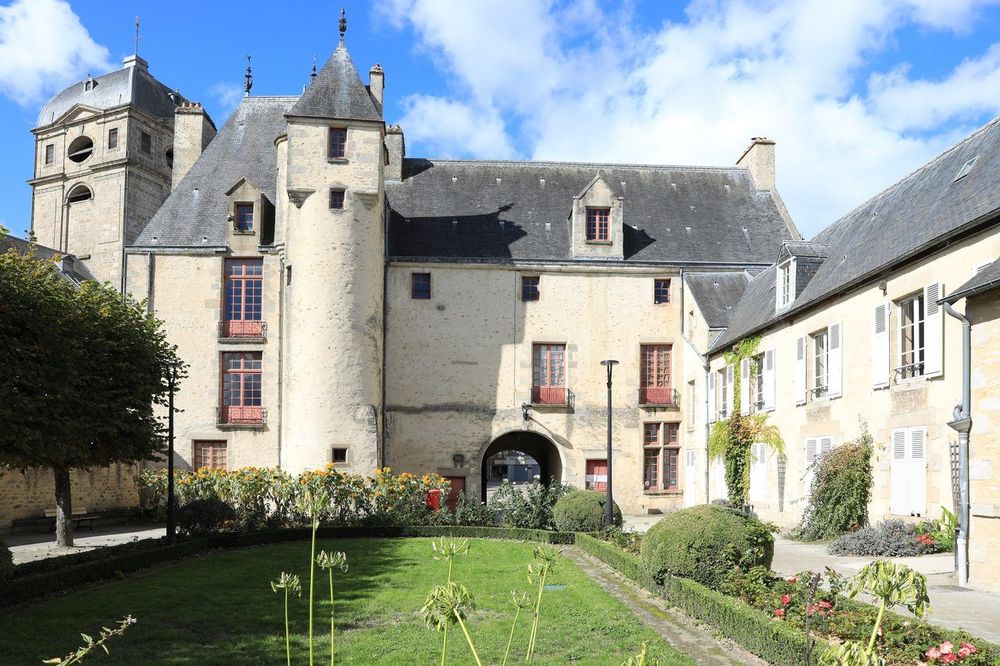
© Shutterstock
 Votre guide Ryo
Things to Do in Alençon in 2026: 15 Ideas to Visit the City
Nestled at the foot of the Normandie-Maine regional natural park, Alençon hides a history far richer than its size might suggest. Wondering what to do in Alençon often means underestimating the city: between lace inscribed on the UNESCO Intangible Cultural Heritage list, a Flamboyant Gothic basilica and the birthplace of a saint canonised by the Pope, the historic centre can be explored on foot in half a day yet deserves a much longer stay. Our Ryo app even turns every street in the old town into an audio-guided tour, ideal for those who prefer exploring at their own pace rather than following a paper map.
Within just a few hours, you will encounter a national workshop where lacemakers still work needle-in-hand as they did in the 17th century, a viewpoint at 417 metres altitude overlooking all of Normandy, and a circular market hall topped with a glass roof worthy of the great Parisian covered markets. Alençon is equally enjoyable on a quiet Sunday morning or a lively Saturday evening, and the immediate surroundings — the Écouves forest, the Alpes mancelles, the château de Carrouges — make it easy to fill a whole weekend. Here are fifteen ways to make the most of your stay, from the city centre to the hills that surround it.
1. The Basilique Notre-Dame d'Alençon
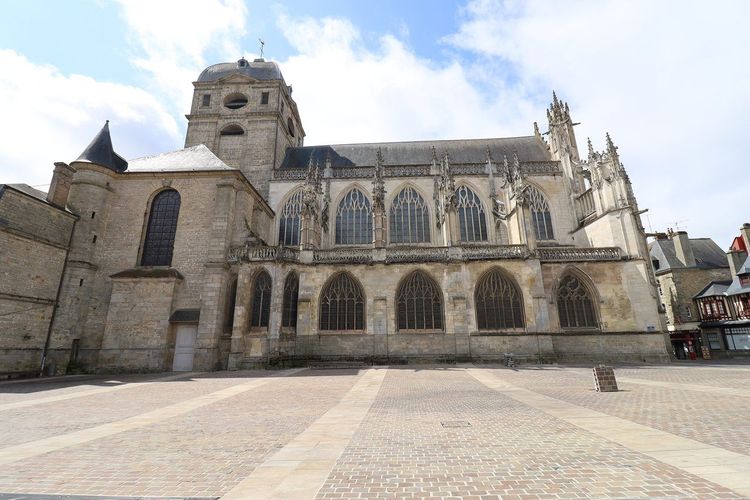
The Basilique Notre-Dame (Place de la Magdeleine, 61000 Alençon, rated 4.6/5 on Google with 717 reviews) dominates the city with its 16th-century Flamboyant Gothic porch, an intricately carved stone lacework that earned the building its reputation well beyond the Orne département. Regional guides often single it out as the city's standout highlight, and the façade alone justifies the detour: three richly worked porches, slender pinnacles, and an abundance of motifs that already evoke, almost unknowingly, the fineness of the point d'Alençon lace that would bring the town fame a few decades later.
Inside, the 16th-century Renaissance stained-glass windows rank among the best-preserved in the region, with biblical scenes whose colours remain vivid despite five centuries of history. The current building replaced an earlier church destroyed during the Wars of Religion, and the nave still bears traces of several reconstruction campaigns, visible in the variation of styles from one bay to the next. Take a moment to step back a few metres onto the forecourt: it is from that distance that the porch best reveals its sculptural depth, especially in the late afternoon when raking light accentuates the relief. The basilica is open free of charge during the day, making it an easy stop to include whether you are visiting on a weekday or on a Sunday after morning Mass.
2. The Musée des Beaux-Arts et de la Dentelle
Housed in the former Jesuit college, the Musée des Beaux-Arts et de la Dentelle (Cour Carrée de la Dentelle, 61000 Alençon, rated 4.5/5 on Google with 523 reviews) brings together two collections you might not expect under the same roof: a gallery of European paintings from the 17th to the 20th century, and one of the world's finest collections of point d'Alençon needle lace, recognised by UNESCO in 2010 as Intangible Cultural Heritage of Humanity.
The lace section explains, piece by piece, the hundred or so hours of work required to produce just a few square centimetres of this needle fabric — a technique so painstaking that it nearly disappeared in the 20th century before being revived by the State. The fine arts section holds more surprises: a collection of Khmer art assembled by a former local resident who had lived in Cambodia sits alongside Flemish canvases and Norman genre scenes. Allow an hour and a half to go through everything at a comfortable pace, a little longer if you linger over the 17th-century lace pieces, which are particularly dense with floral motifs. The museum generally closes on Tuesdays, a detail worth checking before planning a Sunday or Monday visit.
3. The Atelier National du Point d'Alençon
Just a short walk from the museum, the Atelier national du Point d'Alençon keeps alive a craft the city came close to losing: attached to the Mobilier National, this workshop still employs a handful of lacemakers trained for years in this needle technique, which was listed as Intangible Cultural Heritage of Humanity in 2010 at the same time as the recognition obtained by the neighbouring museum.
Guided visits, generally offered on certain weekday afternoons and by appointment, allow you to watch the craftswomen working live at their frames, one thread at a time, on pieces that may take several years to complete. You will learn that producing one square centimetre of point d'Alençon requires around seven hours of work — a figure that instantly puts the price of the pieces on display at the museum into perspective. This is a stop to prioritise if you want to understand why this lace remains inseparable from the city's name, far more than a mere element of tourist display. Check availability in advance: places are limited and demand rises quickly during school holidays, particularly in summer when the city welcomes more passing visitors.
4. The Birthplace of Saint Thérèse de Lisieux
At 50 rue Saint-Blaise, the house where Marie-Françoise-Thérèse Martin — later known as Saint Thérèse de Lisieux — was born in 1873 draws pilgrims from around the world every year. Her parents, Louis and Zélie Martin, were canonised together in 2015 by Pope Francis, the first time in the history of the Catholic Church that a married couple had been canonised jointly, which considerably strengthened the city's status as a place of pilgrimage.
The family home, now managed by a religious association, can be visited with a guide who retraces the daily life of this family of Alençon lacemakers and tradespeople, long before Thérèse entered the Carmel of Lisieux at the age of fifteen. Personal objects, letters and period furniture, carefully reconstructed, are on display in a deliberately understated atmosphere that contrasts with the scale of the devotion the saint has inspired since then. The adjoining chapel still holds services today and remains a place of quiet reflection for visitors, whether devout or simply curious about this local story that became a global one. Allow around forty-five minutes for the full visit, a little longer on busy days around pilgrimage dates.
5. The Château des Ducs d'Alençon
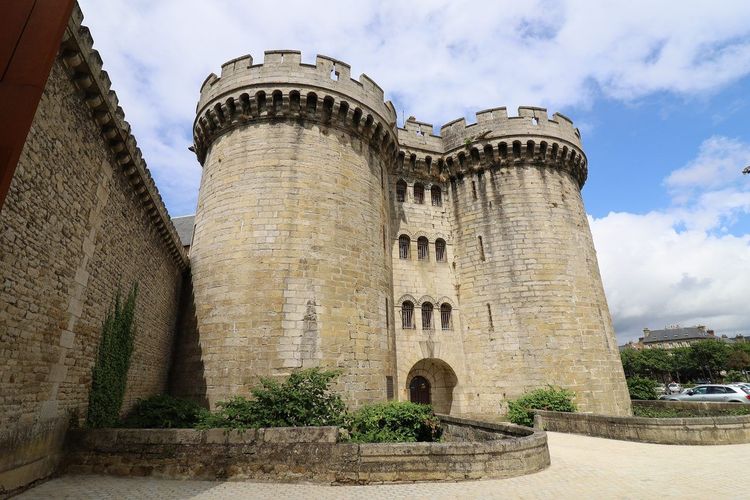
The Château des Ducs d'Alençon (Rue du Château, 61000 Alençon, rated 4.2/5 on Google with 426 reviews) makes an immediate impression with its two 15th-century towers, remnants of a much larger fortress built for the Dukes of Alençon, the most famous of whom was Charles IV, the last duke before the duchy was absorbed by the Crown.
The building's history took a singular turn: converted into a prison in the 19th century, it still serves that function today, which greatly limits public access to the interior. Visitors therefore mainly explore the exterior, from the moat and its immediate surroundings, where the round slate-roofed towers nonetheless convey a powerful image of medieval ducal authority. History enthusiasts will appreciate the striking juxtaposition between the 15th-century defensive architecture and its much later conversion into a prison, a contrast that few French castles display quite so openly. An explanatory plaque near the entrance summarises the main stages of this transformation.
6. The Maison d'Ozé
On the neighbouring square, the Maison d'Ozé (Place du Palais, 61000 Alençon, rated 4.6/5 on Google with 28 reviews) now houses the Alençon tourist office in a half-timbered townhouse dating from the 15th century, one of the few of its kind to have survived the 1944 bombings.
Local legend has it that Marguerite de Navarre, sister of François I, stayed here, although historians remain cautious about the reality of this visit. It is above all a practical starting point: the staff on site provide up-to-date opening hours for museums and themed guided tours, which is particularly useful on a Sunday when several sites close earlier than during the week. The townhouse itself, with its timber framing and spiral staircase, is worth stepping inside even without a specific plan: entry is free and you will rarely leave without an idea for a walk you had not previously considered.
7. A Stroll through Vieux Alençon
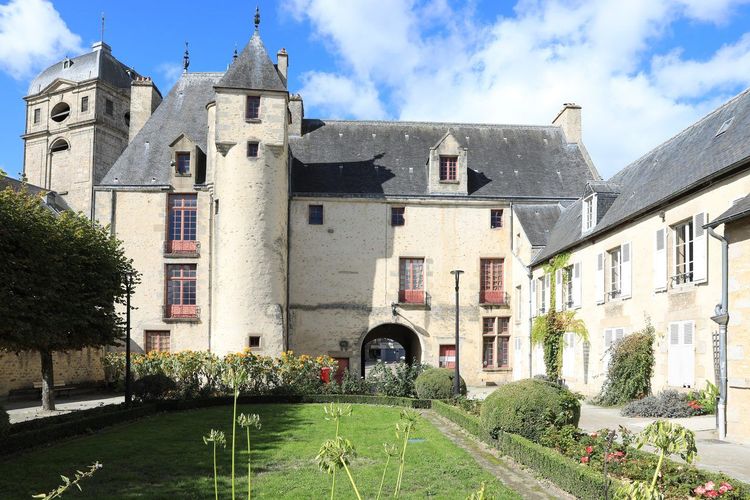
The Vieux Alençon quarter, around the rue aux Sieurs (Rue aux Sieurs, 61000 Alençon) and the rue de Sarthe, concentrates the finest half-timbered houses in the city, some dating from the 15th century and miraculously spared by the bombings that destroyed part of the centre in 1944.
You can wander between craft shops, jettied façades and small cobbled squares where café terraces open at the first sign of good weather. You will notice several buildings where a stone ground floor supports timber-framed upper storeys, a typically Norman construction technique that saved precious wood while ensuring ground-level stability. If you prefer following a commented itinerary rather than improvising, a Ryo audio-guided tour lets you spot these architectural details without constantly consulting a map, simply by walking from one façade to the next. Allow a good hour for this walk, more if you stop frequently to photograph each jettied overhang.
8. The Halle au Blé and Its Market
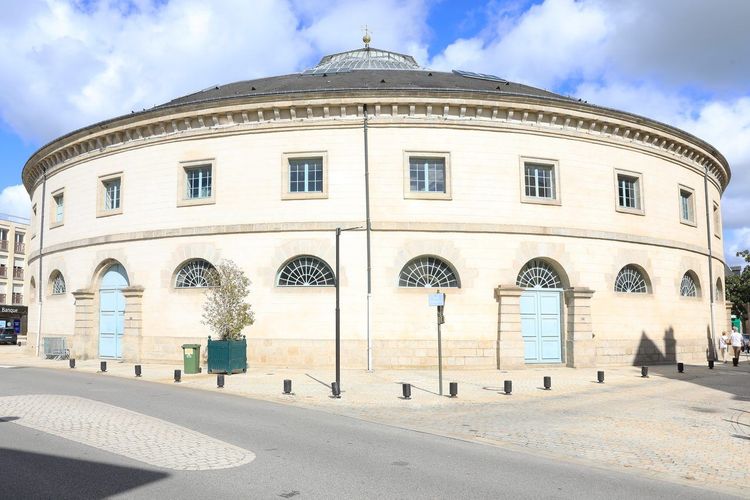
Built in the early 19th century on a circular plan inspired by the Parisian covered markets, the Halle au Blé (Place de la Halle au Blé, 61000 Alençon, rated 4.4/5 on Google with 310 reviews) impresses with its central glass roof, which floods the entire rotunda with natural light.
It now hosts temporary exhibitions and cultural events, but it is above all the neighbouring market that brings the district to life on several mornings a week, with stalls of Norman farm produce: raw-milk camembert, cider and black pudding. Regulars recommend arriving early in the morning to get the best choice before the stands begin to thin out. If your stay happens to fall on a market day, it is probably the best opportunity to taste local specialities without going through a restaurant, chatting directly with the producers set up beneath the rotunda.
9. The Église Notre-Dame de Montsort
On the other side of the Sarthe, in the quieter Montsort district, the église Notre-Dame de Montsort (Place Notre-Dame de Montsort, 61000 Alençon, rated 4.4/5 on Google with 33 reviews) hides a particularity that few visitors notice on a first pass: several of its modern stained-glass windows feature motifs directly inspired by the point d'Alençon lace.
This textile reference in stained glass illustrates just how deeply lace still runs through local identity, well beyond the windows of tourist shops. The building, more modest than the city-centre basilica, can be visited in ten minutes and makes an ideal stop on a Sunday when you are looking for a peaceful interlude away from the bustle of the city's heart. The Montsort district, long an autonomous suburb before being absorbed into Alençon, has retained a village feel with its narrow lanes and small neighbourhood shops. Take the time to cross the bridge over the Sarthe to reach it: the view of the riverbanks from that vantage point offers an angle that most hurried visitors never take. Not far away, Ryo's audio-guided tour of Le Mans, the Plantagenet City, makes for a good addition to the day.
10. The Parc des Promenades
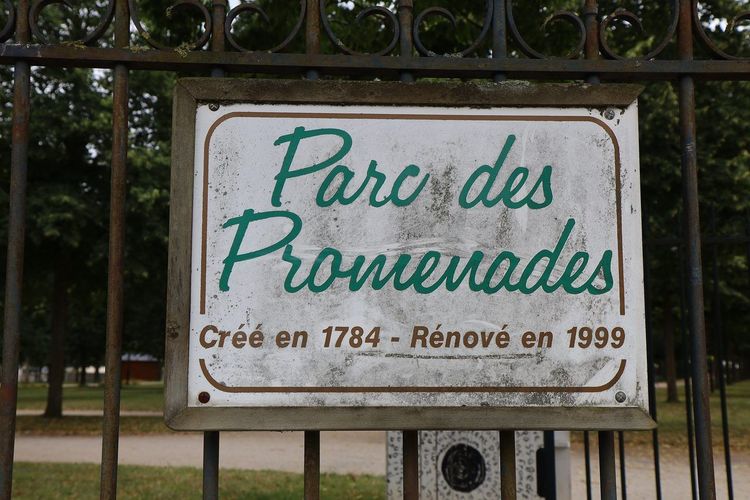
A former wasteland transformed into a public garden at the end of the 19th century, the Parc des Promenades (Rue de Lancrel, 61000 Alençon, rated 4.4/5 on Google with 1,735 reviews) offers a well-tended rose garden and shaded paths that are particularly pleasant in spring and summer.
Families come here in numbers at weekends for the playground and the lawns where they can picnic, while joggers make use of the paths from early morning. A bandstand and a rose garden structure the layout of the garden, inherited from 19th-century landscaping, and a few benches in the shade of tall trees invite you to catch your breath between two museum visits. In spring, the rose bloom attracts photographers and Sunday strollers alike. It is a welcome pause between visits, especially with children who need to burn off some energy before heading back into the historic centre.
11. A Walk along the Sarthe
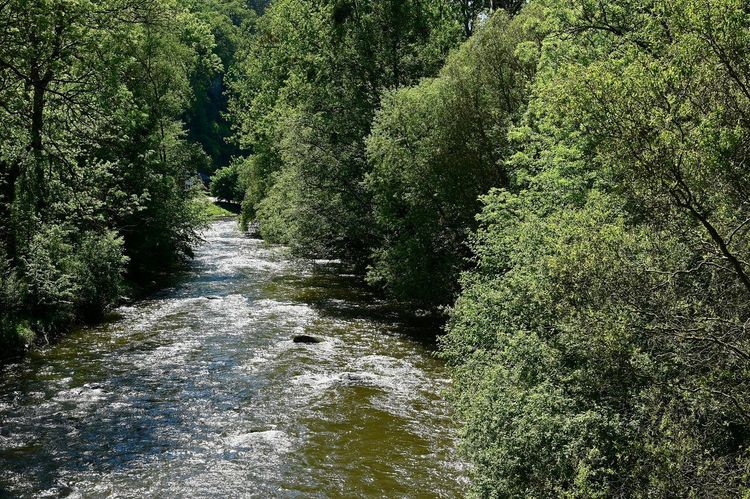
The Sarthe river runs through Alençon from west to east, and its landscaped quays offer a pleasant walking route punctuated by a few locks that recall the city's former river-trading activity.
As evening falls, the low-angled light on the water lends a special quality to the façades lining the river, particularly around the old bridge. Local fishermen often settle here in the late afternoon, and you will regularly come across families cycling along the path that follows part of the riverbank. The route, almost entirely flat, is perfectly suited to an outing with young children or to a gentle walk after a leisurely lunch. It is also a simple way to connect Vieux Alençon to the Montsort district without retracing your steps through the same streets.
12. The Écouves Forest and the Signal d'Écouves
About fifteen minutes by car from the city centre, the Écouves forest (Saint-Didier-sous-Écouves, 61390) is home to the highest point in all of Normandy: the Signal d'Écouves (Forêt d'Écouves, 61390 Saint-Didier-sous-Écouves, rated 3.4/5 on Google with 9 reviews) rises to 417 metres above sea level, a fact that often surprises visitors accustomed to thinking of the region as entirely flat.
This state forest of more than 14,000 hectares blends beech groves and pine woods over a granite bedrock that is rare in the region, a remnant of an ancient massif eroded over millions of years. Several marked trails, including a stretch of the GR36 long-distance footpath, allow you to reach the summit in one to two hours of walking depending on your chosen starting point. Local hunters and naturalists regularly spot deer and wild boar, particularly visible at dawn or dusk during the rutting season between September and October. Good footwear is advisable: the granite terrain becomes slippery after rain, a frequent inconvenience in this Norman region. The orientation table at the summit identifies the surrounding relief on clear days, a reward that more than justifies the climb for anyone looking for an outdoor activity after several hours of urban sightseeing.
13. A Day Trip to the Château de Carrouges
About twenty minutes away by road, the château de Carrouges (Château de Carrouges, 61320 Carrouges, rated 4.6/5 on Google with 1,456 reviews) (61320 Carrouges) is well worth the detour for its Renaissance architecture in pink brick and white stone, surrounded by moats that still hold water and perfectly reflect the façade on calm days.
Listed as a historic monument, the building belonged to the Le Veneur family for several centuries, and the interior retains period furniture as well as monumental carved fireplaces. The surrounding park, open free of charge even outside the château's visiting hours, makes for an ideal family picnic spot. If your weekend itinerary leaves a half-day free, this is the easiest excursion to combine with a stay centred on Alençon, without requiring a long drive.
14. The Alpes Mancelles: a Nature Escape
Straddling the Orne and Sarthe départements, the area known as the Alpes mancelles, centred on the village of Saint-Léonard-des-Bois (Saint-Léonard-des-Bois, 72130, rated 4.7/5 on Google with 410 reviews), offers an unexpected landscape of granite hills and gorges carved by the Sarthe river, far removed from the flat image so often associated with Normandy.
Several hiking trails wind between the ridges, some offering panoramic views over the valley from high points reachable in under an hour's walk. In season, it is possible to paddle part of the river by canoe or kayak, an activity popular with families coming from Alençon for the day. Allow around thirty-five minutes' drive from the city centre, making this an outing that is perfectly feasible even on a single sunny afternoon.
15. Evenings in Alençon: Bars, Cinema and Theatre
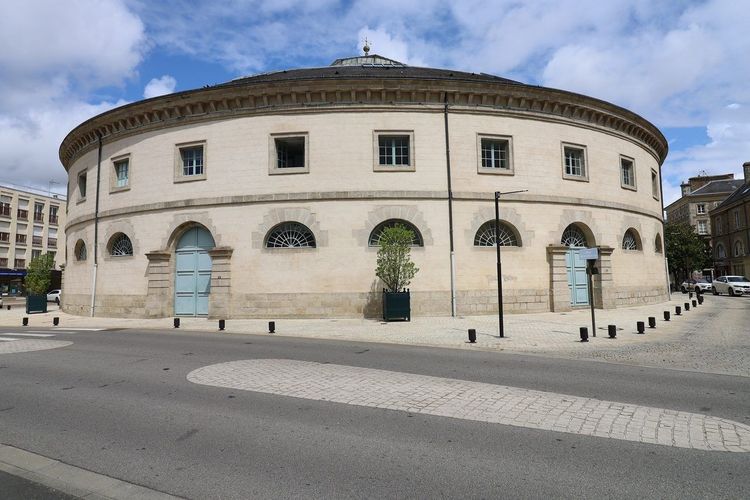
What to do in Alençon in the evening depends largely on the day of the week: the city centre comes alive more on Fridays and Saturdays, with several terraces around the Halle au Blé that stay open late in summer.
The Théâtre d'Alençon (Place Foch, 61000 Alençon, rated 4/5 on Google with 1 review) offers a varied programme throughout the year, including classic plays, concerts and shows for younger audiences, often complemented by a contemporary dance season.
The town-centre cinema screens recent films in their original version on certain evenings of the week, a straightforward option if the weather turns rainy. For a quieter Sunday evening, a walk along the Sarthe is always a safe bet, while a few wine bars near Vieux Alençon regularly organise tastings of Norman ciders and perries that make for a pleasant way to round off the evening.



FAQ
What to do in Alençon on a Sunday?
On Sundays, prioritise the Basilique Notre-Dame and a stroll through Vieux Alençon, which is often quieter than on weekdays. Museums sometimes close earlier: check opening hours at the Maison d'Ozé. Round off your day with the Parc des Promenades or a walk along the Sarthe, two activities with no time constraints.
What to do in Alençon in the evening?
On weekdays, the Théâtre d'Alençon and the town-centre cinema cover most of the cultural offering. At weekends, the terraces around the Halle au Blé and the bars of Vieux Alençon bring more life to the city, especially from May to September when evenings stretch later.
How much time should you plan to visit Alençon?
A full day is enough to cover the historic centre (basilica, lace museum, castle, Vieux Alençon). A full weekend leaves time to add the Écouves forest or the château de Carrouges, both less than thirty minutes away by car.
What to do in Alençon when it rains?
The Musée des Beaux-Arts et de la Dentelle, the Atelier national du Point d'Alençon and the basilica all offer fully covered options. A rainy afternoon also lends itself well to a Ryo audio-guided tour through Vieux Alençon, ducking under doorways during each shower.
Where to park in Alençon city centre?
Several public car parks surround the Halle au Blé and the basilica district, generally free on Sundays and in the evenings after 7 pm. The historic centre is compact, making walking more practical than driving from one site to another.
What to do around Alençon in a day?
The château de Carrouges, the Écouves forest and the Alpes mancelles are the three most popular day trips, each reachable in under thirty-five minutes by car. Combining all three in a single day is tricky: it is better to pick one or two depending on your preferences, nature or built heritage.
Alençon ultimately proves far richer than its reputation as a quiet prefecture might first suggest. Between lace inscribed on the UNESCO World Heritage list, a canonised saint and Normandy's highest point just minutes away by road, the city and its immediate surroundings offer a range of activities that few destinations of this size can match so easily.
Whether you stay for just an afternoon or a full weekend, the historic centre is easy to explore on foot, and our Ryo app is available for those who prefer an audio guide over a paper map during their stroll through Vieux Alençon. Between visits, let yourself be surprised by the Écouves forest or a quiet evening by the Sarthe: Alençon suits both a packed itinerary and a slow-travel stay equally well.